Why Are Lilies Toxic to Cats?
Lilies are highly toxic to cats, as ingestion of any part of the plant—including stems, leaves, or even small amounts of pollen—can lead to fatal acute…

Why Are Lilies Toxic to Cats?
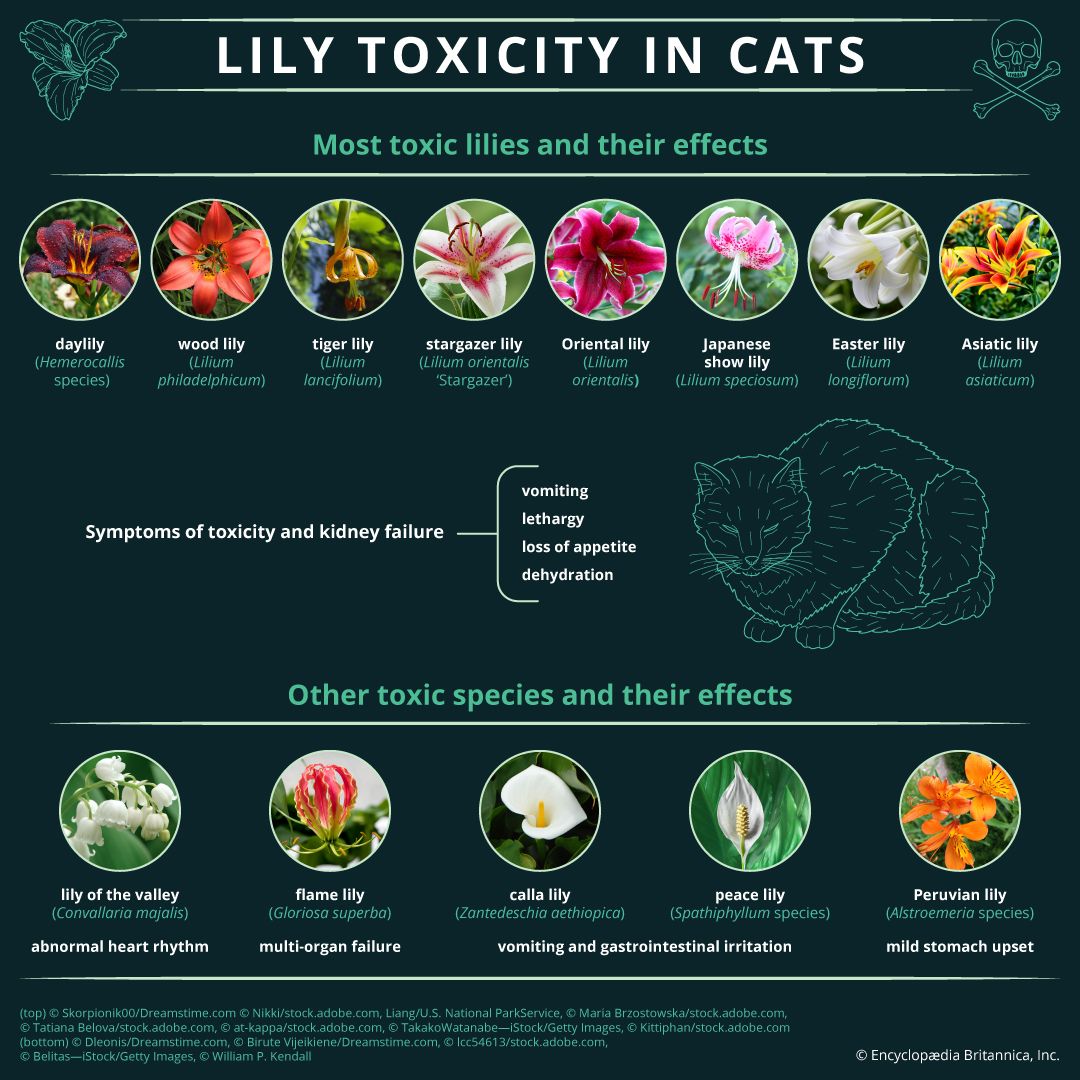
Lilies are highly toxic to cats, as ingestion of any part of the plant—including stems, leaves, or even small amounts of pollen—can lead to fatal acute kidney failure.1
While the specific toxin remains unidentified, experts hypothesize that the substances are rapidly absorbed into the bloodstream, where they damage the epithelial cells of the renal tubules within the nephrons. This damage prevents the kidneys from filtering metabolic wastes, leading to a buildup of substances like urea and phosphorus. Another theory suggests that a cat’s body may produce harmful byproducts when it processes the plant.1
Because the exact toxin is unknown, there is no specific antidote. Treatment is limited to supportive care, such as intravenous fluids or dialysis, making prevention the most critical step in protecting feline health. It is important to note that only true lilies (Lilium species) and daylilies are known to cause this specific type of kidney failure.1
What other common household plants are dangerous for pets?
Many common household plants pose significant risks to pets beyond the highly toxic true lilies. While true lilies and daylilies are uniquely associated with acute kidney failure in cats, other plants often referred to as “lilies” contain different, equally dangerous toxins.1
For example, lily of the valley contains cardiac glycosides, which are potent toxins that can cause irregular heartbeats and potentially fatal heart rhythm disturbances in animals. Similarly, the flame lily contains colchicine, a substance that interferes with cell division. Ingestion of this plant can lead to severe multi-organ failure.1
Other plants, such as the peace lily, do not cause the same kidney damage as true lilies but can still be harmful if ingested. Because many decorative plants contain irritants or toxins, it is essential to research the specific species of any plant brought into a home with pets to ensure their safety.1
How do kidneys filter waste from the blood?
The kidneys filter waste from the blood through a complex process centered in the nephron, the functional unit of the kidney. Each human kidney contains approximately one million of these structures, which work to maintain the body’s internal chemical balance.2
The Filtration Process
The process begins in the renal corpuscle, where blood enters a cluster of capillaries called the glomerulus. This cluster is enclosed by Bowman’s capsule. Under pressure, fluid is forced out of the blood and into the capsule, creating an ultrafiltrate. This initial filtrate contains water and small solutes but excludes larger components like blood cells and proteins.234
Modification and Concentration
As this filtrate travels through the nephron tubule, its composition is refined:
- Selective Reabsorption: The body reclaims essential substances, such as water, glucose, and salts, returning them to the bloodstream.23
- Secretion: The tubules actively add specific waste products and excess ions into the filtrate.2
- Concentration: Structures like the loop of Henle and collecting ducts adjust the final concentration of the urine to maintain the body’s water and electrolyte balance.3
Ultimately, the kidneys process about 1,800 liters of blood daily, ensuring that metabolic waste products like urea are excreted while vital nutrients are preserved.5
Why do cats react differently to toxins than dogs?
Cats and dogs react differently to certain toxins, such as those found in true lilies (Lilium species) and daylilies (Hemerocallis species), because of physiological differences that remain a subject of ongoing scientific study. While these plants can cause acute kidney failure and death in cats, dogs typically experience only mild stomach upset upon ingestion.1
The exact mechanism behind this disparity is not fully understood. One hypothesis suggests that a cat’s body may produce harmful byproducts when it metabolizes the plant material. Experts suspect that the toxins are rapidly absorbed into the cat’s bloodstream, where they specifically damage the epithelial cells of the renal tubules within the nephrons. This damage prevents the kidneys from effectively filtering metabolic wastes, leading to a dangerous buildup of substances like urea and phosphorus.1
Because the specific toxin responsible for this reaction in cats has not been identified, there is no known antidote, making prevention the most critical step in protecting feline health.1
Sources
- Why Are Lilies Toxic to Cats? — Encyclopædia Britannica
- nephron — Encyclopædia Britannica
- renal system - Formation and composition of urine — Encyclopædia Britannica
- renal system - Regulatory functions — Encyclopædia Britannica
- renal system - Glomerular filtration — Encyclopædia Britannica
Published on · 3 min read