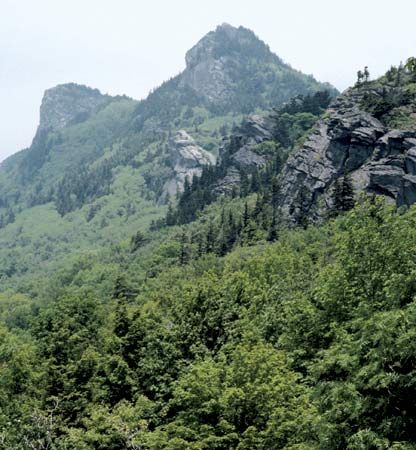
Little Tennessee River
The Little Tennessee River is a 150-mile (240-km) waterway that originates in the Blue Ridge Mountains of northeastern Georgia. It flows north and northwest…
What is Little Tennessee River?
The Little Tennessee River is a 150-mile (240-km) waterway that originates in the Blue Ridge Mountains of northeastern Georgia. It flows north and northwest through southwestern North Carolina and across Tennessee before joining the Tennessee River just below the Fort Loudoun Dam.1
The river is managed by the Tennessee Valley Authority, which operates several dams along its course, including the Calderwood Dam in Tennessee and the Cheoah and Fontana dams in North Carolina. Historically, the river is notable for the site of Fort Loudoun, a British colonial outpost established in 1756–57 that was destroyed in 1760. Additionally, the name of the main Tennessee River is believed to have originated from a Cherokee village located on the banks of the Little Tennessee River.12
What role did the Tennessee Valley Authority play in developing the region?
Established in 1933, the Tennessee Valley Authority (TVA) served as a transformative force in the development of the Tennessee River valley, which spans seven states. The agency was created to address chronic regional poverty and infrastructure challenges through a comprehensive program of flood control, navigation improvements, and electric power generation.3
Key contributions to regional development include:
- Infrastructure & Economy: The construction of a massive system of dams and hydroelectric plants provided cheap electricity, which catalyzed industrial growth in a previously depressed economy.34
- Flood & Navigation Control: By managing the river system as a unit, the TVA effectively eliminated major flood damage and improved river channels, significantly increasing commercial navigation capacity.3
- Public Health & Conservation: The agency implemented mosquito eradication programs that eliminated endemic malaria and promoted improved forestry and land conservation practices.3
- Recreation: The creation of reservoirs, often called the “Great Lakes of the South,” fostered new boating, fishing, and tourism industries.3
How did the Cherokee people historically interact with the Little Tennessee River?
The Little Tennessee River held significant importance for the Cherokee people, serving as a central location for their communities and culture. Most notably, the name of the main Tennessee River is believed to have originated from a Cherokee village named Tanasi, which was situated along the banks of the Little Tennessee River.5
Historically, the Cherokee lived in a network of towns throughout the region, including areas along the Little Tennessee. These settlements were organized into a confederacy of “red” (war) and “white” (peace) towns, featuring council houses where sacred fires were maintained and community meetings were held. The river valley provided the fertile land necessary for their agricultural practices, which centered on the cultivation of corn, beans, and squash.6
While the Cherokee initially maintained friendly trading and military alliances with the British in the 18th century, the encroachment of land-hungry settlers eventually led to intense conflict and the forced removal of the tribe from their ancestral lands in the 19th century.78
What are the environmental impacts of building dams on river ecosystems?
Building dams significantly alters river ecosystems, often leading to profound environmental consequences. These structures transform natural landscapes into reservoirs, which can result in the permanent inundation of terrestrial habitats, the displacement of human communities, and the loss of cultural or natural treasures.101112
Key environmental impacts include:
- Disruption of Migratory Species: Dams act as physical barriers that impede the movement of fish, such as salmon, preventing them from reaching spawning grounds. While technologies like fish passes (ladders and locks) are used to mitigate this, they are not always successful, leading to population declines or even the threat of extinction for some species.101311
- Sedimentation Changes: Dams trap sediment in reservoirs, preventing it from moving downstream. This can cause land degradation downstream, as the water, now largely free of silt, may erode riverbanks rather than building them up.1214
- Habitat Alteration: The creation of reservoirs changes the river’s flow regime and water quality. Furthermore, the decomposition of vegetation submerged by rising reservoir waters can lead to the production of methane, a greenhouse gas.11
- Threats to Biodiversity: Changes to river regimes can adversely affect endangered species that rely on specific river conditions, such as the Chinese sturgeon or the Chinese alligator.12
Sources
- Little Tennessee River — Encyclopædia Britannica
- Tennessee River — Encyclopædia Britannica
- Tennessee Valley Authority — Encyclopædia Britannica
- Tennessee - Economy of Tennessee — Encyclopædia Britannica
- Trail of Tears: Routes, Statistics, and Notable Events - Water route — Encyclopædia Britannica
- Nolichucky River — Encyclopædia Britannica
- Tennessee - Prehistory and European settlement — Encyclopædia Britannica
- Cherokee wars and treaties — Encyclopædia Britannica
- Cherokee - Early colonial period — Encyclopædia Britannica
- dam - Rise of environmental and economic concerns — Encyclopædia Britannica
- dam - Fish passes — Encyclopædia Britannica
- hydroelectric power — Encyclopædia Britannica
- Yangtze River - Human impact on the environment — Encyclopædia Britannica
- river - Environments of deposition — Encyclopædia Britannica
- turbine - Cost of hydroelectric power — Encyclopædia Britannica
Published on · 3 min read