Blue Ridge
The Blue Ridge Mountains are a prominent segment of the Appalachian Mountains in the United States, stretching 615 miles from Pennsylvania to Georgia. The…
What are some of the most notable peaks and natural features in the Blue Ridge Mountains?
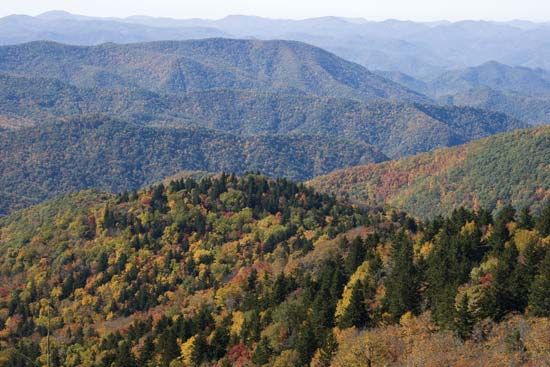
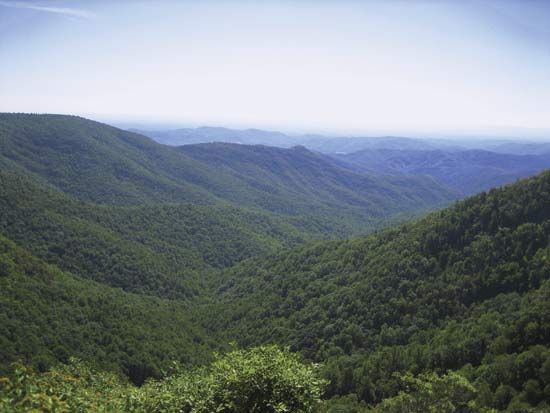
The Blue Ridge Mountains are a prominent segment of the Appalachian Mountains in the United States, stretching 615 miles from Pennsylvania to Georgia. The region is defined by its rugged topography, diverse forests, and significant peaks.
Notable Peaks
The range includes several high-elevation summits, most notably:
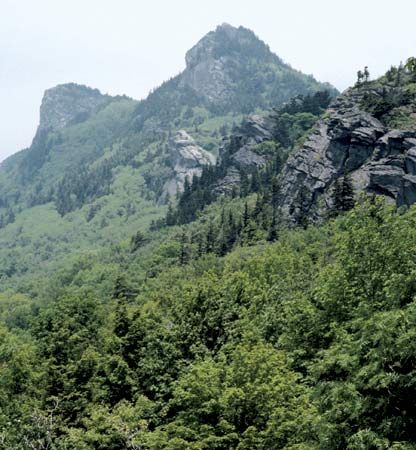
- Mount Mitchell (6,684 feet): Located in North Carolina, it is the highest peak east of the Mississippi River.
- Grandfather Mountain (5,946 feet): A prominent North Carolina peak.
- Mount Rogers (5,729 feet): The highest point in Virginia.
- Brasstown Bald (4,784 feet): The highest point in Georgia.
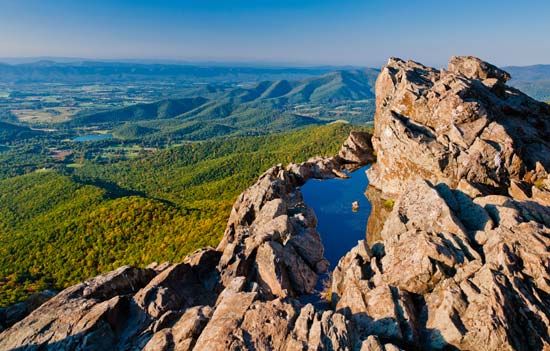
- Stony Man (4,011 feet) and Hawksbill (4,051 feet): Notable peaks in Virginia.
- Sassafras Mountain (3,560 feet): The highest point in South Carolina.
Natural Features
The region is characterized by an intricate network of streams and rivers, including the Roanoke, James, and Potomac rivers, which have cut gaps through the ridge. The area is also known for its abundant waterfalls, formed by water acting on alternating layers of hard and soft rock.
How does the Blue Ridge Parkway contribute to tourism in the area?
The Blue Ridge Parkway serves as a major driver of tourism in the Appalachian region, consistently ranking as one of the most visited units in the U.S. national park system. Its contribution to tourism is multifaceted:3
- Scenic Accessibility: The 469-mile motor route provides motorists with easy access to picturesque mountain vistas, including dozens of overlooks and brilliant fall foliage, which draws large numbers of visitors annually.3
- Recreational Infrastructure: The parkway features extensive facilities for camping, hiking, and picnicking, alongside visitor centers that offer educational resources.3
- Cultural and Historical Attractions: Popular tourist stops include the Blue Ridge Music Center, which highlights regional folk and bluegrass music, as well as historic sites like the restored Mabry Mill.31
- Connectivity: By linking Shenandoah National Park and Great Smoky Mountains National Park, the parkway creates a cohesive travel corridor that encourages extended exploration of the region.3
Since its completion, the parkway has seen significant visitor growth, with annual attendance frequently exceeding 20 million people.3
What types of flora and fauna are unique to the Blue Ridge Mountains?
The Blue Ridge Mountains, as a significant segment of the Appalachian Mountains, host an incredibly diverse ecosystem. The region is home to over 700 varieties of trees and plants, forming part of one of the world’s most complex floral provinces.41
Flora
The southern Appalachian region is renowned for its extensive deciduous forests. Key species include:
- Hardwoods: Sugar maple, beech, ash, birch, hickory, and various oaks.
- Flowering Trees & Shrubs: Dogwood, redbud, rhododendron, azalea, and mountain laurel.
- High-Elevation Species: Red spruce and balsam fir thrive at the highest peaks.45
Notably, it is estimated that of the 2,000 species of Appalachian flora, approximately 200 are native and confined exclusively to the southern mountains.4
Fauna
The mountains support a wide array of wildlife, though many large mammals like bison and wolves have long since disappeared from the region. Common animals currently found in the area include:4
- Mammals: Black bear, white-tailed deer, fox, raccoon, and beaver.45
- Fish: Rainbow trout and brook trout are characteristic of the mountain streams.5
What is the geographical location and extent of the Blue Ridge Mountains?
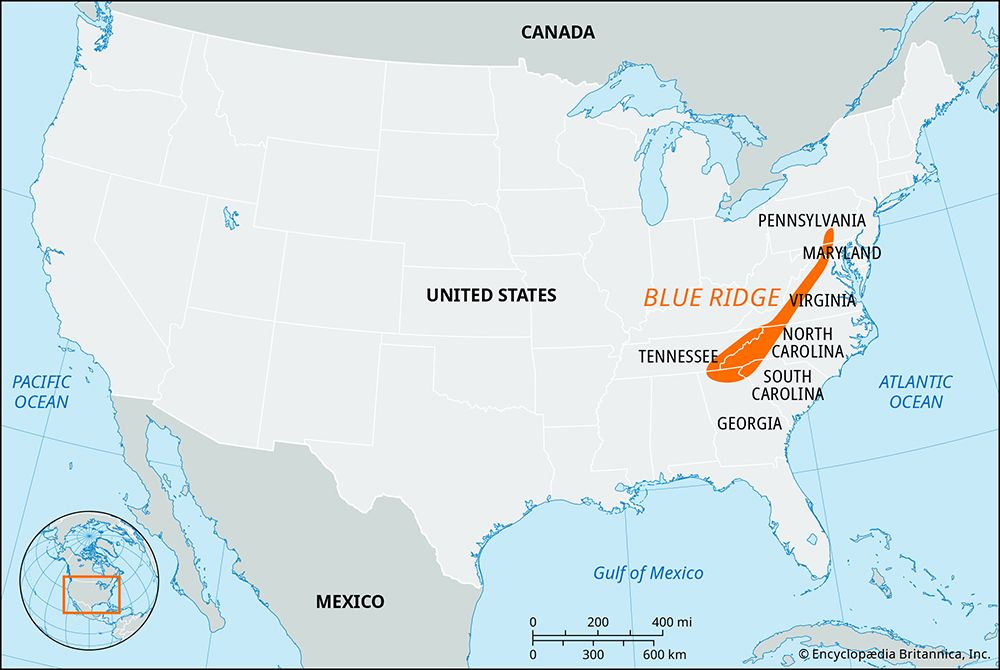
The Blue Ridge is a prominent segment of the Appalachian Mountains located in the United States.
Geographical Extent
The range forms a relatively narrow ridge that stretches southwestward for 615 miles (990 km). Its geographical span includes:
- Starting Point: Carlisle, Pennsylvania.
- States Traversed: The mountains pass through Maryland, Virginia, North Carolina, and South Carolina.
- Ending Point: Mount Oglethorpe in Georgia.
Dimensions and Features
The ridge varies in width from 5 to 65 miles (8 to 105 km), with average elevations ranging between 2,000 and 4,000 feet (600 to 1,200 metres). The system includes notable sub-ranges such as the Black Mountains, the Great Smoky Mountains, and the Unaka Mountains. The region is intricately dissected by numerous streams, and three major rivers—the Roanoke, James, and Potomac—have cut distinct gaps through the ridge.1
Sources
- Blue Ridge — Encyclopædia Britannica
- Appalachian Mountains - Drainage — Encyclopædia Britannica
- Blue Ridge Parkway — Encyclopædia Britannica
- Appalachian Mountains - Plant and animal life — Encyclopædia Britannica
- North Carolina - Plant and animal life — Encyclopædia Britannica
Published on · 3 min read