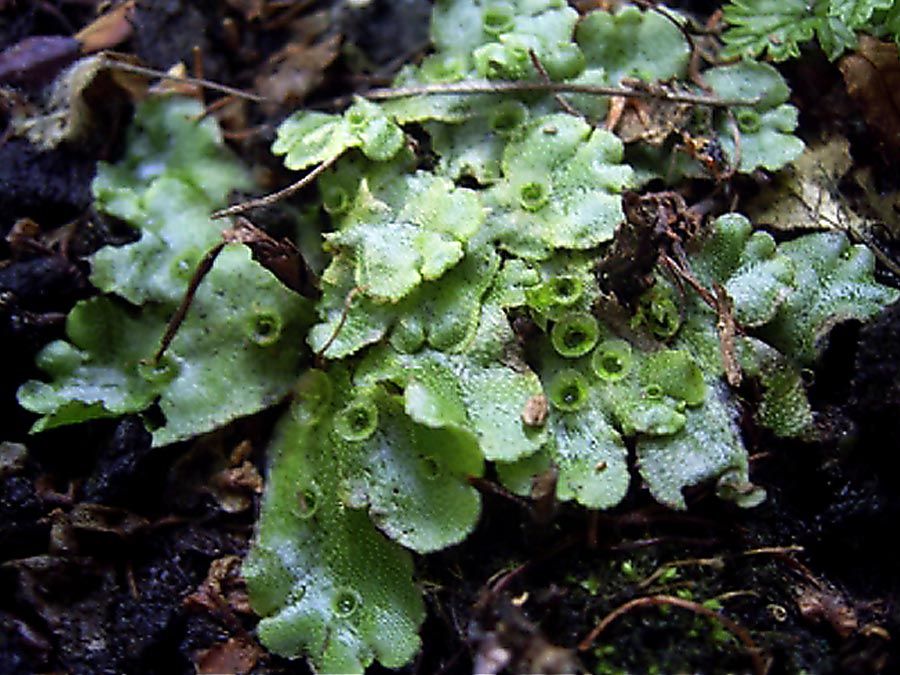
Liverwort
Liverworts (division Marchantiophyta) perform several important ecological functions within their habitats. While they are not considered economically…
What ecological roles do liverworts play in their habitats?
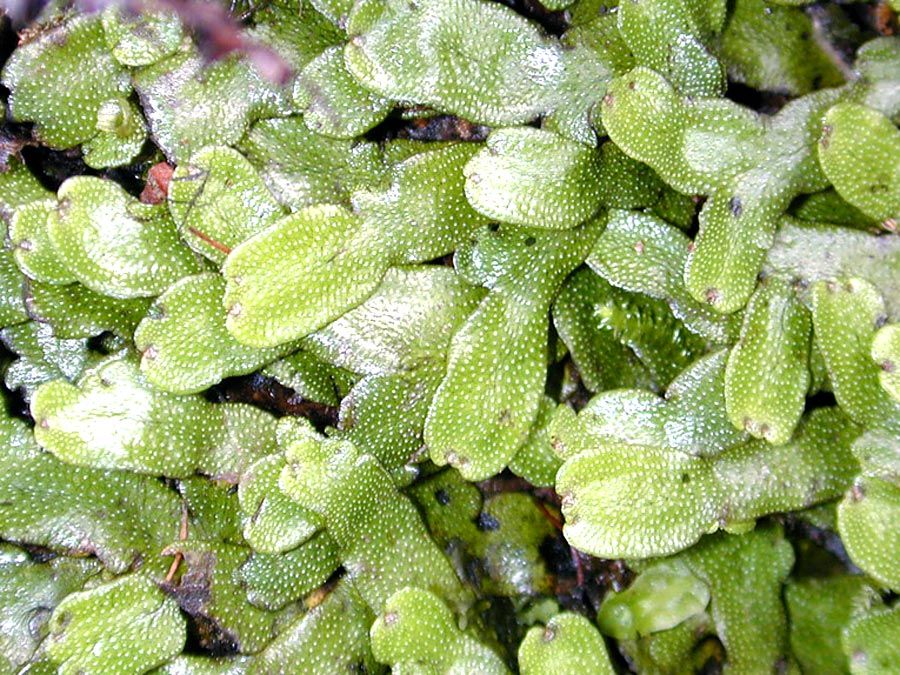
Liverworts (division Marchantiophyta) perform several important ecological functions within their habitats. While they are not considered economically significant to humans, they contribute to ecosystem health in the following ways:
- Nutrient and Food Source: Liverworts serve as a food source for various animals.1
- Decomposition: They facilitate the decay of fallen logs, assisting in the breakdown of organic matter.1
- Soil and Rock Weathering: By retaining moisture, liverworts aid in the physical disintegration of rocks, which contributes to the weathering process.1
- Habitat Diversity: They occupy diverse niches, including damp rocks, moist soil, and tree trunks. Some specialized species even inhabit unique environments such as leaf surfaces, cavern mouths, and copper-rich substrata, adding to the biological complexity of these areas.12
Historically, liverworts are significant for being among the earliest plants to colonize land, with fossil evidence dating back over 470 million years. Their ability to thrive in moist, shaded environments allows them to form lush carpets that help maintain local humidity and provide structural complexity to forest floors and watercourses.12
What are the different types of liverworts and where can they typically be found?
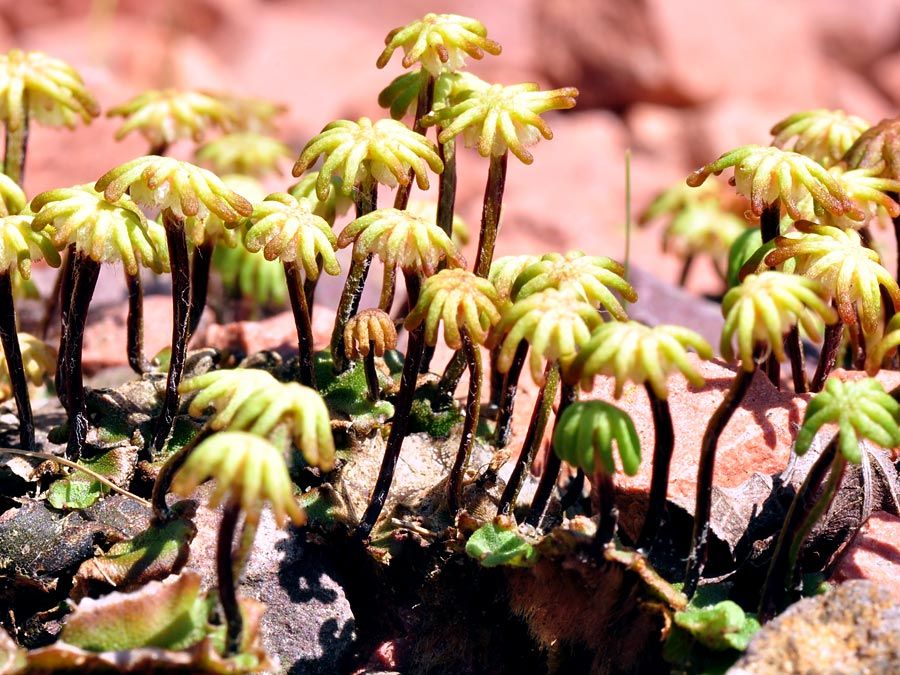
Liverworts (division Marchantiophyta) are generally categorized into two primary types based on their physical structure:
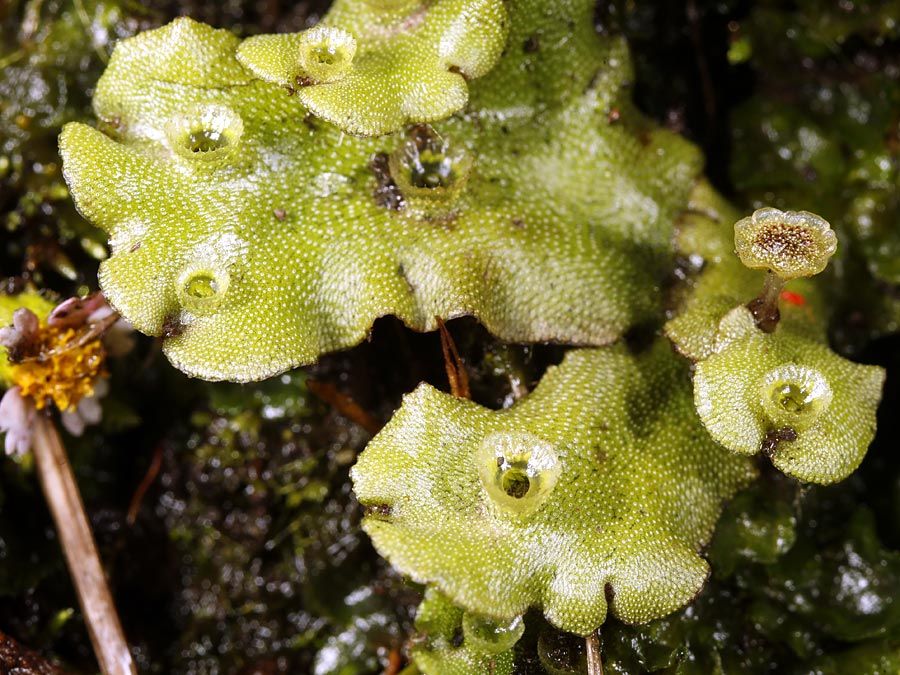
- Thallose liverworts: These plants have a branching, ribbonlike body known as a thallus, which often resembles a lobed liver. They vary significantly in complexity, ranging from simple, one-cell-thick structures like Metzgeria to the complex tissue organization found in Marchantia.14
- Leafy liverworts: These species possess leaflike structures called phyllids arranged in rows around a shoot. They are primarily classified within the order Jungermanniales.14
Typical Habitats Liverworts are distributed worldwide, though they are most common in tropical regions. They require stable, moist environments to thrive and are typically found in the following locations:
- Moist Soil and Rocks: Both thallose and leafy varieties frequently grow on damp soil or rocks.1
- Trees: Leafy liverworts are commonly found on tree trunks in damp woods.1
- Specialized Niches: Some species occupy unique environments, including leaf surfaces, the mouths of shaded caverns (such as Cyathodium), and even salt pans.2
How are liverworts used by humans, if at all, and what is their significance in scientific research?
Liverworts (division Marchantiophyta) are not considered economically important to humans, and they have no significant commercial or industrial applications. Historically, their name stems from the medieval “doctrine of signatures,” a belief that a plant’s physical appearance indicated which human organ it could heal—in this case, the liver.15
In the context of scientific research, liverworts are primarily significant for their evolutionary history. They are among the most ancient land plants, with fossil evidence dating back approximately 471 to 473 million years to the Ordovician Period. Because they represent some of the earliest plants to colonize terrestrial environments, they provide critical insights into the early evolution and diversification of plant life on Earth. Furthermore, their taxonomy has been a subject of significant study; phylogenetic evidence and molecular data have led to a major reorganization of how these plants are classified, distinguishing them from mosses and hornworts.167
How do liverworts absorb water and nutrients without true roots?
Liverworts lack true roots, stems, and leaves, as well as the specialized vascular tissues (xylem and phloem) found in higher plants. Instead, they rely on several mechanisms to absorb water and nutrients from their environment:8
- Rhizoids: Most liverworts are anchored to their substrata by single-celled, rootlike structures called rhizoids. These filaments facilitate the absorption of water and minerals from the surface upon which the plant grows. In leafy liverworts, these rhizoids are typically confined to the undersurface of the stem, where they also play a key role in water retention.1910
- Direct Absorption: Because they lack a well-developed, water-impermeable cuticle, liverworts are highly dependent on their immediate surroundings for moisture. They can absorb water and dissolved nutrients directly through the surface of their thallus or phyllids.8
- Symbiotic Fungi: Many liverworts host fungi within their cells. These fungal partners are believed to be important in assisting with the uptake of water and minerals, as well as making organic compounds available for the plant’s nutrition.10
Sources
- liverwort — Encyclopædia Britannica
- bryophyte - Ecology and habitats — Encyclopædia Britannica
- Plant reproductive system - Liverworts and hornworts — Encyclopædia Britannica
- bryophyte - General features — Encyclopædia Britannica
- Plant - Evolution and paleobotany — Encyclopædia Britannica
- bryophyte - Classification — Encyclopædia Britannica
- Plant - Division Marchantiophyta — Encyclopædia Britannica
- rhizoid — Encyclopædia Britannica
- Plant - Definition of the category — Encyclopædia Britannica
- bryophyte - Form and function — Encyclopædia Britannica
Published on · 3 min read