Cardinal Flower
The cardinal flower (Lobelia cardinalis) is a perennial flowering plant belonging to the Lobelia genus and the Campanulaceae family. Native to North and…
What is Cardinal flower?
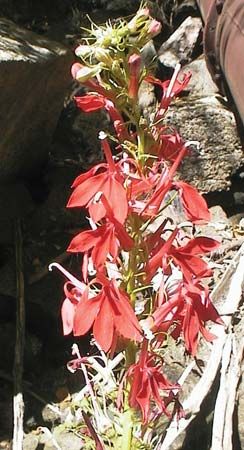
The cardinal flower (Lobelia cardinalis) is a perennial flowering plant belonging to the Lobelia genus and the Campanulaceae family. Native to North and Central America, it is well-known for its spikes of brilliant, scarlet-lipped flowers, though white or pink varieties also exist.12
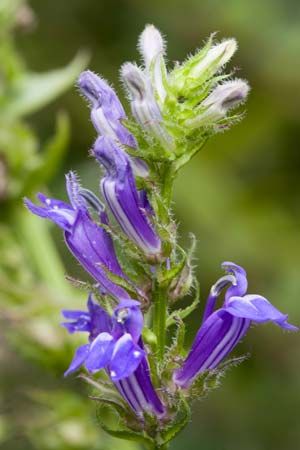
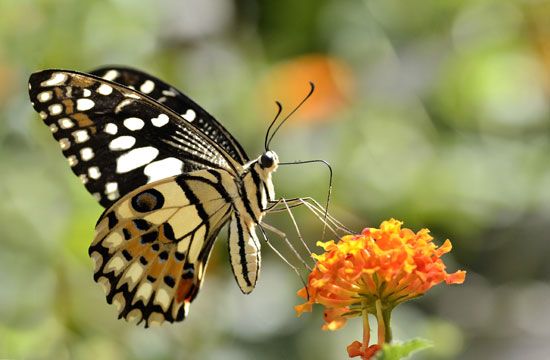
These plants can grow on leafy stems reaching up to 1.5 meters (5 feet) in height. Because of their vibrant appearance, they are frequently cultivated as ornamentals and are particularly effective at attracting hummingbirds and butterflies to gardens. It is worth noting that the related species Lobelia siphilitica, known as the blue cardinal, features blue or whitish blooms.1
Why are hummingbirds particularly attracted to red flowers?
Hummingbirds are particularly attracted to red flowers primarily due to their highly developed sense of vision. Unlike many insects, birds rely heavily on their color sense rather than their sense of smell to locate food sources.3
The sensitivity of a bird’s eye is greatest in the middle and red parts of the light spectrum, a trait often attributed to the presence of orange-red oil droplets in the retina that function as a light filter. Because this visual sensitivity is so acute, many plants that rely on birds for pollination have evolved to produce uniform, pure red flowers to effectively signal their presence to these avian visitors.34
In addition to their color, these “bird-loving” or ornithophilous flowers are adapted to meet the specific needs of hummingbirds by producing copious amounts of nectar to fuel the birds’ high metabolic rates. These flowers typically lack a strong scent, are sturdily constructed, and feature wide floral tubes that accommodate the birds’ specialized beaks and tongues.34
What other plants belong to the Campanulaceae family?
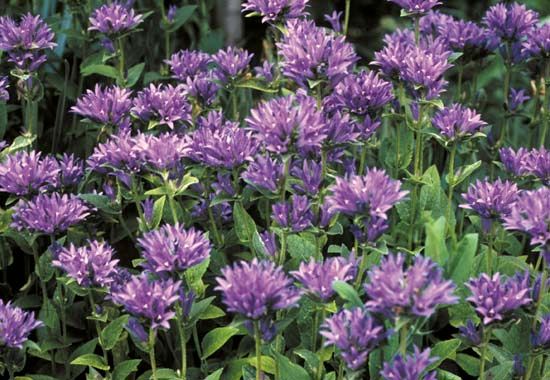
The Campanulaceae family, commonly known as the bellflower family, comprises approximately 84 genera and 2,400 species of mostly herbaceous plants. While many are prized as garden ornamentals, the family exhibits significant diversity in form and habitat.56
Key genera within the family include:
- Campanula: The namesake bellflower genus, featuring about 400 species of herbs, such as the Canterbury bell (C. medium) and the tall bellflower (C. americana).57
- Lobelia: Now classified as a subfamily (Lobelioideae), this large genus includes over 400 species, such as the cardinal flower (L. cardinalis) and Indian tobacco (L. inflata).586
- Adenophora: Known as the ladybell genus, it includes 60 species native to Europe and Asia.5
- Canarina: The canarian bellflower, which produces berries rather than capsules.5
- Codonopsis: The bonnet bellflower, a genus of sprawling perennials from Asia.5
- Cyananthus: Known as trailing bellflowers, these are dainty, mat-forming perennials.56
- Edraianthus: The grassy bellflower genus native to the Balkans.5
- Michauxia: The dart bellflower, characterized by its unique, deep-parted lobes.5
- Siphocampylus, Centropogon, and Burmeistera: Large, primarily hummingbird-pollinated genera found in the New World tropics.56
- Wahlenbergia: A widely distributed genus with about 260 species.6
How does the great blue lobelia differ from the cardinal flower?
The cardinal flower (Lobelia cardinalis) and the great blue lobelia (Lobelia siphilitica) are both members of the Lobelioideae subfamily within the Campanulaceae family, but they are easily distinguished by their appearance and pollination ecology.
The primary differences include:
- Flower Color: The cardinal flower is well-known for its striking, vibrant scarlet (or occasionally white or pink) flowers, which are highly attractive to hummingbirds. In contrast, the great blue lobelia, sometimes referred to as the blue cardinal, features flowers that are blue or whitish.17
- Pollination: Because of its bright red color, the cardinal flower is specifically adapted to attract hummingbirds. While both species belong to the same genus, the great blue lobelia does not share the same specialized red-color signaling associated with hummingbird pollination.17
- General Characteristics: Both plants are perennial herbs that exhibit the typical features of the genus Lobelia, including two-lipped tubular flowers and milky, acrid sap.7
Sources
- cardinal flower — Encyclopædia Britannica
- cardinal flower — Merriam-Webster
- pollination - Birds — Encyclopædia Britannica
- major types of pollinators - Birds — Encyclopædia Britannica
- Campanulaceae — Encyclopædia Britannica
- Campanulaceae — Merriam-Webster
- lobelia — Encyclopædia Britannica
- bellflower — Encyclopædia Britannica
- Asterales - Campanulaceae — Encyclopædia Britannica
Published on · 3 min read