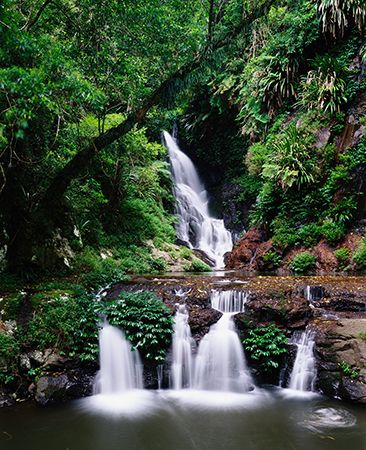
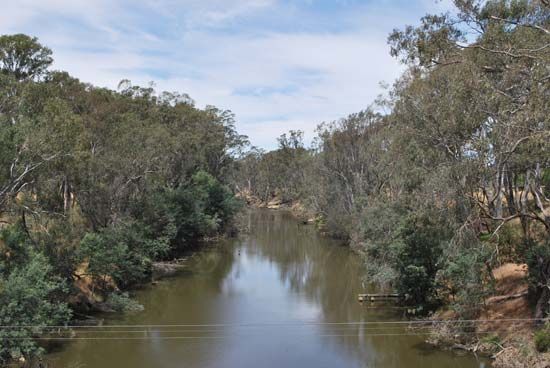
Loddon River
The Loddon River is a river located in central Victoria, Australia. It originates in the Eastern Highlands, approximately 50 miles (80 km) northwest of…
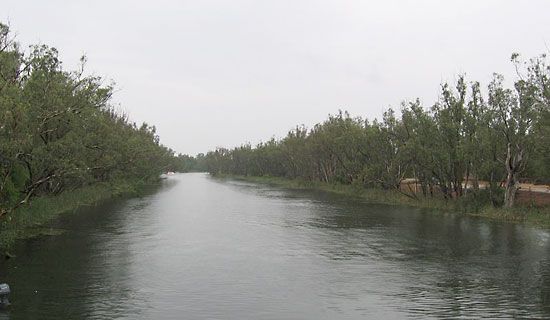
What is Loddon River?
The Loddon River is a river located in central Victoria, Australia1. It originates in the Eastern Highlands, approximately 50 miles (80 km) northwest of Melbourne, and flows in a northwesterly and northerly direction for over 200 miles (320 km).1
The river passes by Kerang before joining the Little Murray River and eventually meeting the Murray River near Swan Hill. Because the river’s volume is inconstant, it has been dammed to create several reservoirs, such as Cairn Curran and Tullaroop, which serve as part of the Goulburn Irrigation System. The river was visited by Thomas Mitchell in 1836 and was named after the Loddon River in Hampshire, England.1
What is the Goulburn Irrigation System?
The Goulburn Irrigation System is a major water management network in central Victoria, Australia, designed to support regional agriculture by regulating water flow from the Goulburn River and other tributaries, such as the Loddon River.
Key components and functions of the system include:
- Water Storage: The system utilizes several reservoirs to manage the river’s variable volume, including the Eildon, Goulburn, and Waranga reservoirs, as well as Lake Nagambie. The Loddon River also contributes to the system through reservoirs like Cairn Curran and Tullaroop.23
- Agricultural Support: By providing reliable water, the system enables intensive vegetable farming, fruit production, dairying, and sheep raising in the Goulburn Valley.21
- Environmental Impact: While essential for the economy, the irrigation system has led to rising water tables and increased soil salinity, which poses significant environmental challenges for the region.24
How do dams affect river ecosystems?
Dams significantly alter river ecosystems by transforming natural environments to serve human needs, often resulting in the destruction of local flora and fauna. Their impact on river health is multifaceted:5
- Disruption of Migratory Species: Dams act as physical barriers that block or impede the movement of fish, such as salmon, traveling to and from their spawning grounds. While technologies like fish passes—including fish ladders and locks—are used to mitigate these effects, they have not always been successful in preventing dramatic population declines.56
- Sediment and Flow Alteration: By impounding water, dams trap sediment that would otherwise travel downstream, which can lead to channel erosion below the reservoir as the released water regains its transporting capacity. Furthermore, dams regulate river flow to manage floods and irrigation, which fundamentally changes the natural rhythm of the waterway.78
- Habitat Loss: The creation of reservoirs often leads to the inundation of large areas, destroying terrestrial habitats and displacing human communities. Conversely, some structures, such as beaver dams, create new wetlands and ponds that support diverse aquatic species, acting as positive “ecosystem engineers”.589
Who was Thomas Mitchell and what did he explore?
Sir Thomas Livingstone Mitchell (1792–1855) was a Scottish-born soldier and the surveyor general of New South Wales, known for his extensive mapping and exploration of Australia. After succeeding John Oxley in 1828, he oversaw the development of critical infrastructure, including roads and bridges, before leading several major expeditions into the interior.11
His key explorations included:
- 1831–32: Surveyed the region between the Castlereagh and Gwydir rivers.11
- 1835: Traced the Darling River from where Charles Sturt had previously stopped to its junction with the Murray River.11
- 1836: Explored the fertile lands around the Murray River, which he named “Australia Felix” (Happy Australia), a region that later became the state of Victoria.1112
- 1845–46: Conducted a fourth expedition attempting to find an overland route to Port Essington, during which he surveyed a vast area of the interior.11
Sources
- Loddon River — Encyclopædia Britannica
- Goulburn River — Encyclopædia Britannica
- Murray River — Encyclopædia Britannica
- Shepparton — Encyclopædia Britannica
- dam - Rise of environmental and economic concerns — Encyclopædia Britannica
- dam - Fish passes — Encyclopædia Britannica
- Why do beavers build dams? — Encyclopædia Britannica
- river - Environments of deposition — Encyclopædia Britannica
- reservoir — Encyclopædia Britannica
- dam - Construction techniques — Encyclopædia Britannica
- Sir Thomas Livingstone Mitchell — Encyclopædia Britannica
- Australia - Culture — Encyclopædia Britannica
Published on · 3 min read