Paper Mulberry
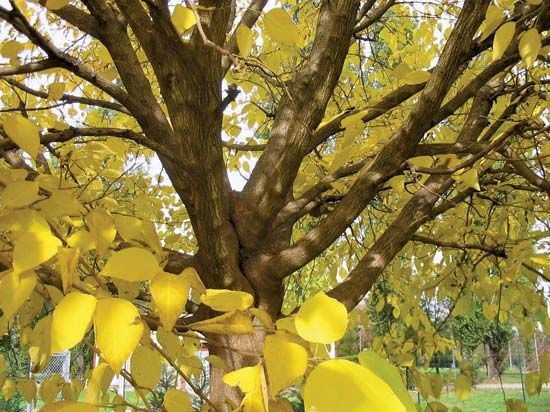
The paper mulberry (Broussonetia papyrifera) is a fast-growing tree belonging to the Moraceae family, native to Asia.
What is Paper mulberry?
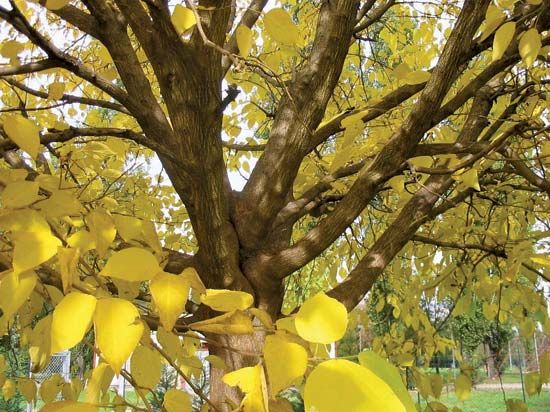
The paper mulberry (Broussonetia papyrifera) is a fast-growing tree belonging to the Moraceae family, native to Asia.12
The tree is historically and culturally significant because its inner bark provides a fibre used for papermaking and the production of tapa cloth, a traditional fabric in Polynesia.1
Beyond its utility, the paper mulberry is often cultivated as an ornamental shade tree due to its ability to tolerate urban conditions. It thrives in rich, moist loam and is available in several varieties, including cut-leaved and variegated forms. However, because it can spread aggressively, it is classified as an invasive species in certain regions outside of its native habitat.12
How is tapa cloth made from tree bark?
Tapa cloth, also known as bark cloth, is a traditional nonwoven fabric created primarily from the inner bark, or bast, of the paper mulberry tree, though breadfruit and fig trees are sometimes used as well.31
The production process involves several key steps:
- Stripping: The inner bark is carefully stripped from the tree.1
- Soaking: The bark is soaked to soften the material.1
- Beating: The softened fibers are pounded, traditionally with wooden tools, to reduce their thickness and cause the fibers to interlace, forming a cohesive sheet.41
- Assembly: These individual sheets are often joined together to create larger pieces, which are then fashioned into items such as loincloths, capes, skirts, and headdresses.4
Once the cloth is prepared, it is frequently decorated through painting, watermarking, or by attaching ornaments like feathers and shells. The finished fabric is often characterized by intricate geometric patterns.45
What makes a plant species considered invasive?
An invasive species is defined as any nonnative organism that significantly disrupts or modifies the ecosystems it colonizes. While many introduced species fail to survive in new environments, those that become invasive typically possess a competitive advantage over indigenous species, often thriving in areas that lack natural predators to keep their populations in check.7
Key factors that characterize invasive species include:
- Competitive Advantage: They may outcompete native species for essential resources such as food, water, sunlight, and living space.78
- Rapid Spread: Many invasive plants, such as purple loosestrife or Japanese knotweed, are capable of rapid growth and proliferation, allowing them to form dense, monospecies stands that displace native vegetation.910
- Ecological Disruption: They can reduce local biodiversity, act as vectors for diseases, or even cause the localized extinction of native species.78
- Allelopathy: Some invasive plants release chemicals into the soil that inhibit the growth and survival of surrounding native plants.10
What are some other plants used in traditional papermaking?
Beyond wood pulp, a wide variety of plants have been used throughout history to create paper. These materials are often categorized by their source, such as agricultural residues, grasses, or specific bast fibers.
Agricultural and Grass Fibers
- Cereal Straws: Used extensively worldwide, straw pulp was historically common for corrugating medium before being largely replaced by hardwood pulp.11
- Bagasse: The fibrous residue left after crushing sugarcane is a significant source of pulp in many sugar-producing regions.11
- Bamboo: Although botanically a grass, its dense, wood-like culms provide a high yield of fiber and are utilized in several Asian countries.11
- Esparto: A desert grass from the Mediterranean, it was once highly valued for its dimensional stability and smooth printing surface.11
- Papyrus: Ancient Egyptians created a writing surface by pressing the pith of this aquatic plant into thin, layered sheets.12
Bast Fibers
Bast fibers are obtained from the inner bark of certain plants and are prized for their strength and flexibility.13
- Paper Mulberry: A foundational material in early papermaking, its inner bark is still used for specialized papers.114
- Flax, Hemp, Jute, and Kenaf: These plants provide long, durable fibers often used for heavy-duty paper, currency, or high-grade cigarette paper.1114
- Mitsumata: The bark of this plant is another traditional source of high-quality paper pulp.14
Sources
- Paper mulberry — Encyclopædia Britannica
- paper mulberry — Merriam-Webster
- bark cloth — Merriam-Webster
- Polynesian culture - Material culture — Encyclopædia Britannica
- tapa — Merriam-Webster
- Bark painting — Encyclopædia Britannica
- invasive species — Encyclopædia Britannica
- conservation - Removing invasive species — Encyclopædia Britannica
- habitat loss — Encyclopædia Britannica
- Japanese knotweed — Encyclopædia Britannica
- papermaking - Natural fibres other than wood — Encyclopædia Britannica
- papyrus — Encyclopædia Britannica
- Bast fiber — Encyclopædia Britannica
- papermaking - Historical development — Encyclopædia Britannica
- rice paper — Merriam-Webster
- paper pulp — Encyclopædia Britannica
Published on · 3 min read