Santalales
The order Santalales, commonly known as the sandalwood order, comprises a diverse group of flowering plants that includes approximately 1,990 species across…
What are the main characteristics of plants in the order Santalales?
The order Santalales, commonly known as the sandalwood order, comprises a diverse group of flowering plants that includes approximately 1,990 species across 7 to 14 families.1
Key Characteristics
- Parasitism: All members of the order are parasitic to some degree. They utilize a specialized organ called a haustorium to penetrate the host’s tissues, establishing a connection with the host’s xylem to extract water and nutrients.1
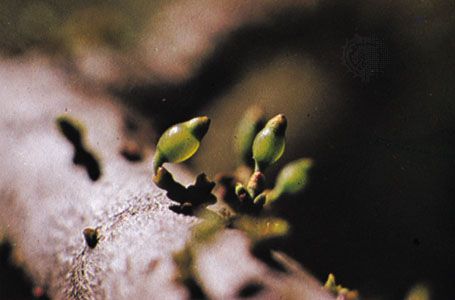
- Morphology: These plants range from large trees to extremely small herbs, such as the dwarf mistletoe. Most possess simple leaves that lack stipules.1
- Reproductive Features: Flowers vary in structure, sometimes lacking petals or sepals entirely. A defining feature for many is an inferior ovary, and the stamens typically align with the number of petal lobes.12
- Diversity: The order includes various mistletoes (found in Santalaceae and Loranthaceae) as well as other groups like Balanophoraceae, which are primarily root parasites.1
How have Santalales plants adapted to different environments around the world?
Plants in the order Santalales have adapted to diverse environments globally primarily through the evolution of parasitism. By developing a specialized organ called a haustorium, these plants penetrate the tissues of host species to extract water and nutrients, allowing them to thrive in various habitats ranging from tropical forests to temperate regions.31
Key adaptive strategies include:
- Nutrient Acquisition: While many species retain some chlorophyll to manufacture their own food, their reliance on host xylem connections ensures survival even when environmental resources are limited.31
- Dispersal Mechanisms: Many mistletoes in the family Loranthaceae produce fleshy fruits containing a sticky substance called a viscidium. This adaptation ensures seeds adhere to tree bark, facilitating germination upon a suitable host.1
- Morphological Specialization: Adaptations vary from the reduction of leaves to scalelike structures in some Santalaceae to the development of threadlike internal systems in dwarf mistletoe (Arceuthobium), which can infiltrate the growing points of conifers.31
- Host Specificity: Some groups have evolved to target specific hosts, such as the South American Misodendraceae, which grow exclusively on Nothofagus (southern beech) trees.1
What are some well-known examples of plants from the Santalales order?
The order Santalales includes a wide variety of parasitic plants, ranging from economically significant trees to small, specialized mistletoes. Some of the most well-known examples include:
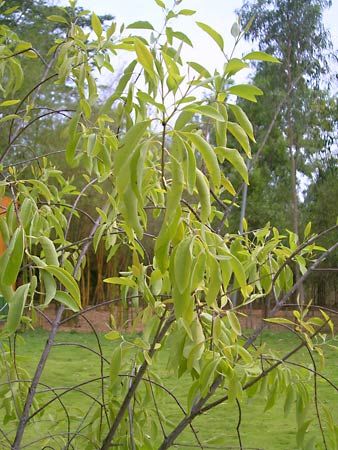
- Sandalwood (Santalum): This genus contains about 25 species of semiparasitic trees, most notably the aromatic sandalwood (S. album). Prized for its fragrant heartwood, it has been used since antiquity in religious rituals, incense, and perfumes.156
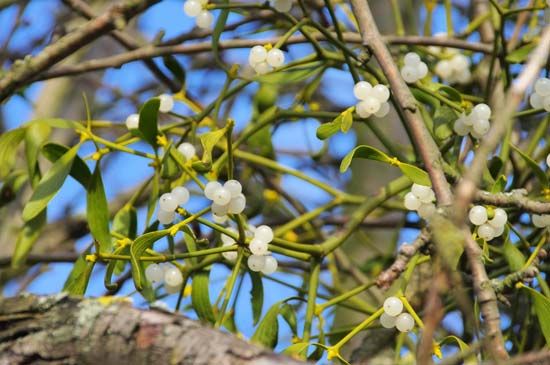
- Mistletoes: Many members of the families Santalaceae and Loranthaceae are known as mistletoes. This includes Viscum album, the traditional mistletoe used during the Christmas season, as well as the tropical mistletoe genus Phoradendron.16
- Dwarf Mistletoe (Arceuthobium): These are among the smallest vascular plants and are known for being parasitic on conifers. They are notorious for causing witches’-broom and other damage to timber trees.13
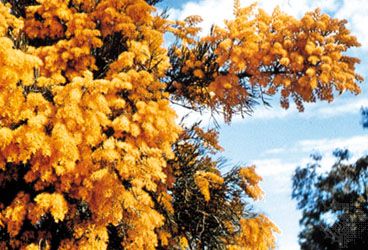
- Australian Christmas Tree (Nuytsia floribunda): A striking parasitic tree belonging to the Loranthaceae family.1
- Other Notable Species: These include the bastard toadflax (Comandra in North America and Thesium in Europe) and the buffalo nut (Pyrularia pubera), a North American parasite known for its oil-filled fruit.6
How do Santalales plants obtain nutrients, and what makes them unique in this regard?
Plants in the order Santalales are defined by their parasitic nature, which is their primary method for obtaining water and nutrients. While many species retain some chlorophyll and can perform photosynthesis to manufacture their own food, they are all dependent on host plants to varying degrees.31
The unique mechanism that enables this lifestyle is the haustorium. This specialized organ acts as a bridge between the parasite and its host, penetrating the host’s living tissue to establish a connection with the xylem—the plant’s internal water-conducting system. Through this partial fusion of tissues, the parasite effectively siphons off water and essential nutrients directly from the host.1
The complexity of this adaptation varies across the order:
- Root vs. Stem Parasitism: Members may attach to the roots or the branches of their hosts.1
- Structural Infiltration: In many Santalaceae, the haustorium branches out through the host’s softer tissues to maximize nutrient uptake.1
- Specialized Systems: Some species, such as the dwarf mistletoe (Arceuthobium), develop intricate, threadlike internal systems that can infiltrate the host’s growing points.31
Sources
- Santalales — Encyclopædia Britannica
- Santalales — Merriam-Webster
- Santalaceae — Encyclopædia Britannica
- mistletoe: Top Questions — Encyclopædia Britannica
- dwarf mistletoe — Encyclopædia Britannica
- sandalwood — Encyclopædia Britannica
Published on · 3 min read