Lovebird
Lovebirds are a group of nine species of small parrots belonging to the genus Agapornis. They possess several distinctive physical characteristics that set…
What are the distinctive physical characteristics of lovebirds?
Lovebirds are a group of nine species of small parrots belonging to the genus Agapornis. They possess several distinctive physical characteristics that set them apart from other birds, such as the budgerigar, which is often mistakenly identified as a lovebird.12
Their primary physical traits include:
- Size and Build: They are small, chunky birds measuring between 10 and 16 cm (4 to 6 inches) in length, and they are characterized by their short tails.1
- Bill and Eyes: Most species feature a prominent red bill and a noticeable eye-ring.1
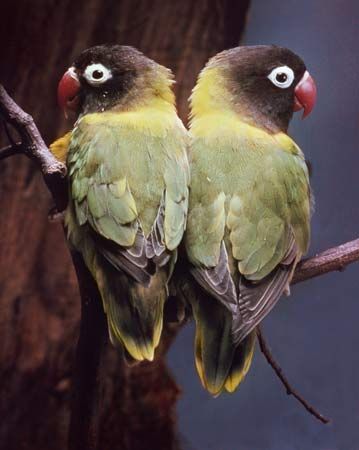
- Appearance: The sexes look alike in appearance. While many are known for their vibrant colors, specific markings vary by species; for example, the black-masked lovebird is green with a blackish-brown head and a yellow band across the breast and hindneck.1
It is important to note that while they are often associated with affectionate behavior toward their mates, this is a social observation rather than a physical trait.13
How many species of lovebirds are there, and which are the most common as pets?
There are nine species of lovebirds, all belonging to the genus Agapornis and native to Africa and MadagascarAgapornis* and native to Africa and Madagascar.1
While the provided information notes that lovebirds are popular in small aviaries, it does not explicitly rank or identify which specific species are the most common as pets. It does, however, highlight the black-masked lovebird as a notable species often found in captivity, where common mutations include blue and whitish color variations.1
It is important to clarify that the budgerigar—often the most popular caged parakeet—is frequently and erroneously referred to as a lovebird, despite being a distinct species.13
How long do lovebirds typically live, and what are their care requirements as pets?
Lovebirds are described as hardy and long-lived birds, though the provided Britannica entry does not specify an exact number of years for their lifespan.
Regarding their care as pets, they are popular in small aviaries but require specific considerations:
- Temperament: They are not easy to tame and can be pugnacious, or aggressive, toward other birds. They also possess loud, squawky voices.
- Training: Despite their temperament, they can be taught to perform tricks and may mimic human speech to a limited extent.
- Health: Owners should be aware of potential health risks, such as psittacine beak and feather disease. This is a debilitating viral condition that causes feather loss and immune suppression. Because there is no effective treatment, it is ethically imperative to acquire birds from flocks known to be free of infection to ensure their well-being.
How do lovebirds differ from other parrot species in terms of behavior and care?
Lovebirds (Agapornis) share many general characteristics with other parrots, such as being monogamous and intelligent, but they possess distinct behavioral and care-related traits:
Behavioral Differences
- Nesting Habits: Unlike many parrots that simply lay eggs in tree cavities, some lovebird species exhibit unique nesting behavior. Females cut leaves or grass into strips and tuck them into their rump feathers to transport them to the nest, a behavior rarely seen in other parrot species.15
- Temperament: While many parrots are known for being affectionate toward humans, lovebirds are notably pugnacious and can be aggressive toward other birds. Despite their reputation for “affectionate” pair bonding, they are generally not easy to tame compared to some other popular pet parrots.12
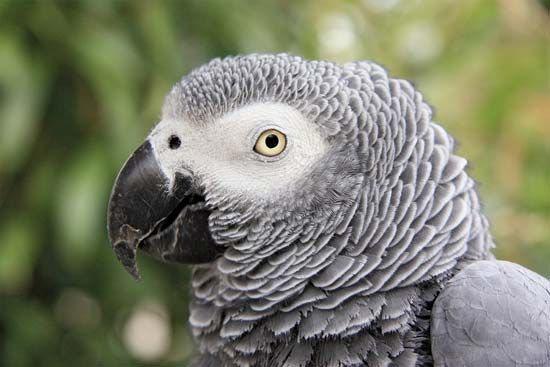
- Vocalization: Lovebirds have loud, squawky voices. While they can mimic human speech to a limited extent, they are not typically considered the most proficient mimics compared to species like the African gray parrot or certain amazons.12
Care Considerations
- Social Needs: While they are often kept in pairs due to their social nature, the belief that a lovebird will die of grief if its mate dies is unproven.1
- General Maintenance: Like most parrots, they are vegetarians and require a varied diet. Their care is relatively straightforward, as they are hardy and produce dry, compact droppings, which makes them suitable for small aviaries.21
Sources
- Lovebird — Encyclopædia Britannica
- lovebird — Merriam-Webster
- Parakeet — Encyclopædia Britannica
- psittacine beak and feather disease — Encyclopædia Britannica
- Psittaciform - Reproduction — Encyclopædia Britannica
- Psittaciform - Importance to humans — Encyclopædia Britannica
Published on · 3 min read