Tern
Terns are generally smaller than gulls and typically return to large colonies on islands, offshore bars, isolated beaches, or Arctic tundra to breed. Their…
How do terns reproduce and care for their young?
Terns are generally smaller than gulls and typically return to large colonies on islands, offshore bars, isolated beaches, or Arctic tundra to breed. Their courtship displays are notably aerial and include “fish flights,” where a bird postures while carrying a fish. A ceremonial transfer of this fish occurs during ground-based displays, which are essential for courtship and maintaining the pair bond.1
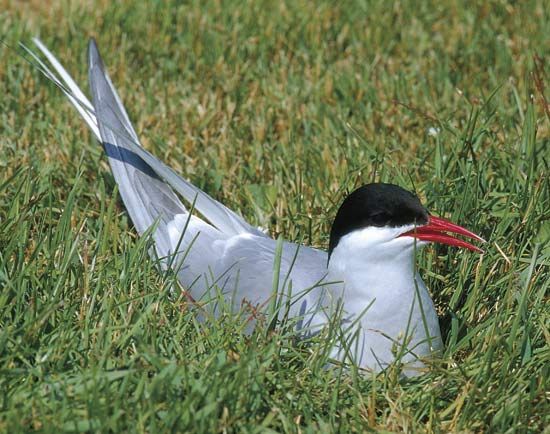
Nesting habits vary by species: while many Sterna and Thalasseus terns nest on the ground in such close proximity that neighbors may spar while incubating, others like noddies nest in bushes or on cliff ledges, and the fairy tern deposits its single egg on a tree limb.1
Unlike gulls, most terns do not regurgitate food for their young; instead, they bring fish back to the colony to feed the chicks, which solicit food by energetically pecking at the adult’s bill. Terns are fierce in defending their nests and will mob predators. In some species, such as royal terns, chicks band together shortly after leaving the nest and may take to the water if threatened.1
What are the common habitats and migration patterns of terns?
Terns are widely distributed across the globe, inhabiting both seacoasts and inland waters. During the breeding season, they typically gather in large, gregarious colonies on islands, offshore bars, isolated beaches, or Arctic tundra. While most species nest on the ground, some, such as noddies, nest in bushes or on cliff ledges, and the fairy tern may deposit its egg on a tree limb.89
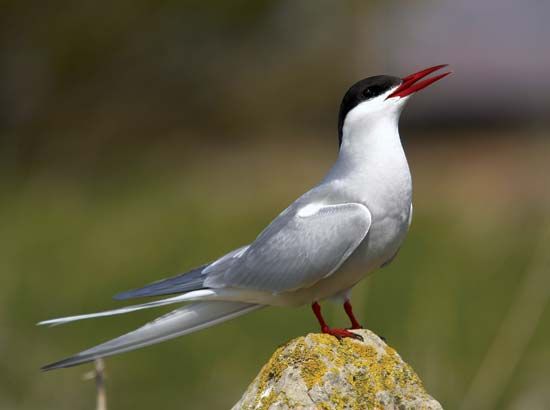
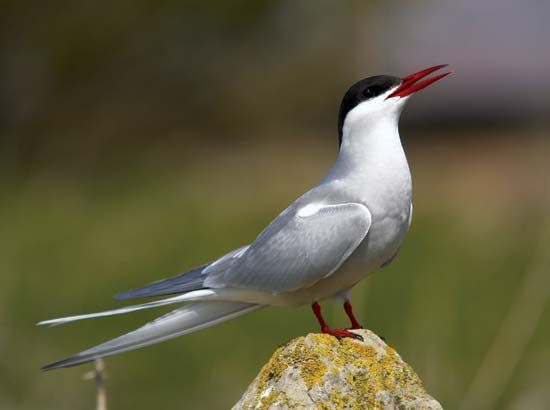
Many tern species are long-distance migrants. The most notable is the Arctic tern, which holds the record for the longest annual migration of any bird. These birds breed in the northernmost reaches of Europe, Asia, and North America and winter in the extreme southern Pacific and Atlantic oceans, often near Antarctic pack ice. This round-trip journey can span 60,000 to 82,000 km (roughly 37,000 to 51,000 miles). Other species, such as the black tern, breed in temperate regions and migrate to tropical areas for the winter.8101
What are the distinctive physical characteristics of terns?
Terns are slender, graceful water birds belonging to the subfamily Sterninae within the family Laridae. Compared to their relatives, the gulls, they are generally smaller, more slender, shorter-legged, and possess longer, narrower wings.1011
Key physical characteristics include:
- Size: They range from approximately 20 to 55 cm (8 to 22 inches) in length.10
- Wings and Tail: Most species feature long, pointed wings and often a deeply forked tail, which aids in their agile flight.1011
- Bill and Feet: They have sharply pointed bills that may be black, red, or yellow, and their feet are webbed and typically red or black.1011
- Coloration: Plumage varies widely, ranging from white to black and white, or sometimes almost entirely black. Many species, such as the common tern, are characterized by a distinctive black cap during the breeding season.1012
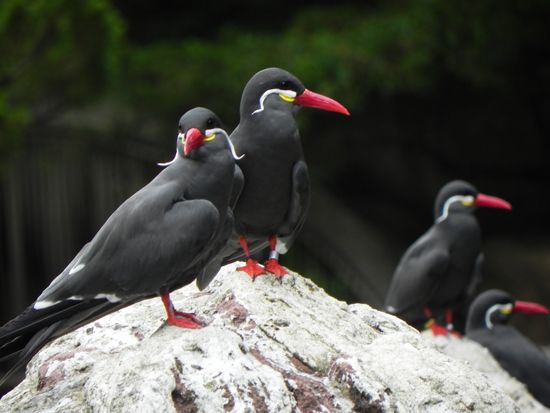
- Specialized Features: While most have forked tails, some, like the noddies, have wedge-shaped or only slightly forked tails. Others, such as the Inca tern, display unique features like white plumes on the side of the head.10
What is the typical diet of terns and how do they hunt for food?
The diet of terns consists primarily of small fish and crustaceans, though they may also consume insects.1013
These birds are highly adapted for feeding on the wing, utilizing several agile hunting techniques to secure their prey:
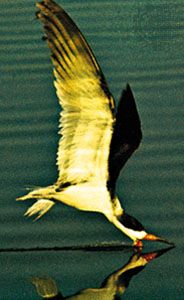
- Plunging: Terns often hover over the water before diving through the air to plunge into the surface to capture fish or crustaceans.1013
- Swooping: They may swoop low over the water to snatch prey directly from the surface while in flight.13
- Hawking: When foraging over land, they engage in hawking, which involves catching insects while flying.1013
Because they rely on these active, flight-based methods, terns spend a significant portion of their time on the wing, both during migration and while foraging in their breeding or wintering grounds.13
Sources
- Charadriiform - Gulls (suborder Lari) — Encyclopædia Britannica
- Charadriiform - Shorebirds (suborder Charadrii) — Encyclopædia Britannica
- Pelecaniform - Nests, eggs, and young — Encyclopædia Britannica
- Bird - Nesting — Encyclopædia Britannica
- mammal - Estrus and other cycles — Encyclopædia Britannica
- Reproductive behaviour - Mammals — Encyclopædia Britannica
- Pelecaniform - Courtship behaviour — Encyclopædia Britannica
- Arctic tern — Encyclopædia Britannica
- Migration - In coastal and pelagic regions — Encyclopædia Britannica
- Tern — Encyclopædia Britannica
- common tern — Merriam-Webster
- tern — Merriam-Webster
- Charadriiform - Locomotion and feeding behaviour — Encyclopædia Britannica
Published on · 3 min read