Spotted Owl
The spotted owl (Strix occidentalis) is a nonmigratory, medium-sized owl native to North America, ranging from British Columbia to central Mexico. These…
What is Spotted owl?
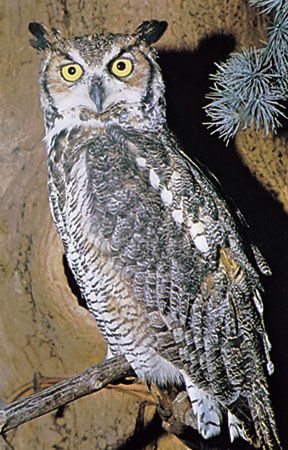
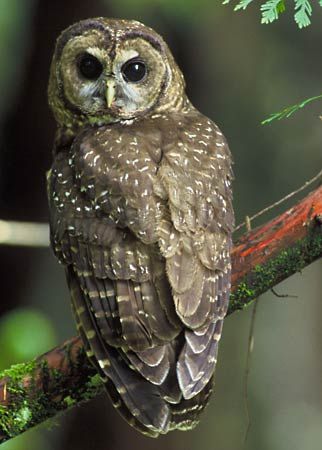
The spotted owl (Strix occidentalis) is a nonmigratory, medium-sized owl native to North America, ranging from British Columbia to central Mexico. These birds are recognized by their mottled chocolate-brown feathers with white and tan patches, large dark eyes, and an X-shaped pattern of light feathers on their facial disks.12
They are primarily nocturnal hunters that inhabit old-growth conifer or pine-oak forests, where they nest in tree hollows or abandoned nests. The species is divided into three subspecies: the northern, California, and Mexican spotted owls.2
Currently listed as near threatened by the IUCN, the species faces significant population declines due to habitat loss from logging and competition with barred owls. In the United States, all three subspecies are protected under the Endangered Species Act. The northern spotted owl is particularly well-known as an indicator species in long-standing environmental and political debates regarding forest management in the Pacific Northwest.23
What is an indicator species and why is the spotted owl one?
An indicator species is an organism, such as a plant or microorganism, that serves as a measure of the environmental conditions within a specific locale. By observing the presence or health of these species, scientists can infer the overall state of an ecosystem, as their sensitivity to environmental changes provides a reliable gauge of habitat quality.4
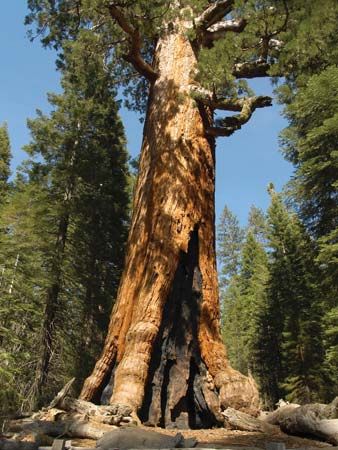
The northern spotted owl is used by ecologists as an indicator species to monitor the health of old-growth forests. These forests are dense, climax communities that can take at least 150 years to fully develop. Because the northern spotted owl relies heavily on these specific, mature forest structures for nesting and survival, its population trends serve as a proxy for the integrity and stability of the old-growth ecosystem itself.2
When these owl populations decline, it often signals significant degradation of the forest habitat, typically caused by factors such as logging or environmental stressors. Consequently, the owl has become a central figure in long-standing debates regarding forest management and conservation policy.2
How do barred owls compete with spotted owls for resources?
Barred owls (Strix varia) compete with spotted owls (Strix occidentalis) primarily by vying for the same essential resources: food and living space.6
Because both species are members of the genus Strix and share similar ecological requirements, the expansion of the barred owl into the northern habitat of the spotted owl has created significant pressure on the latter. Barred owls are highly adaptable and have successfully encroached upon areas traditionally occupied by spotted owls, effectively driving them out of large portions of their range.627
This competition is a major factor contributing to the decline of spotted owl populations, which are already struggling due to the loss of old-growth forest habitats. The presence of the more aggressive or adaptable barred owl forces spotted owls to compete for the limited nesting sites and prey—such as small mammals and rodents—that are critical for their survival.637
What are the characteristics of old-growth forests?
Old-growth forests, often referred to as primary forests, are climax communities in the late stages of ecological succession that have remained largely undisturbed by human activity for centuries. These ecosystems are defined by several key structural characteristics:89
- Complex Stand Structure: Unlike younger forests, old-growth areas contain trees of varying ages, sizes, and shapes, rather than a uniform stand.9
- Multilayered Canopy: The presence of mature, long-lived trees creates multiple canopy layers, which influence the amount of light reaching the forest floor.89
- Dead and Dying Wood: A hallmark of these forests is the abundance of snags (standing dead trees) and woody debris on the forest floor, which provide essential habitats for a wide variety of organisms, including fungi, bacteria, insects, and amphibians.89
- Biodiversity and Resilience: Because they have been free from significant disturbance, these forests support complex interactions between diverse species and exhibit high levels of biodiversity.9
- Ecosystem Services: Old-growth forests are vital for sequestering carbon, filtering water, and mitigating the impacts of natural events like fires and floods.9
Sources
- spotted owl — Merriam-Webster
- Spotted owl — Encyclopædia Britannica
- Spotted owl: Top Questions — Encyclopædia Britannica
- indicator species — Encyclopædia Britannica
- chemical indicator — Encyclopædia Britannica
- Barred owl — Encyclopædia Britannica
- Wood owl — Encyclopædia Britannica
- old-growth — Merriam-Webster
- Old-growth forest — Encyclopædia Britannica
- Forest — Encyclopædia Britannica
Published on · 3 min read