Lugworm
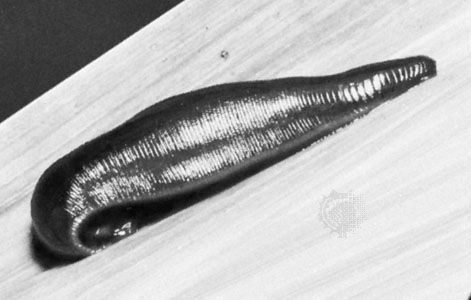
A lugworm (genus Arenicola) is a large marine worm belonging to the class Polychaeta within the phylum Annelida.
What is a lugworm and which family does it belong to?
A lugworm (genus Arenicola) is a large marine worm belonging to the class Polychaeta within the phylum Annelida.12
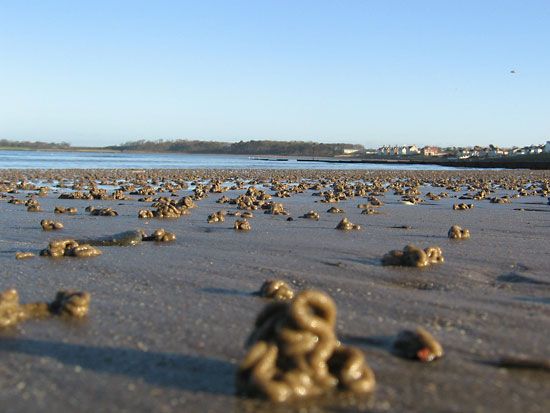
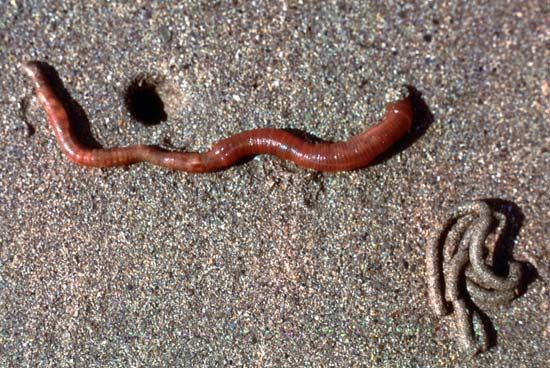
These segmented worms typically burrow deep into sandy sea bottoms or intertidal areas, sometimes reaching depths of up to 60 cm (2 feet). Physically, they are characterized by a dark red head, a thicker middle section featuring bristles and approximately 12 pairs of feathery gills, and a thinner, yellowish-red tail. Lugworms are hermaphroditic and feed by ingesting sand to extract decayed organic matter, often leaving behind coiled casts of excrement at the surface during low tide. Due to their size and availability, they are frequently utilized by fishermen as bait.12
What role do lugworms play in their marine ecosystem?
Lugworms play a vital role in marine ecosystems by acting as biological engineers within sandy sea bottoms and intertidal zones. By burrowing as deep as 60 cm (2 feet) into the sediment, they facilitate the movement of oxygen and nutrients through the substrate, which helps maintain the health of the seafloor environment.1
As they feed, lugworms ingest large quantities of sand to extract decayed organic matter. This process of sediment processing and the subsequent deposition of coiled fecal casts on the surface at low tide contribute to the turnover and aeration of the sediment, which is essential for supporting other marine life that inhabit these coastal areas.1
How do lugworms reproduce and what is their life cycle like?
Lugworms (genus Arenicola) are hermaphroditic, meaning that functional reproductive organs for both sexes are present within a single individual. Despite this, they do not typically self-fertilize; instead, the eggs of one individual are fertilized by the sperm of another.1
While many other members of the class Polychaeta engage in mass spawning events involving specialized reproductive forms known as epitokes, the specific life cycle and mating behaviors of the lugworm differ from these swarming species. Because they spend much of their lives in deep burrows, their reproductive process relies on the exchange of gametes between individuals to ensure cross-fertilization. Detailed information regarding their larval development and specific life stages beyond these reproductive basics is not provided in the current knowledge base.13
What are some common species of lugworms and where are they found?
Common species of lugworms, which belong to the genus Arenicola, are found in sandy sea bottoms and intertidal areas across various coastal regions. Two notable species include:1
- Arenicola marina: This species is commonly found along the coasts of Europe and can reach lengths of approximately 23 cm (9 inches).1
- Arenicola cristata: This species inhabits the coasts of North America and typically ranges in length from 7.5 to 30 cm.1
These marine polychaete worms are well-adapted to their environment, utilizing their burrowing behavior to thrive in sandy substrates.12
Sources
- lugworm — Encyclopædia Britannica
- lugworm — Merriam-Webster
- Reproductive behaviour - Segmented worms — Encyclopædia Britannica
- Arenicola — Merriam-Webster
Published on · 2 min read