Lupine
Lupines, members of the Fabaceae family, have long been valued for their ecological and aesthetic contributions. Contrary to the historical misconception…

What are the traditional and modern uses of lupine plants?
Lupines, members of the Fabaceae family, have long been valued for their ecological and aesthetic contributions. Contrary to the historical misconception that they deplete soil minerals—a belief that inspired their name, derived from the Latin for “wolf”—these plants are actually beneficial for soil health.1
Agricultural and Ecological Uses
Lupines are widely utilized in modern agriculture for their ability to perform nitrogen fixation, a process that converts atmospheric nitrogen into a form that enriches the soil for other plants. Because of this, they are frequently grown as:1
- Cover crops: Used to improve soil fertility and structure.1
- Forage crops: Certain species, such as the white lupine (L. albus) and various blue lupines, are cultivated to provide nutrient-rich feed for livestock.12
Ornamental Uses
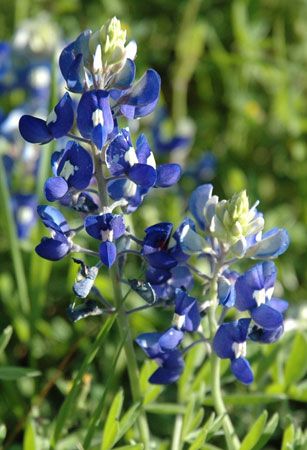
Many lupine species are prized as ornamentals due to their striking, upright flower spikes. Through hybridization, horticulturists have developed numerous varieties for gardens, including the popular Texas bluebonnet and the widely recognized Russell hybrids.1
How do lupines contribute to soil health and ecology?
Lupines, which belong to the Fabaceae family, play a vital role in maintaining soil health and supporting ecosystems. Contrary to the historical belief that they deplete soil minerals—a misconception that led to their name, derived from the Latin word for “wolf”—lupines actually enhance soil fertility through a process known as nitrogen fixation.3
Through a symbiotic relationship with Rhizobium bacteria housed in their root nodules, lupines convert atmospheric nitrogen into compounds like nitrates or ammonia. These compounds are essential for plant metabolism and become available to other plants when the lupine’s roots and tissues decay, effectively enriching the soil.1
Because of this ability, lupines are highly valued in agriculture and ecology for several purposes:
- Cover crops: They are planted to improve soil structure and fertility.3
- Erosion control: As cover crops, they help prevent or reduce soil erosion.1
- Forage: Species such as the white lupine (L. albus) are cultivated to provide nutrient-rich feed for livestock.3

How many species of lupine exist, and what are some common varieties?
The genus Lupinus, which belongs to the Fabaceae family, comprises approximately 200 species of herbaceous and partly woody plants. These plants are widely distributed across the Mediterranean and are particularly abundant on the prairies of western North America.1
Several common varieties and species include:
- Texas bluebonnet (L. texensis): A popular ornamental known for its bountiful blue flower spikes that cover large areas of Texas.14
- White lupine (L. albus): Also known as wolf bean, this species is primarily cultivated as a cover crop and for livestock forage.1
- Sundial lupine (L. perennis): Found in the dry, open woods and fields of eastern North America.1
- Bigleaf lupine (L. polyphyllus): Native to the Pacific Northwest, this species is the parent of many ornamental Russell hybrids.1
- Spreading lupine (L. diffusus) and lady lupine (L. villosus): Both are distributed throughout the southern United States.1
Where do lupine plants typically grow, and what are their preferred habitats?
Lupines are widely distributed across the Mediterranean region, but they are particularly numerous on the prairies of western North America.1
Regarding their preferred habitats, these plants exhibit a range of environmental adaptations:
- Open Landscapes: Many species thrive in open areas, such as the expansive prairies of the western United States and the fields of eastern North America.1
- Wooded Areas: Some varieties, such as the sundial lupine (L. perennis), are commonly found in dry, open woods.1
- Regional Diversity: Specific species are adapted to distinct climates, ranging from the southern United States to the Pacific Northwest.1
- Adaptability: While many are native to specific regions, some species, such as the bigleaf lupine (L. polyphyllus), have proven highly adaptable, becoming invasive species in parts of Europe and New Zealand after escaping cultivation. of Europe and New Zealand after escaping cultivation.1
Sources
- lupine — Encyclopædia Britannica
- blue lupine — Merriam-Webster
- Fabaceae - Nitrogen fixation — Encyclopædia Britannica
- bluebonnet — Encyclopædia Britannica
Published on · 3 min read