Bluebonnet
A bluebonnet refers to any of several North American lupines belonging to the pea family (Fabaceae). The most iconic are the Texas bluebonnets, specifically…
What is bluebonnet?
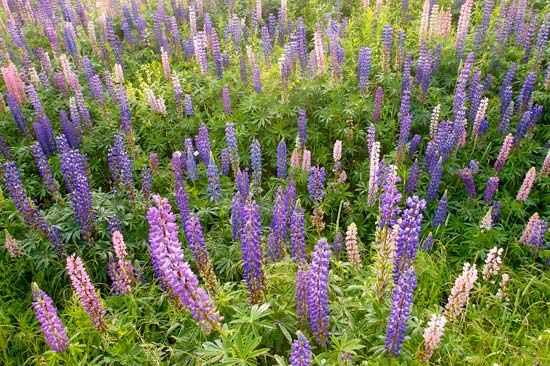
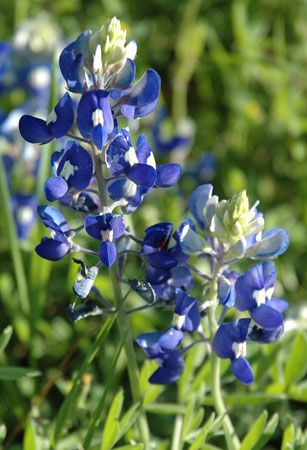
A bluebonnet refers to any of several North American lupines belonging to the pea family (Fabaceae). The most iconic are the Texas bluebonnets, specifically Lupinus texensis and L. subcarnosus, which are celebrated as the state flower of Texas.123
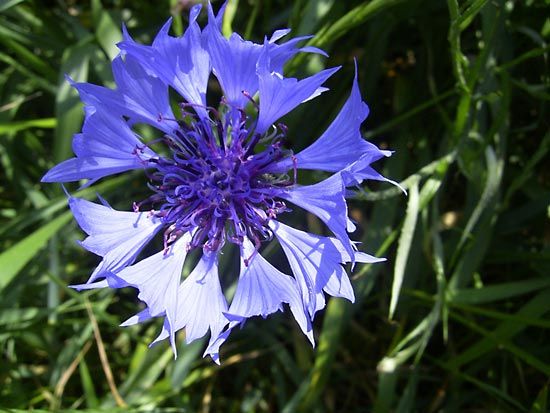
These plants are typically herbaceous annuals that grow about 0.3 meters tall, featuring palmately compound leaves and spikes of purplish-blue flowers often marked with white or yellow centers. Their common name stems from the resemblance of their petals to the sunbonnets worn by American pioneer women. While the term is most strongly associated with these lupines, it is occasionally used to describe other blue-flowered plants, such as the cornflower or the blue scabious.1
How do lupines help improve soil quality?
Lupines, which belong to the pea family (Fabaceae), are highly beneficial for soil health primarily due to their ability to perform nitrogen fixation.43
Contrary to the historical misconception that they deplete soil minerals, lupines actively improve fertility through a symbiotic relationship with Rhizobium bacteria. This process works as follows:35
- Symbiosis: The bacteria inhabit root nodules on the lupine, where they convert atmospheric nitrogen—which is otherwise unusable by most plants—into ammonia and nitrates.45
- Nutrient Enrichment: The host plant utilizes these compounds for its own growth. When the plant dies or its roots decay, these nitrogen-rich products are released into the soil, making them available to other plants.4
- Soil Conservation: Beyond nitrogen enrichment, lupines are often used as cover crops to prevent soil erosion. They can also be plowed under as green manure to further enhance soil quality.43
Because of these properties, certain species are specifically cultivated for soil-building purposes and forage.36
What are some other state flowers in the United States?
In the United States, a state flower is a flowering plant selected by a state’s legislature to serve as an official emblem. These symbols often reflect the unique botanical heritage of each region.7
Here are several examples of official state flowers across the country:
State
State Flower
Alaska
Alpine forget-me-not
California
California poppy
Colorado
White-and-lavender columbine
Hawaii
Yellow hibiscus
Kansas
Common sunflower
Maine
White pine cone and tassel
New York
Rose
North Dakota
Wild prairie rose
Texas
Bluebonnet
Utah
Sego lily
Many states have also designated specific wildflowers to represent them, particularly when the primary state flower is a cultivated or nonnative variety.8
What is the difference between an annual and a perennial plant?
The primary difference between annual and perennial plants lies in the duration of their life cycles.
- Annuals: These plants complete their entire life cycle—from germination to seed production—within a single growing season. Once they produce seeds, the plant dies, and the seed is the only part that survives to the next season. Common examples include many cereal grains, peas, and garden flowers like marigolds.1112
- Perennials: These plants persist for several years. They typically regrow and rebloom annually, often surviving cold climates through specialized underground structures like bulbs, rhizomes, or tubers. This category includes all trees and shrubs, as well as herbaceous plants like chrysanthemums and asparagus.1113
While some plants are technically biennials or tender perennials, they are often managed as annuals in agricultural settings if they are harvested within a single season.12
Sources
- bluebonnet — Encyclopædia Britannica
- Texas: Country Facts — Encyclopædia Britannica
- lupine — Encyclopædia Britannica
- Fabaceae - Nitrogen fixation — Encyclopædia Britannica
- blue lupine — Merriam-Webster
- Nitrogen-fixing bacteria — Encyclopædia Britannica
- state flower — Merriam-Webster
- New York: Country Facts — Encyclopædia Britannica
- North Dakota: Country Facts — Encyclopædia Britannica
- United States - State nicknames and symbols — Encyclopædia Britannica
- Is That Plant 'Perennial' or 'Annual'? — Merriam-Webster
- Perennial — Encyclopædia Britannica
- Annual — Encyclopædia Britannica
Published on · 2 min read