Macrofauna
In soil science, macrofauna refers to animals that are at least one centimeter long but smaller than an earthworm. This diverse group includes potworms…
What is macrofauna?
In soil science, macrofauna refers to animals that are at least one centimeter long but smaller than an earthworm. This diverse group includes potworms, myriapods, centipedes, millipedes, slugs, snails, spiders, and various beetle and fly larvae.12
These organisms play a vital role in maintaining soil health. Many species burrow into the ground, which improves soil aeration and drainage while facilitating the movement of organic material into the soil. While some macrofauna, such as centipedes and spiders, are predatory, most consume decaying plant material and organic debris, contributing to the decomposition process.12
The term is one of several size-based classifications used to categorize soil organisms, which also include microfauna, mesofauna, and the larger megafauna. Because they are essential to the cycle of life, death, and decay that rejuvenates the environment, their presence is often an indicator of fertile soil.2
How do earthworms differ from macrofauna in their impact on soil?
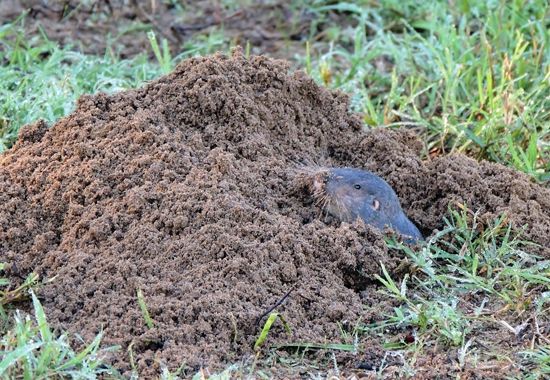
In soil science, earthworms are distinct from macrofauna primarily due to their size and their classification as soil megafauna. While macrofauna are defined as animals at least one centimeter long but smaller than an earthworm, earthworms represent the largest organisms in the soil hierarchy, often categorized alongside small vertebrates like moles and rabbits.526
Their impacts on soil also differ in scale and function:
- Soil Turnover: Earthworms are considered the principal agents of soil turnover. They ingest vast quantities of soil and organic matter, passing them through their guts to create a matrix that supports plant life. It is estimated that earthworms turn over the equivalent of the top inch of the planet’s soil every decade.52
- Vertical Distribution: A unique contribution of earthworms is their ability to move organic material vertically, transporting nutrients from the surface down into the subsoil.5
- Macrofauna Contributions: In contrast, macrofauna—such as centipedes, millipedes, and snails—primarily aid in soil health by burrowing, which improves aeration and drainage, and by fragmenting organic litter into a mulch that facilitates further decomposition by smaller organisms.56
While both groups are essential for soil fertility, earthworms function as major ecosystem engineers that physically restructure the soil profile on a global scale.152
What are the main differences between microfauna, mesofauna, and macrofauna?
Soil organisms are categorized into five size-based groups to help understand their roles in maintaining soil fertility, structure, and nutrient cycling. The distinctions between microfauna, mesofauna, and macrofauna are primarily based on their physical dimensions and ecological functions.7
Classification of Soil Fauna
- Microfauna: These are the smallest of the three groups, typically measuring less than 100 microns in length. They often inhabit water films or pore spaces within the soil and leaf litter. Common examples include single-celled protozoans, nematodes, rotifers, and tardigrades. They generally feed on other microorganisms.27
- Mesofauna: This group is somewhat larger and more heterogeneous than microfauna. They occupy an intermediate size range and include creatures such as mites, springtails, proturans, and pauropods. Their diet is varied, consisting of microorganisms, decaying organic matter, and living plant tissues.7
- Macrofauna: These organisms are the most diverse of the three. This group includes potworms, slugs, snails, millipedes, centipedes, beetles, and various larvae. They play a significant role in fragmenting organic litter and improving soil aeration and drainage through their burrowing activities.7
While these groups differ in size, they collectively act as essential catalysts in natural cycles—such as the carbon, nitrogen, and sulfur cycles—by breaking down complex organic materials into nutrients that plants can absorb.7
How do soil organisms contribute to the nitrogen and carbon cycles?
Soil organisms act as essential catalysts in the carbon cycle and nitrogen cycle, breaking down complex organic matter into forms that can be reused by living plants.28
The Carbon Cycle
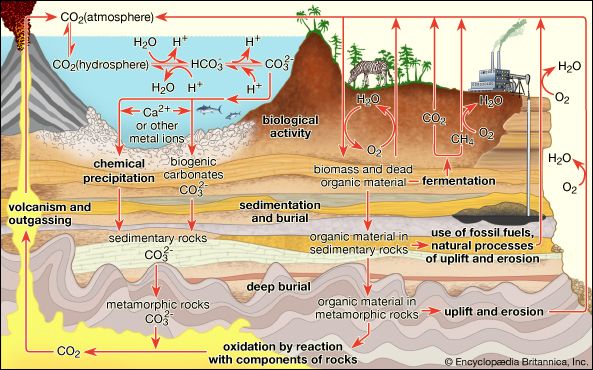
The carbon cycle is driven by the conversion of organic matter into gases and biomass. Soil organisms contribute to this process through several key mechanisms:
- Decomposition: Aerobic microorganisms convert dead biomass into carbon dioxide (CO2) through soil respiration, while anaerobic microorganisms produce organic acids, alcohols, or methane under oxygen-depleted conditions.9
- Storage: Soils act as significant carbon reservoirs, containing approximately three times as much carbon as land vegetation in the form of humus and other organic matter.8
- Recycling: The CO2 released by soil organisms is eventually recaptured by plants and photosynthetic microorganisms to create new biomass, restarting the cycle.98
The Nitrogen Cycle
Soil organisms facilitate the transformation of nitrogen into plant-usable forms:
- Mineralization: When plants and animals die, soil organisms break down complex proteins and nucleic acids into ammonium ions (NH4+).29
- Nitrification: Specific bacteria, such as Nitrosomonas and Nitrobacter, convert ammonium into nitrite and then into nitrate (NO3−), a highly mobile form of nitrogen readily absorbed by plant roots.9
- Nitrogen Fixation: Certain organisms, including Rhizobium bacteria in legume root nodules, cyanobacteria, and Azotobacter, convert atmospheric nitrogen into biomass nitrogen, effectively introducing new nitrogen into the soil ecosystem.29
Sources
- macrofauna — Encyclopædia Britannica
- soil organism — Encyclopædia Britannica
- mesofauna — Merriam-Webster
- macroinvertebrate — Encyclopædia Britannica
- earthworm — Encyclopædia Britannica
- soil megafauna — Encyclopædia Britannica
- microfauna — Encyclopædia Britannica
- soil - Biological phenomena — Encyclopædia Britannica
- soil - Carbon and nitrogen cycles — Encyclopædia Britannica
Published on · 4 min read