Magnolia
Magnolia plants, belonging to the genus Magnolia within the family Magnoliaceae, are characterized by their status as primitive flowering plants. Their…
What are the main characteristics of magnolia plants?
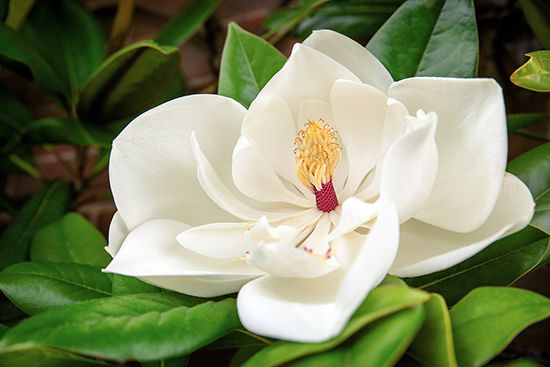
Magnolia plants, belonging to the genus Magnolia within the family Magnoliaceae, are characterized by their status as primitive flowering plants. Their evolutionary significance is marked by simple vessels in their wood and an elongated, conelike floral axis with spirally arranged parts.12
Key characteristics include:
- Growth Habit: They exist as evergreen or deciduous trees and shrubs with alternate, smooth-margined leaves.2
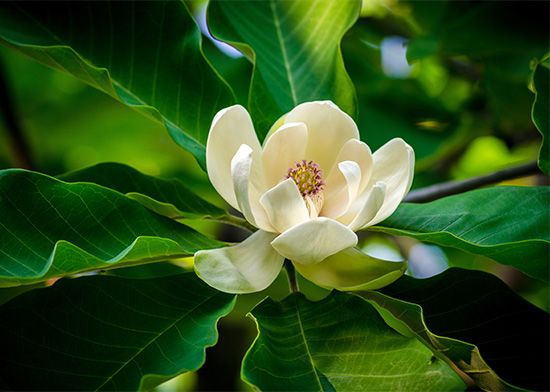
- Flowers: Typically cuplike and fragrant, flowers are usually borne at branch tips. They feature three sepals and six to 12 petals arranged in multiple series, along with numerous spirally arranged stamens.12
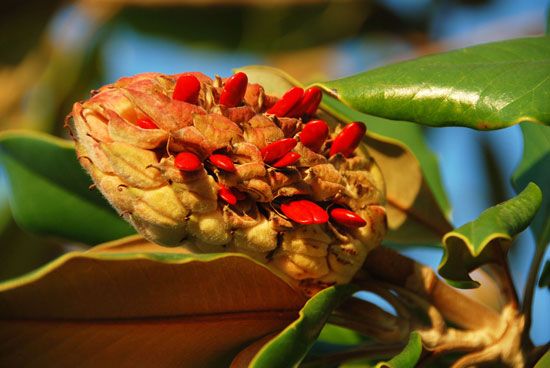
- Fruit and Seeds: The reproductive structures form an aggregate of follicles that resemble a cone. These fruits often open to reveal reddish seeds that hang pendulously by slender threads.21
Magnolias are widely valued as ornamental plants for their large, showy blooms, which appear in various colors including white, yellow, pink, and purple.2
How many species of magnolia exist, and where are they native to?
The genus Magnolia consists of approximately 225 species of trees and shrubs belonging to the Magnoliaceae family.1
These plants are native to a variety of regions, primarily across:
- North and South America: Including the southeastern United States, Mexico, Central America, and the Caribbean.21
- Asia: Specifically the Himalayas, East Asia, and Southeast Asia.21
While the broader Magnoliaceae family was once widely distributed throughout Eurasia and North America according to the fossil record, modern species are concentrated in these specific areas, with only a few representatives found in the Southern Hemisphere.2
What are the most popular magnolia species for landscaping and gardening?
Many magnolia species are highly valued in landscaping and gardening for their fragrant, showy flowers and attractive foliage. Popular choices include both native North American species and various Asian hybrids.
North American Species
- Southern magnolia (Magnolia grandiflora): Perhaps the most popular garden variety, this evergreen tree is prized for its large, creamy-white flowers and thick, leathery, dark green leaves.24
- Sweet bay (M. virginiana): A smaller, elegant tree known for its leathery leaves.2
- Cucumber tree (M. acuminata): Named for its unique, cucumber-shaped fruits, this hardy tree can grow quite large.24
- Big-leaf magnolia (M. macrophylla): Notable for its impressive size and blooms with purple bases.2
Asian Species and Hybrids
- Saucer magnolia (M. ×soulangeana): A widely cultivated, hardy hybrid that produces stunning white, pink, or purple flowers in early spring before its leaves emerge.24
- Star magnolia (M. stellata): A smaller tree or shrub recognized for its distinctive, spidery flowers.2
- Lily magnolia (M. liliiflora): A shrubby tree featuring purple blossoms with white interiors.2
Why are magnolias considered one of the most primitive flowering plants?
Magnolias are considered one of the most primitive groups of flowering plants because they retain several ancestral structural features that reflect early stages in the evolution of angiosperms.516
Key characteristics that mark the Magnoliaceae family and the order Magnoliales as evolutionarily basal include:
- Floral Structure: Unlike more advanced plants with fixed, differentiated parts, magnolias possess an elongated floral axis with numerous stamens and carpels arranged in a spiral pattern.36
- Reproductive Organs: Primitive members of the magnoliid clade exhibit leaflike stamens and carpels that are less specialized than the filaments, anthers, and distinct styles found in modern groups.56
- Pollen and Seeds: They typically produce monosulcate pollen (grains with a single aperture), a trait common in early fossil records. Additionally, their seeds contain a relatively undifferentiated, small embryo surrounded by copious, food-rich endosperm.561
- Pollination: Magnolias are primarily adapted for pollination by beetles, an insect group that was well-established before the rise of more specialized pollinators like bees and butterflies.5
- Wood Anatomy: The presence of simple vessels (water-conducting cells) in their wood is also considered a primitive trait on the evolutionary scale.3
While molecular evidence has identified other groups as even more basal, magnolias remain a vital link to understanding the early history of flowering plants.6
Sources
- Magnoliaceae — Encyclopædia Britannica
- magnolia — Encyclopædia Britannica
- Magnoliales — Encyclopædia Britannica
- Magnoliales - Magnoliaceae — Encyclopædia Britannica
- magnoliid clade - Reproductive structures — Encyclopædia Britannica
- magnoliid clade - Reproduction and life cycles — Encyclopædia Britannica
- Magnoliales - Evolution — Encyclopædia Britannica
Published on · 3 min read