Karnataka Coast
The Karnataka Coast, a narrow strip of lowlands in southwestern India, is drained by several major rivers that originate in the Western Ghats and flow…
What are the major rivers that flow through the Karnataka Coast lowlands?
The Karnataka Coast, a narrow strip of lowlands in southwestern India, is drained by several major rivers that originate in the Western Ghats and flow westward toward the Arabian Sea. These rivers have carved out narrow valleys characterized by steep gradients.1
The primary rivers draining this region include:
These watercourses are essential to the geography of the coastal plain, which features a mix of sandy beaches, marshes, and estuaries where mangroves thrive. While the Sharavati River is particularly notable for being the source of the famous Jog Falls as it descends from the Western Ghats, it is just one of the several swift streams that traverse the coastal lowlands.12
What is the geographical location and extent of the Karnataka Coast in India?
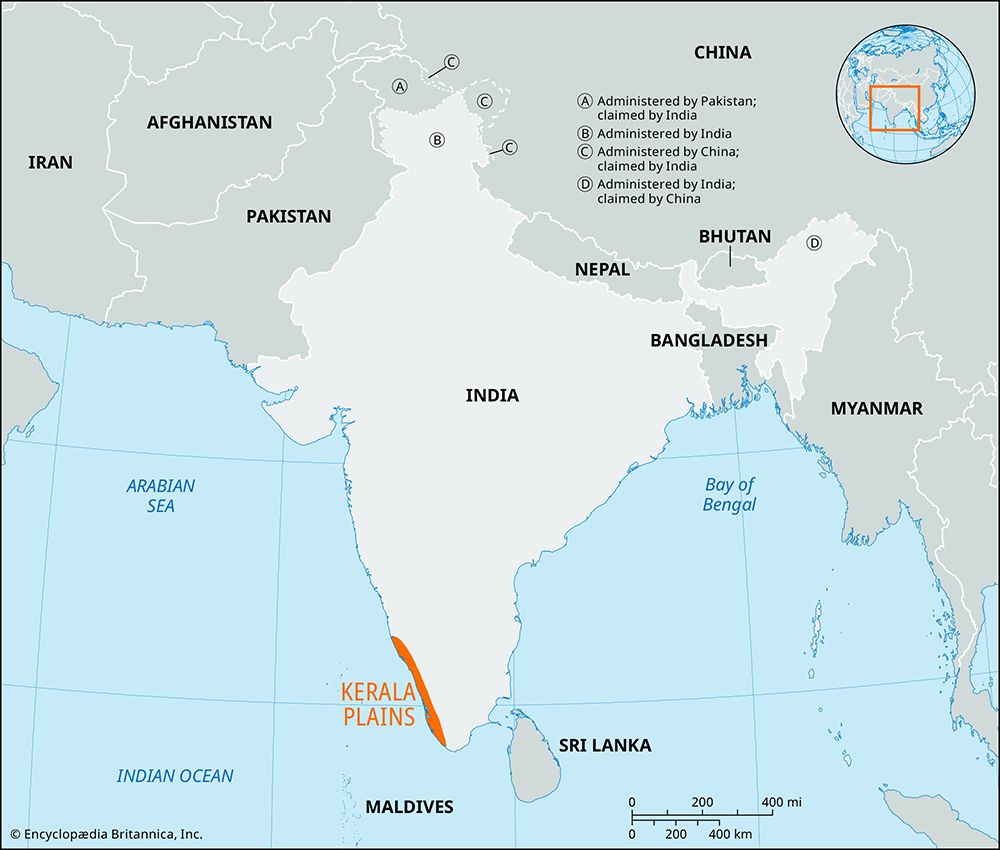
The Karnataka Coast consists of a narrow strip of coastal lowlands located in the state of Karnataka in southwestern India. It covers an area of approximately 4,000 square miles (10,000 square km) and serves as a transitional zone between the states of Maharashtra to the north and Kerala to the south.1
Geographical Boundaries and Extent
The region is defined by the following boundaries:
- North: Konkan coast1
- East: The Western Ghats1
- South: The Kerala Plains1
- West: The Arabian Sea1
The coast stretches approximately 140 miles (225 km) from north to south. Its width varies, reaching a maximum of about 40 miles (64 km) in the southern portion of the region.1
Terrain and Landscape
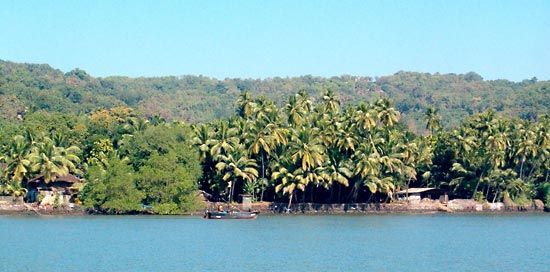
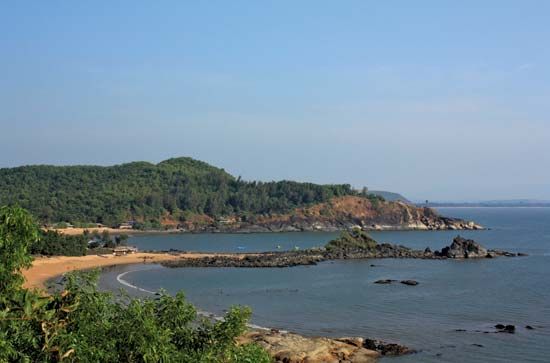
The landscape slopes from east to west, transitioning from isolated hills—ranging from 300 to 1,000 feet (90 to 300 meters) in height—to a narrow belt of coastal sand dunes, marshes, and valley plains. The coastline itself is characterized by sandy beaches and occasional rocky cliffs that overhang the sea.1
How has the Karnataka Coast influenced the region’s climate and vegetation?
The Karnataka Coast plays a pivotal role in shaping the region’s climate and vegetation, primarily through its interaction with the Western Ghats and the monsoon system.3
Climate Influence
The region experiences a subtropical climate heavily influenced by the southwest monsoon. As moisture-laden winds from the Arabian Sea encounter the steep slopes of the Western Ghats, they are forced upward, resulting in significant orographic rainfall. Consequently, the coastal plain is one of the wettest areas in Karnataka, receiving nearly 160 inches (4,000 mm) of annual precipitation, primarily between June and September. This high humidity and heavy rainfall create a distinct tropical environment that contrasts with the drier conditions found in the inland Maidan region.31
Vegetation Patterns
The coastal environment dictates a specific distribution of flora:
- Coastal Lowlands: The saline, sandy beaches and marshy areas support specialized vegetation, including coconut palms, casuarina (beefwood) trees, and mangroves in the estuaries.57
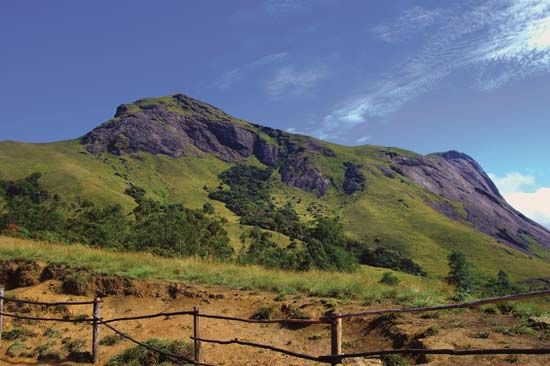
- Inland Slopes: As the terrain rises toward the Western Ghats, the vegetation transitions into monsoon forests, while the hills themselves feature bamboo and scrub vegetation.57
What are the major economic activities along the Karnataka Coast?
Economic activities along the Karnataka Coast are diverse, driven by the region’s geography, maritime access, and agricultural potential.
Agriculture and Plantations
The coastal plain is intensively cultivated. In the southern regions, coconut palms and beefwood trees are prominent, while the northern areas around Udipi focus on rice and pulses (legumes). Beyond these, the broader region supports cash crops such as cashews, betel (areca) nut, and sugarcane.91
Maritime Trade and Industry
Mangaluru serves as the primary industrial and commercial hub, functioning as a major coffee port for India. Both Mangaluru and Karwar have been developed into deepwater ports, specifically to facilitate the export of mineral ores. While smaller historical ports like Kumta and Honavar have declined due to the expansion of interior railways, the coast remains a vital link for trade.910
Fisheries
Fishing is a significant economic activity, with the Arabian Sea providing rich marine resources. Commercial catches include sardine, mackerel, and shrimp, the latter of which has become a key export.1112
Sources
- Karnataka Coast — Encyclopædia Britannica
- Karnataka - Relief, drainage, and soils — Encyclopædia Britannica
- Karnataka - Climate — Encyclopædia Britannica
- Ghats — Encyclopædia Britannica
- Western Ghats — Encyclopædia Britannica
- Konkan — Encyclopædia Britannica
- Karnataka - Plant and animal life — Encyclopædia Britannica
- climate of India - The monsoons — Encyclopædia Britannica
- Karnataka - Agriculture and forestry — Encyclopædia Britannica
- India - Fishing — Encyclopædia Britannica
- Karnataka - Transportation — Encyclopædia Britannica
- Indian Ocean - Fisheries — Encyclopædia Britannica
Published on · 3 min read