Mamey Apple
The mamey apple (Mammea americana) is a large tree and its edible fruit, belonging to the family Calophyllaceae and native to the West Indies and tropical…
What is Mamey apple?
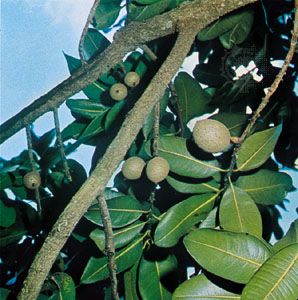
The mamey apple (Mammea americana) is a large tree and its edible fruit, belonging to the family Calophyllaceae and native to the West Indies and tropical America.1
The fruit, which measures 7–15 cm (3–6 inches) in diameter, features a yellow or russet-coloured bitter rind that encloses sweet, aromatic flesh and one to four large, rough seeds. While the fruit is commonly eaten raw or used in preserves, the tree has other traditional uses: an aromatic liqueur is distilled from its white, sweet-scented flowers, and its resinous components have been used as an antiworming agent or to treat skin-infesting chigoe fleas.1
It is important to note that the mamey apple is often confused with the sapote, or mamey sapote, which is an entirely unrelated fruit.1
How is the mamey apple different from the mamey sapote?
The mamey apple and the mamey sapote are frequently confused due to their similar names, but they are entirely distinct plants with different botanical classifications and characteristics.
Botanical Differences
- Mamey Apple (Mammea americana): A member of the Calophyllaceae family, this tree is native to the West Indies and tropical America. It features leathery, gland-dotted leaves and produces white, sweet-scented flowers.1
- Mamey Sapote (Pouteria sapota): Also known as red mamey, this fruit belongs to a different botanical family and is not related to the mamey apple, despite sharing the common name.1
Fruit Characteristics
- Mamey Apple: The fruit has a yellow or russet-coloured bitter rind that must be removed to reach the sweet, aromatic flesh inside. It typically contains one to four large, rough seeds.1
- Mamey Sapote: While the mamey apple is often used for preserves or eaten raw, the mamey sapote is a distinct fruit found throughout Latin America with its own unique culinary profile.1
What other tropical fruits are native to the West Indies?
The West Indies and the broader Caribbean region are home to a diverse array of tropical fruits. Many of these species are native to the American tropics, while others were introduced and became well-established in the region over time.
Notable Fruits Native to or Established in the West Indies
- Mamey apple (Mammea americana): A large tree native to the West Indies and tropical America, known for its sweet, aromatic fruit encased in a bitter rind.2
- Soursop (Annona muricata): Likely originating in Brazil or the Antilles, this spiny, heart-shaped fruit is prized for its aromatic, fibrous white flesh used in drinks and desserts.2
- Custard apple (Annona reticulata): Also known as the West Indian bullock’s-heart, this fruit is well-adapted to hot climates and features a sweet, cream-coloured pulp.2
- Biriba (Rollinia mucosa): A large tree native to the West Indies and northern South America that produces delicious, edible fruits.2
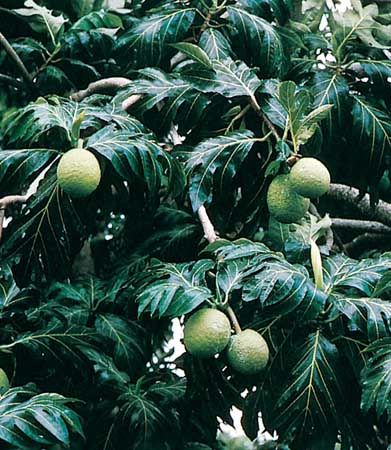
- Breadfruit (Artocarpus altilis): While indigenous to the Malay Archipelago, this tree was introduced to the West Indies in the 18th century and has since become a common dooryard tree throughout the region.3
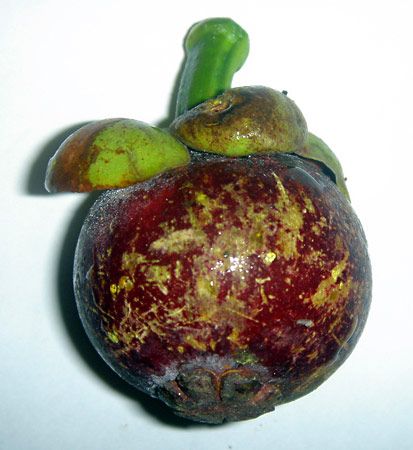
- Mangosteen (Garcinia mangostana): Originally from Southeast Asia, this fruit was introduced to the Western Hemisphere and became established in several West Indian islands, most notably Jamaica.4
How do plants use resin to protect themselves from pests?
Sorry, the Britannica knowledge base does not contain information regarding how plants use resin to protect themselves from pests. The provided search results focus on structural components like lignin, cutin, and suberin, which function as physical barriers against microbes and dehydration rather than resin-based pest defense mechanisms.6
Sources
- Mamey apple — Encyclopædia Britannica
- Magnoliales - Fruit — Encyclopædia Britannica
- mangosteen — Encyclopædia Britannica
- breadfruit — Encyclopædia Britannica
- list of culinary fruits — Encyclopædia Britannica
- Cell wall - Plastics — Encyclopædia Britannica
Published on · 3 min read