Mangosteen
The mangosteen (Garcinia mangostana) is a tropical fruit known for its distinct appearance and highly regarded flavor profile.
What are the unique characteristics of mangosteen fruit in terms of appearance and taste?
The mangosteen (Garcinia mangostana) is a tropical fruit known for its distinct appearance and highly regarded flavor profile.
Appearance
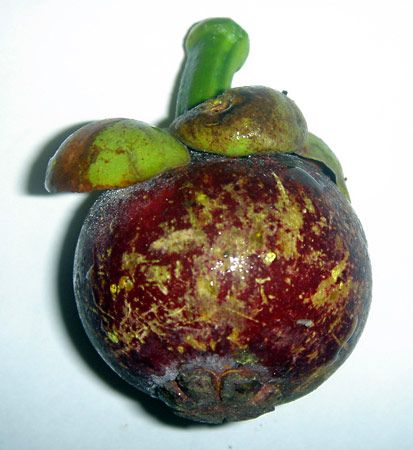
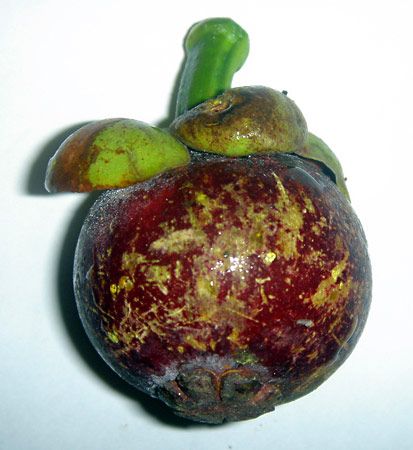
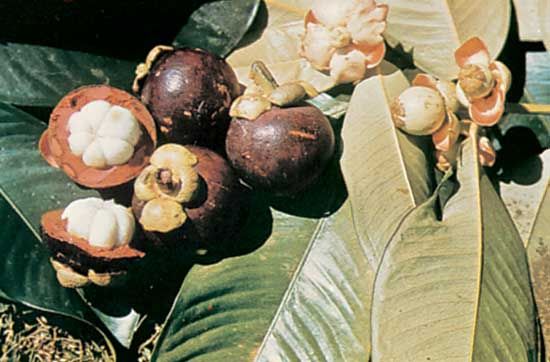
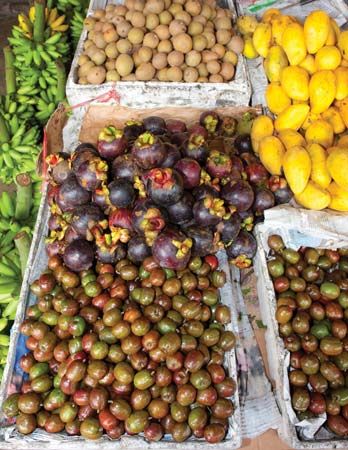
The fruit is roughly the size of a small orange and can be round or flattened at the ends. It features a thick, hard, deep red rind that protects the interior. Inside, the fruit contains snow-white flesh divided into segments, which resemble those of a mandarin orange.1
Taste and Texture
The mangosteen is celebrated for its juicy, delicate texture that is often described as melting in the mouth. Its flavor is characterized by a tart-sweet profile, offering what is considered a perfect balance of acids and sugars. While the rind itself is bitter, the white pulp is tangy and citruslike.12
Because of its unique qualities, the fruit is commonly enjoyed fresh, though it can also be found dried or canned.1
Are there any cultural or historical significances associated with mangosteen in its native regions?
The mangosteen (Garcinia mangostana) has been cultivated in regions such as Java, Sumatra, Indochina, and the southern Philippines since antiquity. Within these native areas, particularly in Indonesia, it is a common dooryard tree.
Regarding its cultural and historical significance, the plant is utilized locally in traditional medicine. Furthermore, it has been promoted as an alternative treatment for cancer, though it is important to note that clinical studies in humans to support these medicinal claims are currently lacking.1
Are there different varieties of mangosteen, and how do they differ?
While the term “mangosteen” specifically refers to the species Garcinia mangostana, it is important to clarify that there are no distinct commercial varieties of this specific fruit. Instead, the name is often used loosely to describe other related species within the Garcinia genus that share the family Clusiaceae.
These related species differ significantly in appearance and flavor:
- Imbe (African mangosteen, G. livingstonei): Produces small, thick-skinned orange fruits with a juicy, acidic, and fragrant pulp.
- Rata (Yellow mangosteen, G. tinctorea): Features a peach-sized yellow fruit with a pointed end and buttery, acid-flavored yellow flesh.
- Bacupari (G. gardneriana): A South American species that produces an edible aril.
- Garlic fruit (Bitter garcinia, G. spicata): Primarily planted as an ornamental in tropical coastal areas.
While these plants are related to the true mangosteen, they are distinct species with their own unique botanical and culinary characteristics.
How is the mangosteen tree cultivated, and what are its growing requirements?
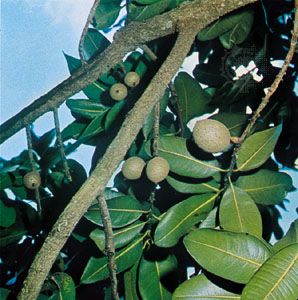
The mangosteen (Garcinia mangostana) is a slow-growing tropical tree that thrives primarily within tropical climates and generally does not prosper outside of them.1
Growing Requirements
- Climate: The tree is highly sensitive to its environment and requires tropical conditions to flourish. While it has been successfully introduced to parts of the Western Hemisphere, such as Jamaica, Guatemala, and southern Florida, it remains largely restricted to these warm regions.1
- Development: The tree is notably slow-growing, reaching heights of up to 9.5 meters (31 feet). A significant challenge in cultivation is the time required for maturity; seedlings typically take 8 to 15 years before they begin to bear fruit.1
- Yield: Production is often cyclical, with trees typically yielding good crops only in alternate years, though a single tree can produce over 1,000 fruits in a productive season.1
General fruit farming practices often involve managing soil through clean cultivation or mulching to balance nutrient availability and water retention.5
Sources
- mangosteen — Encyclopædia Britannica
- 8 Fruits to Try Before You Die — Encyclopædia Britannica
- Mango — Encyclopædia Britannica
- Garcinia — Encyclopædia Britannica
- Fruit farming - Soil management — Encyclopædia Britannica
Published on · 3 min read