Marsh Treader
The marsh treader is a slender insect belonging to the family Hydrometridae, known for its slow, deliberate movement across the surface of ponds and among…
What do marsh treaders eat, and how do they catch their prey?
The marsh treader is a slender insect belonging to the family Hydrometridae, known for its slow, deliberate movement across the surface of ponds and among shore vegetation.1
Regarding their diet, marsh treaders are predators that feed on small crustaceans and various insect larvae. They are particularly noted for consuming mosquito larvae. While the provided information details their habitat and diet, it does not specify the exact mechanical process they use to capture their prey beyond their ability to navigate the water surface and vegetation where these organisms reside.1
What is the average size of a marsh treader?
The average size of a marsh treader is approximately 8 mm (0.3 inch) in length.1
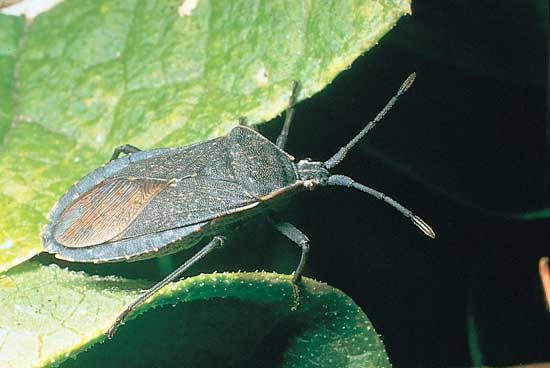
These insects are characterized by their sticklike bodies, long, thin, threadlike legs, and slender heads that are nearly as long as their thorax.1
How are marsh treaders classified within the insect world?
Marsh treaders are classified within the insect world as follows:
As members of the suborder Heteroptera, they are characterized by their piercing-sucking mouthparts and the specific texture and resting position of their forewings. Within the family Hydrometridae, they are recognized as small, slender, long-legged semiaquatic bugs that are closely related to water striders.16
How do marsh treaders move on the water’s surface?
Marsh treaders move across the water’s surface with a slow, deliberate walking gait. As semiaquatic bugs, they are supported entirely by the water’s surface tension, which acts like a stretched elastic membrane to hold their small, lightweight bodies.147
Their movement is facilitated by several physical adaptations:
- Leg Distribution: Their long, thin middle and hind legs spread their weight, creating only a slight indentation in the surface film at each point of contact.4
- Front Legs: The shorter front legs are typically used for resting on the water or for capturing and holding prey.4
- Water Repellency: Their bodies are covered in a fine, dense, water-repellent (hydrofuge) pile that traps a thin layer of air, preventing the insect from becoming wet or sinking.14
Because they have very little bulk to support, they can navigate the surface film effectively while searching for food, such as mosquito larvae, among shore vegetation.14
Sources
- marsh treader — Encyclopædia Britannica
- marsh treader — Merriam-Webster
- Hydrometridae — Merriam-Webster
- heteropteran - Habitats — Encyclopædia Britannica
- heteropteran - Distinguishing taxonomic features — Encyclopædia Britannica
- list of true bugs — Encyclopædia Britannica
- surface tension — Encyclopædia Britannica
Published on · 2 min read