Mason Bee
A mason bee is a member of the genus Osmia, which comprises more than 350 species of solitary bees primarily native to the Northern Hemisphere. They are…
What is a mason bee?
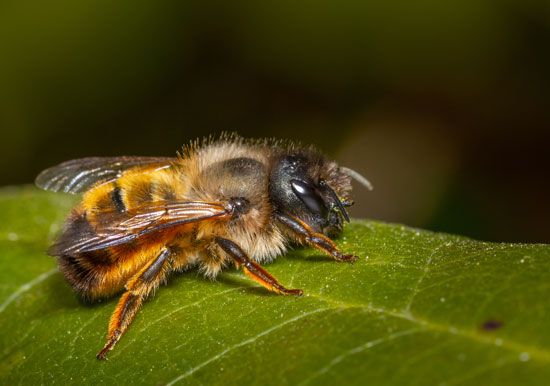
A mason bee is a member of the genus Osmia, which comprises more than 350 species of solitary bees primarily native to the Northern Hemisphere2. They are named for their habit of using mud to construct and seal their nest chambers.12
Unlike honeybees, mason bees are solitary insects that do not form hives or produce honey. They typically nest in existing cavities, such as hollow reeds, small crevices, or human-made “bee hotels,” rather than chewing their own tunnels. These bees are highly efficient native pollinators and are often managed in agriculture to support fruit tree pollination.12
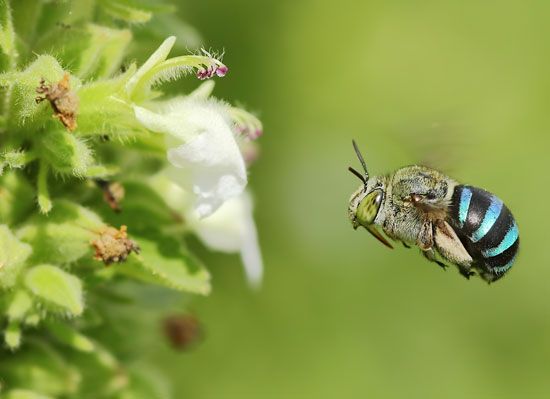
Physically, they range from 9.5 to 16 mm in length and often exhibit metallic green, blue, or black coloration. They are generally gentle and do not sting unless provoked. Unfortunately, many populations are currently in decline due to factors such as habitat loss, pesticide use, and anthropogenic climate change.12
How do mason bees differ from honeybees?
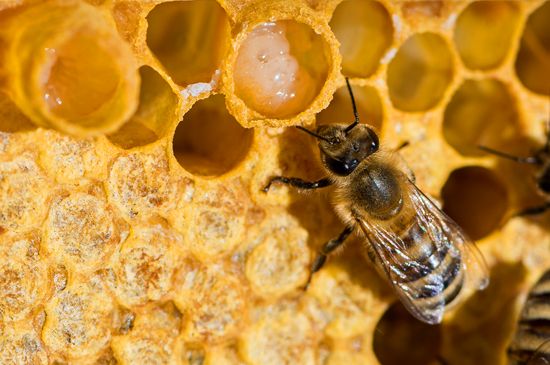
Mason bees and honeybees differ significantly in their social structure, nesting habits, and methods of pollination.
Feature
Mason Bee (
Osmia
)
Honeybee (
Apis mellifera
)
Social Structure
Solitary; they do not form hives or colonies.
Highly social; they live in organized, perennial colonies.
Nesting
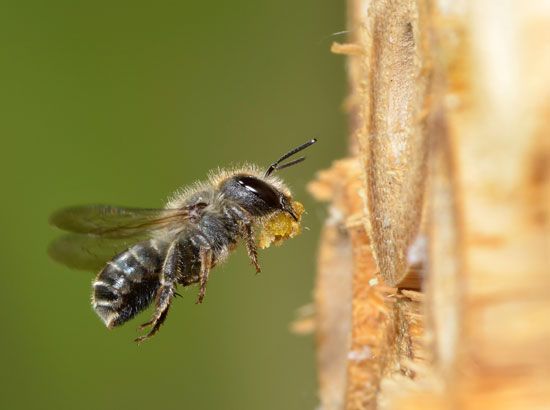
Use existing cavities (reeds, crevices) or mud to build individual brood cells.
Construct complex wax combs within a hive.
Honey Production
Do not produce honey.
Produce and store honey.
Pollen Transport
Carry pollen on their abdomen using specialized hairs called scopae.
Carry pollen in specialized structures on their hind legs called pollen baskets.
Life Cycle
Females provide for their own offspring individually.
A queen lays eggs, while workers maintain the hive and feed the larvae.
While honeybees are well-known for their hive-based society, mason bees are solitary insects that act as highly efficient native pollinators. Because they coevolved with local flowering plants, they are often better adapted to specific regional climates and flower structures than non-native species.2
Where do mason bees build their nests?
Mason bees are solitary insects that do not chew their own tunnels. Instead, they utilize existing cavities for their nests, such as hollow reeds, plant stems, small crevices, or tunnels previously created by other insects. Many species also readily occupy human-made “bee hotels,” which provide various sizes of holes and canes for nesting.12
While most mason bees nest aboveground in these types of cavities, some species are ground-nesting and excavate their own tunnels in the soil. Regardless of the location, the female mason bee develops her nest by creating individual brood cells. She provisions each cell with a mixture of pollen and nectar, lays an egg, and then seals the chamber using mud or leaf mastic (chewed leaf sections). This reliance on mud to partition and seal their nest chambers is the origin of their common name.12
What materials do mason bees use to construct their nests?
Mason bees, which belong to the genus Osmia, are named for their characteristic use of hardened materials to construct and partition their nests. To build these structures, they primarily use:
- Mud: This is the most common material used by mason bees to create partitions between individual brood cells and to seal the entrance of the nest.12
- Sand: Along with mud, sand is frequently incorporated into the construction of their hardened nest structures.1
- Leaf Mastic: Some species utilize leaf mastic, which consists of chewed leaf sections, to create partitions or to seal the openings of their brood cells.2
Within their chosen nesting sites—such as hollow reeds, plant stems, or crevices—the female bee uses these materials to separate each egg into its own individual cell. By sealing these chambers with mud or mastic, the bees protect their developing larvae from predators and environmental elements.2
Sources
- mason bee — Merriam-Webster
- mason bee — Encyclopædia Britannica
- 8 Buzzworthy Types of Bees — Encyclopædia Britannica
- Hymenoptera - Solitary forms — Encyclopædia Britannica
Published on · 3 min read