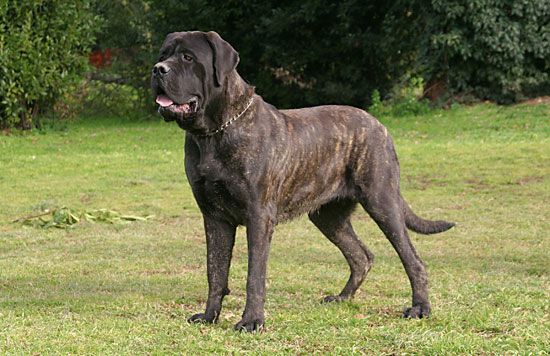
Mastiff Bat
A mastiff bat is a common name for various species of free-tailed bats (family Molossidae), so named because their faces bear a superficial resemblance to…
What is mastiff bat?
A mastiff bat is a common name for various species of free-tailed bats (family Molossidae), so named because their faces bear a superficial resemblance to mastiff dogs.12
These bats are characterized by their doglike faces, narrow wings, and short, ridged ears. They are part of a family of bats known for having a tail that extends somewhat beyond the membrane connecting their hind legs. The eight New World species within the genus Molossus are specifically referred to as mastiff bats, though the term is also applied to several other genera within the Molossidae family.132
How do free-tailed bats use echolocation to hunt insects?
Free-tailed bats, like other microchiropteran bats, use echolocation—a biological sonar system—to track and capture insects in flight. By emitting high-frequency sound pulses through their nose or mouth, they interpret the returning echoes to determine the direction, distance, velocity, and nature of their prey.67
The hunting process occurs in three distinct phases of pulse output:6
- Search Phase: The bat emits approximately 10 pulses per second while scanning for potential targets.6
- Approach Phase: Once an insect is detected, the bat increases its pulse rate to 25–50 pulses per second, shortening the pulses as it closes the distance.6
- Terminal Phase: During the final interception, the bat emits extremely short pulses at a rapid rate of 200 or more per second, allowing for precise tracking during the final maneuver.6
To process this information, bats rely on specialized ears and an auditory system tuned to high frequencies. They can even distinguish their own echoes from background noise and the signals of other bats. Once an insect is intercepted, many bats use their wing membranes or tail membrane to secure the prey before consuming it.68
Why do some bat species migrate instead of hibernating?
Some bat species migrate rather than hibernate as a behavioral response to adverse environmental conditions, primarily to seek out more favorable climates and reliable food sources when local insect populations decline during colder months.1112
While many temperate-zone bats hibernate in caves or other stable shelters to survive the winter, others are “true migrants” with strong flight capabilities. For example, species such as the red bat, hoary bat, and silver-haired bat travel from northern regions to the southern United States and beyond to avoid the winter.111213
Migration also serves specific ecological and reproductive purposes. In the case of the Mexican free-tailed bat, females migrate from Mexico to Texas each spring. This movement is believed to relocate pregnant and lactating females to areas with high food availability, reducing competition with males and ensuring a suitable environment for raising young. Ultimately, whether a bat migrates or hibernates depends on its species-specific adaptations and its ability to find an environment that supports its metabolic needs throughout the year.1211
What is the ecological importance of bat guano in nature?
Bat guano plays a significant role in nature, primarily by acting as a vital nutrient source and environmental modifier within cave ecosystems. Because many bats are colonial and roost in large numbers, their accumulated excrement creates a foundation for complex biological communities.1516
Within these environments, guano serves as a primary food source for a variety of organisms, including cave crickets, roaches, and dermestid beetles, as well as various fungi and molds that thrive on the cave floor. These organisms, in turn, form the base of a specialized food web that supports other cave-dwelling species. Furthermore, the presence of guano alters the cave environment by releasing carbon dioxide, ammonia, and heat, which can influence the local temperature and humidity levels essential for the survival of other cave inhabitants.16
Beyond its immediate ecological role, guano is also highly valued by humans as a fertilizer due to its nutrient content, which includes nitrogen, phosphoric acid, and potash.1517
Sources
- mastiff bat — Encyclopædia Britannica
- free-tailed bat — Encyclopædia Britannica
- Mastiff — Encyclopædia Britannica
- mongoose — Encyclopædia Britannica
- mastiff bat — Merriam-Webster
- bat - Orientation — Encyclopædia Britannica
- Echolocation — Encyclopædia Britannica
- Donald Redfield Griffin: Top Questions — Encyclopædia Britannica
- bat - Food habits — Encyclopædia Britannica
- bat - Anatomical specializations — Encyclopædia Britannica
- bat - Thermoregulation — Encyclopædia Britannica
- Migration - Flying mammals ( bats ) — Encyclopædia Britannica
- mammal - Response to environmental cycles — Encyclopædia Britannica
- bat - Migration — Encyclopædia Britannica
- guano — Encyclopædia Britannica
- bat - Roosting — Encyclopædia Britannica
- guano — Merriam-Webster
Published on · 3 min read