Mid-Atlantic Ridge
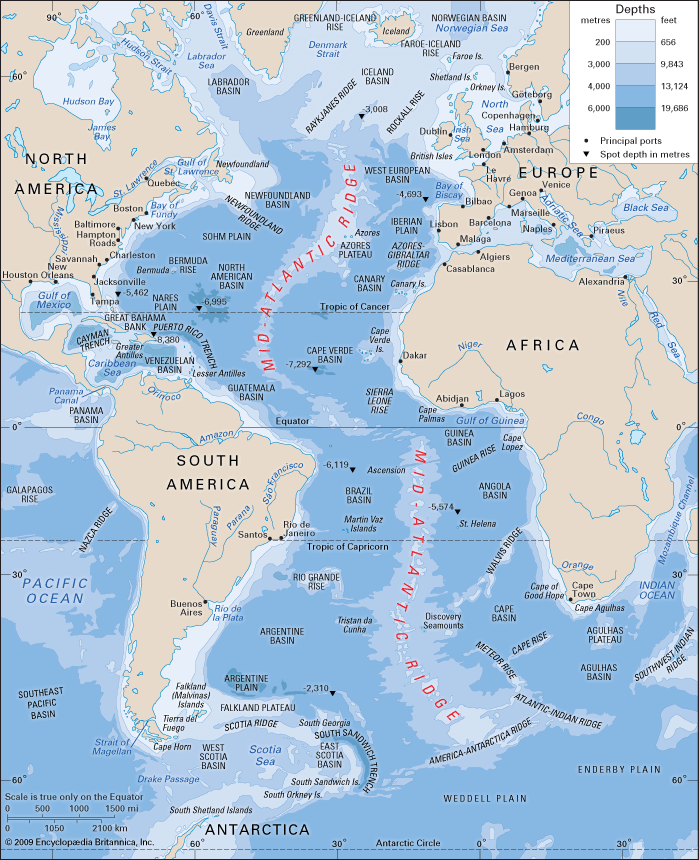
The Mid-Atlantic Ridge is a massive, 10,000-mile-long submarine mountain chain that bisects the Atlantic Ocean basin. While the provided search results…
How does the Mid-Atlantic Ridge affect ocean currents and marine life in the Atlantic?
The Mid-Atlantic Ridge is a massive, 10,000-mile-long submarine mountain chain that bisects the Atlantic Ocean basin. While the provided search results detail its geological significance—such as its role in seafloor spreading and plate tectonics—they do not contain specific information regarding how the ridge influences ocean currents.123
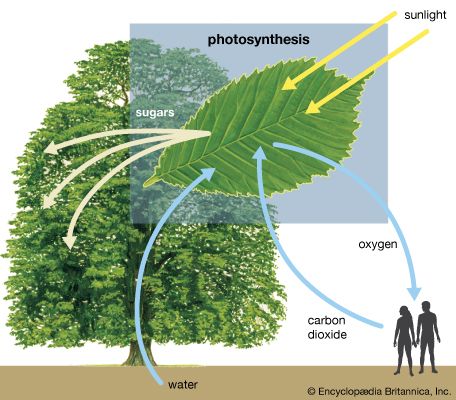
Regarding marine life, the ridge is known to host active hydrothermal fields. These deep-sea vents support unique biological communities that are entirely independent of sunlight. Instead of relying on photosynthesis, these ecosystems thrive through chemosynthesis performed by sulfur-fixing bacteria, which utilize the chemical energy from mineral-rich fluids released by the vents.14
Because the available data does not address the ridge’s impact on ocean currents, I cannot provide information on that specific aspect of your query.
What types of minerals and resources are found near the Mid-Atlantic Ridge?
The Mid-Atlantic Ridge is a geologically active spreading centre where hydrothermal circulation and volcanic activity concentrate a variety of valuable minerals. As seawater penetrates the crust and is heated by magma, it leaches metals from the surrounding rocks, which are then deposited on the seafloor as the solution cools.56
Mineral Resources
The primary mineral deposits found near the ridge are volcanogenic massive sulfides (VMS). These deposits are significant sources of industrial and precious metals, including:
- Base Metals: Copper, lead, and zinc are the most prominent metals found in these deposits.56
- Precious Metals: Important amounts of gold and silver are often associated with these sulfide ores.5
- Other Metals: Sediments near spreading centres are also enriched with iron, manganese, and chromium.6
Characteristics of Sulfide Deposits
Sulfide minerals are compounds of sulfur combined with one or more metals. They are typically characterized by a metallic lustre, electrical conductivity, and high specific gravity. These deposits often form in isolated concentrations, such as veins or fracture fillings, and are frequently rich enough to be considered for economic exploitation.16
How was the Mid-Atlantic Ridge formed and what is its significance in plate tectonics?
The Mid-Atlantic Ridge was formed as a result of plate tectonics and the breakup of the supercontinent Pangea approximately 180 million years ago. As the landmasses of the Western and Eastern hemispheres separated, they created the Atlantic Ocean basin, with the ridge developing along the divergent boundary where the plates continue to move apart.111
In the context of plate tectonics, the ridge serves as a primary site of seafloor spreading. Molten magma from the mantle wells up through a central rift, cooling to form new oceanic crust. This process pushes older crustal material away from the ridge’s flanks, causing the Atlantic basin to widen at a rate of 1 to 10 cm per year.111
The ridge is significant because it provides conclusive evidence for the movement of continents and the evolution of the ocean floor. Its existence, characterized by high heat flow, volcanic activity, and the presence of progressively younger rock near the center, remains a cornerstone for studying tectonic dynamics.111
Are there any inhabited areas or islands associated with the Mid-Atlantic Ridge?
Yes, several islands and island groups are associated with the Mid-Atlantic Ridge, as the ridge’s massive mountain chain occasionally rises above sea level. These islands are primarily volcanic in origin.12113
Key inhabited areas and islands include:
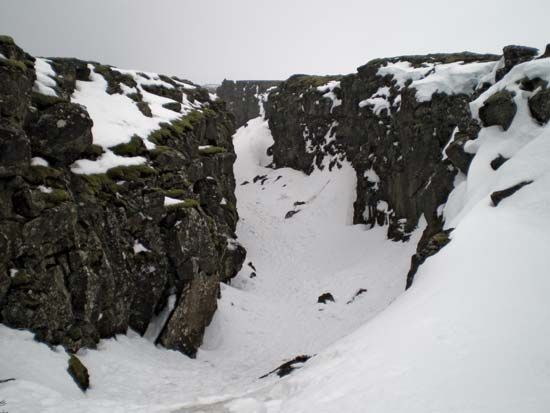
- Iceland: This is the most prominent example, as the plate boundary of the ridge extends directly through the center of the island. It features active rifts, volcanoes, and geysers, providing a unique surface-level view of an accreting plate boundary.413
- Azores: An autonomous region of Portugal, this archipelago consists of nine major islands that rise from the ridge. These islands are geologically active, characterized by frequent earthquakes and volcanic features like calderas.1413
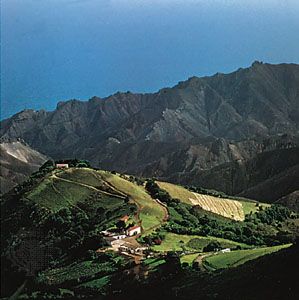
- Ascension, St. Helena, and Tristan da Cunha: These are additional volcanic island groups located along the ridge.1213
These islands serve as significant points of interest for studying the geological processes of the ocean floor, such as seafloor spreading and volcanic activity.1215
Sources
- Mid-Atlantic Ridge — Encyclopædia Britannica
- oceanic ridge - Atlantic Ocean — Encyclopædia Britannica
- deep-sea vent — Encyclopædia Britannica
- Atlantic Ocean - Origin and development — Encyclopædia Britannica
- mineral deposit - Volcanogenic massive sulfides — Encyclopædia Britannica
- spreading centre — Encyclopædia Britannica
- oceanic ridge - Spreading centre zones and associated phenomena — Encyclopædia Britannica
- sulfide mineral — Encyclopædia Britannica
- mineral - Sulfides — Encyclopædia Britannica
- oceanic ridge - Principal characteristics — Encyclopædia Britannica
- plate tectonics - Continental rifting — Encyclopædia Britannica
- Azores — Encyclopædia Britannica
- Europe - Iceland — Encyclopædia Britannica
- Atlantic Ocean - Islands of the Atlantic Ocean — Encyclopædia Britannica
- aseismic ridge — Encyclopædia Britannica
- Atlantic Ocean: Top Questions — Encyclopædia Britannica
Published on · 3 min read