Mockingbird
A mockingbird is any of several versatile songbirds belonging to the New World family Mimidae. The common, or northern, mockingbird (Mimus polyglottos) is…
What is Mockingbird?
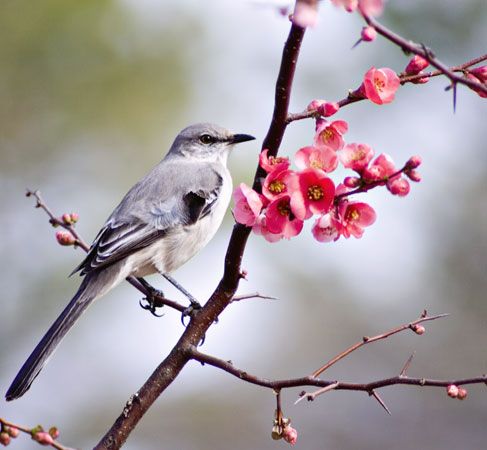
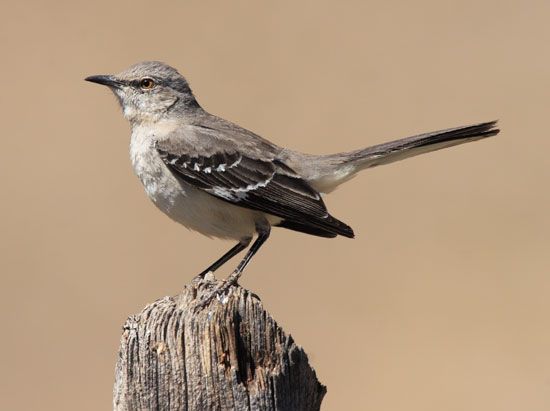
A mockingbird is any of several versatile songbirds belonging to the New World family Mimidae. The common, or northern, mockingbird (Mimus polyglottos) is particularly well known for its ability to mimic the songs of numerous other bird species. These birds are typically gray with white markings on their wings and tails, and they are known for being highly territorial, often singing from high perches—sometimes even at night.12
The term is also famously associated with the 1960 novel To Kill a Mockingbird by Harper Lee. In the book, the title refers to a central moral lesson: that it is a sin to harm a creature that does nothing but provide beauty through its song. The novel uses this metaphor to explore themes of racism, prejudice, and the loss of innocence in the American South.34
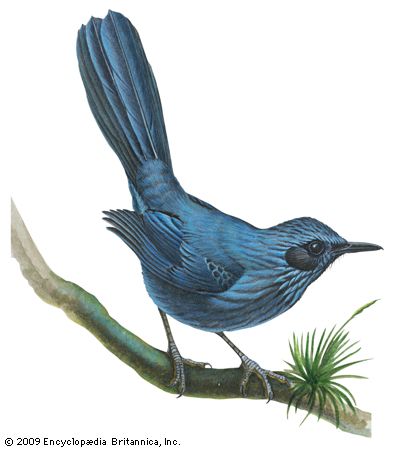
How do mockingbirds learn to imitate other birds?
Mockingbirds, members of the family Mimidae, possess a superior vocal apparatus known as the syrinx. Located at the juncture of the trachea and the two bronchi, this structure allows them to control the right and left sides of the vocal organ independently, enabling the production of complex, varied sounds and the imitation of other species.1
While the specific mechanisms of how mockingbirds acquire their repertoire are part of the broader study of birdsong, song learning in many songbirds generally involves a combination of innate templates and observational learning. Young birds often go through a sensitive period where they must hear vocalizations to develop their own songs, establishing a mental template that they later refine through practice.67
Unlike species that only learn their own species-typical song, mockingbirds are distinguished by their ability to incorporate the sounds of their environment—frequently the songs of other birds—into their own vocalizations. This mimicry serves functions such as attracting mates and defending territory.187
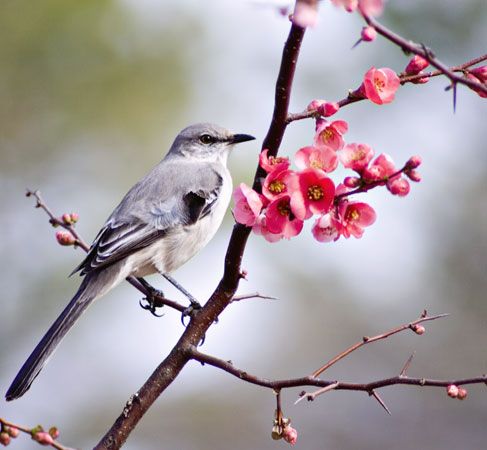
Why do mockingbirds defend their territory so aggressively?
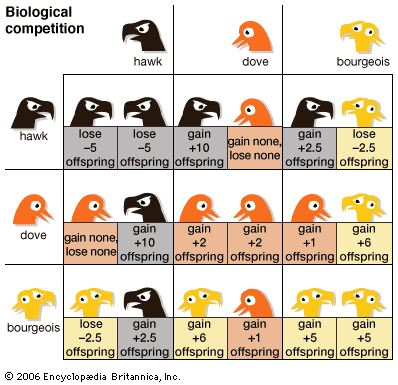
Mockingbirds are highly territorial songbirds that defend their space to ensure exclusive access to essential resources, including food, nest sites, and mates. This behavior is considered an adaptive strategy where the benefits of securing these resources outweigh the energy costs of defending the area against intruders.11011
The intensity of this defense is rooted in the principles of territorial behaviour, where animals protect their space to minimize competition and prevent overcrowding. For many songbirds, this involves maintaining a multipurpose territory that supports all breeding activities, from courtship to raising young. Mockingbirds often advertise their presence and boundaries by singing from high perches, sometimes even at night. If vocal warnings are ignored, they will escalate their defense through chases and direct combat to drive away rivals. The decision to defend a territory is fluid, often intensifying during the breeding season when the need for high-quality resources is at its peak.1112110
What is the significance of the mockingbird in To Kill a Mockingbird?
In Harper Lee’s novel To Kill a Mockingbird, the mockingbird serves as a powerful symbol of innocence. The title refers to a lesson taught by the character Atticus Finch, who tells his children that “it’s a sin to kill a mockingbird” because these birds do nothing but make music for people to enjoy, causing no harm to anyone.5
This metaphor is applied to characters who are vulnerable and innocent, yet are destroyed or threatened by the cruelty of society. Tom Robinson, a Black man falsely accused of a crime, is compared to a songbird by a local newspaper editor, who describes his death as a “senseless slaughter of songbirds”. Similarly, the reclusive Arthur “Boo” Radley is treated as a metaphorical mockingbird; when he saves the children and kills Bob Ewell, the sheriff decides to protect him from public scrutiny, with the narrator, Scout, noting that exposing him to the limelight would be “sort of like shootin’ a mockingbird”.13
Sources
- Mockingbird — Encyclopædia Britannica
- mockbird — Merriam-Webster
- mockingbird — Merriam-Webster
- To Kill a Mockingbird - Themes and criticism: “This was the world that she knew” — Encyclopædia Britannica
- To Kill a Mockingbird — Encyclopædia Britannica
- mimicry - Parasitic weaverbirds — Encyclopædia Britannica
- 12 Lovely and Unusual Words for the Natural World | Syrinx — Merriam-Webster
- Animal learning - Song learning — Encyclopædia Britannica
- Birdsong — Encyclopædia Britannica
- Animal social behavior - Territoriality — Encyclopædia Britannica
- Territorial behaviour — Encyclopædia Britannica
- Passeriform - Territoriality and courtship — Encyclopædia Britannica
- To Kill a Mockingbird: Top Questions — Encyclopædia Britannica
- To Kill a Mockingbird - A Southern small-town trial — Encyclopædia Britannica
- 12 Novels Considered the “Greatest Book Ever Written” - To Kill a Mockingbird — Encyclopædia Britannica
Published on · 3 min read