Mountain Ash
It is important to clarify that the term "mountain ash" refers to two distinct types of trees. The genus Sorbus (the true mountain ash) is unrelated to the…
How tall can mountain ash trees grow, and what is their typical lifespan?
It is important to clarify that the term “mountain ash” refers to two distinct types of trees. The genus Sorbus (the true mountain ash) is unrelated to the Australian mountain ash (Eucalyptus regnans), which is a member of the myrtle family.1
Regarding their growth and lifespan:
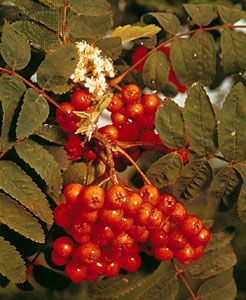
- Genus Sorbus: These are typically small deciduous trees or shrubs. The European mountain ash (S. aucuparia) can reach heights of up to 18 metres (60 feet), while the American mountain ash (S. americana) generally grows to about half that height.1
- Australian Mountain Ash (Eucalyptus regnans): This species is significantly larger and holds the distinction of being the tallest flowering plant (angiosperm) in the world, capable of reaching heights exceeding 114 metres (375 feet).1
The provided information does not specify the typical lifespan for these species.
What are the different species of mountain ash and how do they differ?
The term “mountain ash” is commonly applied to two distinct, unrelated groups of plants. It is important to distinguish between the genus Sorbus and the Australian mountain ash to avoid botanical confusion.1
Genus Sorbus (True Mountain Ash)
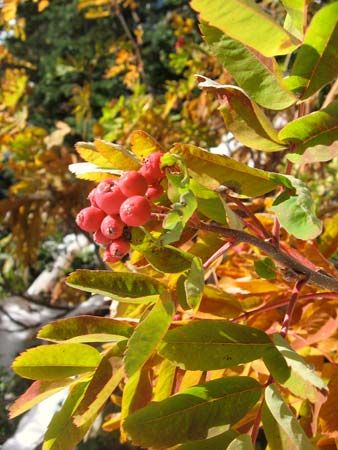
Members of this genus belong to the rose family and are native to the Northern Hemisphere. They are typically small deciduous trees or shrubs valued as ornamentals for their white flower clusters and bright pome fruits, which serve as a food source for birds.1
- European mountain ash (S. aucuparia): Also known as rowan-berry or quickbeam, this species can grow up to 18 metres (60 feet) tall.1
- American mountain ash (S. americana): Often called dogberry, this species is generally smaller, reaching about half the height of its European counterpart.1
Australian Mountain Ash
The Australian mountain ash (Eucalyptus regnans) is a member of the myrtle family and is entirely unrelated to the Sorbus genus. Native to southeastern Australia, it is the world’s tallest angiosperm, capable of exceeding 114 metres (375 feet) in height.1
What is a mountain ash plant and what are its key characteristics?
The term “mountain ash” is often used to describe two botanically unrelated groups of plants, which can lead to confusion. It is important to distinguish between the true mountain ash of the genus Sorbus and the unrelated Australian mountain ash.1
Genus Sorbus (True Mountain Ash)
Members of this genus belong to the rose family and are native to the Northern Hemisphere. They are typically small deciduous trees or shrubs widely cultivated as ornamentals.1
Key Characteristics:
- Leaves: Usually alternate and pinnately compound, though some species have simple leaves.1
- Flowers: They produce dense clusters of five-petaled, often white flowers.1
- Fruit: They bear small, astringent pome fruits that are an important food source for birds and can be used in jellies or beverages.1
- Notable Species: The American mountain ash (S. americana) and the European mountain ash (S. aucuparia), the latter of which can reach 18 metres (60 feet) in height.1
Australian Mountain Ash
The Australian mountain ash (Eucalyptus regnans) is a member of the myrtle family and is entirely unrelated to the Sorbus genus. It is the world’s tallest angiosperm, capable of exceeding 114 metres (375 feet) in height.1
What are some common uses of mountain ash plants in landscaping and gardening?
Mountain ash plants of the genus Sorbus are widely cultivated as ornamentals in landscaping and gardening due to their aesthetic appeal. Gardeners and landscapers typically value these trees and shrubs for two primary features:
- Floral Display: They produce dense inflorescences of five-petaled, often white flowers that provide visual interest in the garden.1
- Fruit Production: These plants bear brightly colored pome fruits that add seasonal color. Beyond their ornamental value, these fruits serve as an important food source for birds, making them a popular choice for wildlife-friendly gardens.1
Additionally, certain species, such as the European mountain ash, have various cultivated varieties specifically developed for use in landscaping. While the fruits are generally astringent, they are sometimes harvested for use in jellies or alcoholic beverages. It is important to note that the Australian mountain ash is an unrelated, massive forest tree and is not typically used in residential landscaping.1
Sources
- mountain ash — Encyclopædia Britannica
- eucalyptus — Encyclopædia Britannica
Published on · 3 min read