Mourning Dove
The mourning dove (Zenaida macroura) is a common wild pigeon native to North America. It is easily identified by its long, pointed tail and the violet and…
What is Mourning dove?
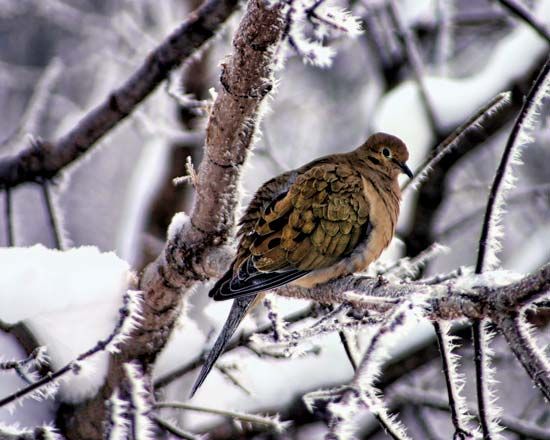
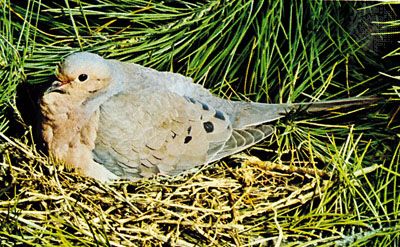
The mourning dove (Zenaida macroura) is a common wild pigeon native to North America. It is easily identified by its long, pointed tail and the violet and pink coloration on the sides of its neck. Known for its plaintive cooing sound, the bird is a member of the order Columbiformes.12
These doves are primarily ground feeders that subsist almost entirely on seeds. Because they rely on food sources that can become scarce in winter, mourning doves in the northern parts of their range migrate southward. In the wild, most mourning doves live only four to five years, with a high first-year mortality rate of approximately 80 percent. They are also frequently hunted as game birds. Like other pigeons, they are known for laying only one or two eggs per clutch.31456
Why is the mourning dove’s call described as plaintive?
The mourning dove’s call is described as “plaintive” because of its low, soft, and mournful-sounding coo, which is often perceived by human listeners as expressing sorrow or melancholy.27
While the term “plaintive” is a subjective descriptor used to characterize the bird’s vocalization, the sound itself is a standard avian utterance typical of the species (Zenaida macroura). The association between the bird’s name and its call has been established in common usage since at least 1833.27
How do mourning doves differ from other common pigeon species?
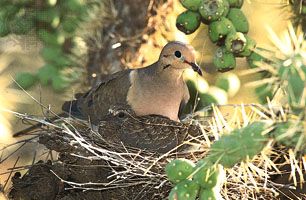
Mourning doves (Zenaida macroura) share many fundamental traits with other members of the pigeon family (Columbidae), such as being monogamous, producing “pigeon’s milk” to feed their young, and typically laying only one or two eggs per clutch. However, they differ from many other common pigeon species in several key ways:81
- Feeding Habits: Unlike many pigeons that feed in trees or a mix of trees and ground, mourning doves are specialized ground feeders. They subsist almost entirely on seeds collected from the ground or low herbage and rarely take green vegetation or feed in trees.3
- Physical Appearance: Mourning doves are distinguished by their long, pointed tails and violet and pink coloration on the sides of their necks. While many pigeons are known for their compact, plump shapes, the mourning dove’s specific tail structure and coloration help set it apart from other common urban or woodland pigeons.94
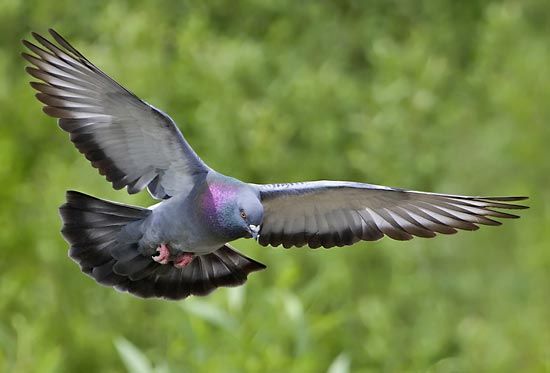
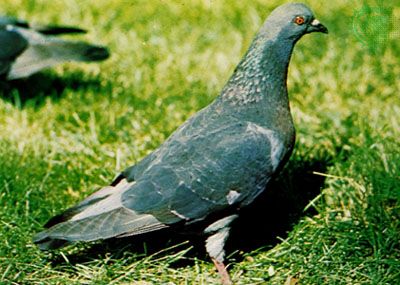
- Migratory Behavior: Because they rely on ground-based food sources that become scarce in winter, mourning doves in the northern parts of their range are migratory, moving southward to survive. Many other pigeon species, such as the common street pigeon, are non-migratory.938
What are the primary migration patterns of North American birds?
North American bird migration is primarily dictated by the continent’s geography, with major routes running north to south. These established pathways include the Atlantic oceanic route, the Atlantic Coast route, the Mississippi Flyway, the Central Flyway, the Pacific Flyway, and the Pacific oceanic route.10
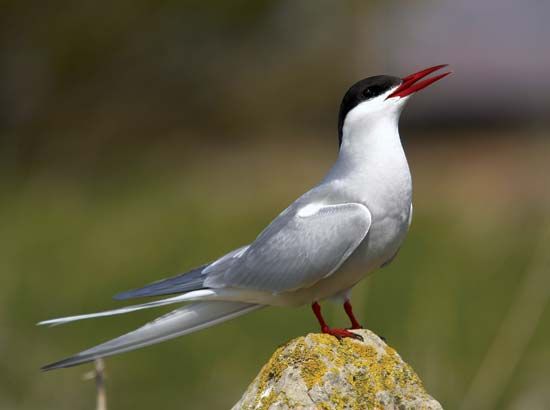
While many birds winter in the Gulf States, the principal wintering grounds extend through Mexico and Central America to Panama, which hosts a high density of wintering species. Some birds, such as the American golden plover, undertake massive loop migrations, traveling from the Arctic tundras to South America and returning via the Mississippi Valley. Others, like the Arctic tern, perform some of the longest migrations in the world, traveling between the Arctic and Antarctic.1011
Migration is triggered by a combination of internal physiological changes—such as fat accumulation regulated by the endocrine system in response to decreasing day length—and external cues like weather shifts and food availability.12
Sources
- Mourning dove — Encyclopædia Britannica
- mourning dove — Merriam-Webster
- Columbiform - General habits — Encyclopædia Britannica
- Reproductive behaviour - Birds — Encyclopædia Britannica
- Columbiform - Ecology — Encyclopædia Britannica
- Columbiform - Behaviour — Encyclopædia Britannica
- 15 Bird Sounds and the Birds Who Make Them | Coo — Merriam-Webster
- Columbiform - Distinguishing characteristics — Encyclopædia Britannica
- Pigeon — Encyclopædia Britannica
- Migration - In North America — Encyclopædia Britannica
- How do birds know when to fly south? — Encyclopædia Britannica
- Migration - In coastal and pelagic regions — Encyclopædia Britannica
- Bird - Flight — Encyclopædia Britannica
Published on · 3 min read