Mudminnow
A mudminnow is any of several hardy, pikelike fishes belonging to the family Umbridae (order Esociformes). These small fish, typically measuring 7.5 to 15 cm…
What is mudminnow?
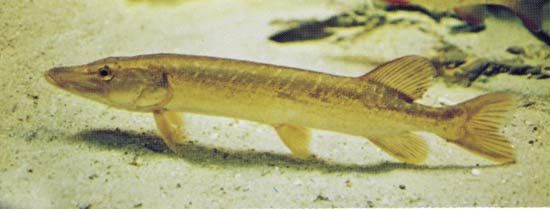
A mudminnow is any of several hardy, pikelike fishes belonging to the family Umbridae (order Esociformes). These small fish, typically measuring 7.5 to 15 cm (3 to 6 inches) in length, are characterized by their rounded snouts and tails.1
They are found in the cool, mud-bottomed ponds, lakes, and streams of North America and southeastern Europe. A notable survival trait of the mudminnow is its ability to thrive in water with oxygen levels too low for most other fish; they are also known to bury themselves tail-first into the mud.1
The family includes approximately seven species across the genera Umbra, Novumbra, and Dallia. While they are sometimes kept in home aquariums, they are also frequently used as bait. In North America, specific species are occasionally referred to by other names, such as the central mudminnow (U. limi), which is sometimes called a mudfish or dogfish.1
How do mudminnows survive in low-oxygen water?
Mudminnows are remarkably hardy fish capable of surviving in environments where oxygen levels are too low to support most other aquatic species. While most fish rely exclusively on their gills to extract dissolved oxygen from the water, many primitive teleosts—a group that includes the mudminnow—possess a swim bladder that retains a connection to the digestive tract.13
In several fish lineages, this organ has evolved to function as a highly vascularized accessory breathing organ, effectively acting as a lung. This physiological adaptation allows mudminnows to supplement their oxygen intake by gulping air at the surface, enabling them to persist in stagnant, low-oxygen habitats like mud-bottomed ponds and streams where standard gill respiration would be insufficient.31
What other fish belong to the order Esociformes?
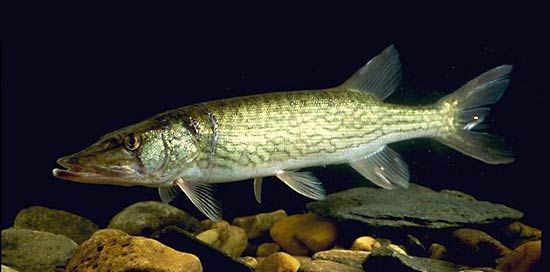
The order Esociformes consists of freshwater fishes native to the Northern Hemisphere. Beyond the mudminnows (family Umbridae), this order includes the family Esocidae, which comprises the pikes, pickerels, and their allies.45
The following table summarizes the primary families within the order:
Family
Common Names
Key Characteristics
Esocidae
Pikes, pickerels, muskellunge
Elongated, voracious predators with shovellike snouts and large mouths armed with strong teeth.
Umbridae
Mudminnows
Hardy, smaller fish (7.5–15 cm) capable of surviving in low-oxygen water by gulping air.
While pikes are sometimes historically associated with the order Salmoniformes in older literature, they are classified as Esociformes in modern ichthyological taxonomy.14
Why do mudminnows bury themselves in the mud?
Mudminnows frequently bury themselves tail-first into the mud as a behavioral adaptation to their environment. While they are known for this habit, it is often associated with their ability to remain in mud-bottomed ponds and streams during periods of environmental stress, such as cold temperatures or fluctuating water conditions.17
Unlike some other species that enter a state of true dormancy or create protective cocoons during drought, mudminnows are hardy fish that remain active throughout the year. Their tendency to settle into the mud is a strategy for navigating their habitat, allowing them to persist in areas where oxygen levels are too low to support other aquatic life. By staying near or within the substrate, they can utilize their specialized swim bladder to gulp air at the surface, ensuring their survival in stagnant or challenging waters.17
Sources
- mudminnow — Encyclopædia Britannica
- mudminnow — Merriam-Webster
- fish - The respiratory system — Encyclopædia Britannica
- Esocidae — Merriam-Webster
- pike — Encyclopædia Britannica
- protacanthopterygian - Annotated classification — Encyclopædia Britannica
- Dormancy - Fishes and amphibians — Encyclopædia Britannica
Published on · 2 min read