Pike
Pike are highly specialized freshwater fish whose morphology and physiology are optimized for predatory success. Their effectiveness as hunters relies on…
How have pike fish adapted to be such effective predators?
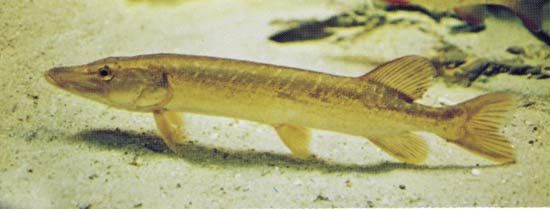
Pike are highly specialized freshwater fish whose morphology and physiology are optimized for predatory success. Their effectiveness as hunters relies on several key adaptations:
- Body Shape and Positioning: They possess an elongated body with dorsal and anal fins positioned far back toward the tail. This configuration is specifically adapted for swift, darting lunges, allowing them to remain motionless in weeds or open water before striking prey with sudden speed.12
- Sensory Specialization: Vision is their primary hunting tool. Their brains feature a highly developed optic lobe, and their eyes are positioned to provide partial binocular vision. By sighting down grooves on their snout, they can accurately aim at moving targets.2
- Feeding Apparatus: Pike are equipped with large, powerful jaws and strong, caninelike teeth designed to seize and handle substantial prey, including other fish, insects, and occasionally waterfowl or small mammals.12
- Hunting Strategy: As solitary hunters, they utilize a “sit-and-wait” approach, lurking in vegetation to ambush prey that ventures within reach.1
What are the distinctive physical features of pike fish?
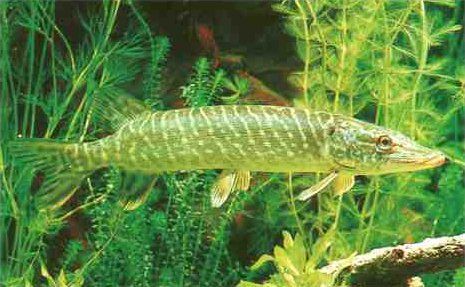
Pike are characterized by a highly specialized morphology designed for predatory efficiency. Their distinctive physical features include:
- Body and Head Structure: They possess an elongated body, a long head, and a shovellike snout. Their jaws are large and powerful, armed with strong, caninelike teeth capable of handling substantial prey.12
- Fin Placement: The dorsal and anal fins are positioned far back toward the tail, an arrangement that facilitates the swift, darting movements necessary for their ambush hunting style.12
- Sensory Adaptations: Pike rely primarily on vision to hunt. Their eyes are positioned to provide partial binocular vision, allowing them to sight down grooves on their snout to aim accurately at moving targets. Their brains feature a highly developed optic lobe compared to their olfactory lobes.2
- Skin and Scales: They have small scales and, in the case of the northern pike, often display pale, bean-shaped spots on the body. Notably, they lack an adipose fin.12
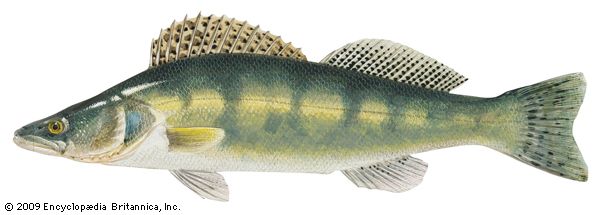
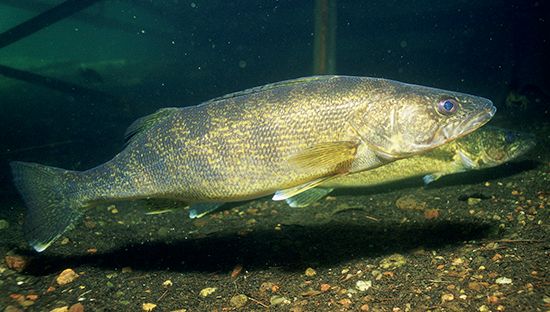
It is important to note that while “wall-eyed pikes” are often referred to by that name, they are not true pikes but members of the perch order.1
In what types of habitats are pike fish typically found?
Pike fish, which belong to the family Esocidae, are primarily found in freshwater environments across North America, Europe, and northern Asia.1
Their habitat preferences are closely tied to their “sit-and-wait” predatory strategy. They typically inhabit areas that provide cover, such as clumps of weeds, where they can remain motionless while waiting for prey to come within reach. Additionally, these fish require specific conditions for reproduction; they spawn in weedy shallows from late winter through the spring months.1
It is important to distinguish true pikes from other species like the walleye or sauger, which are often colloquially called “pike” but are actually members of the perch order. These perch-related species occupy different habitats, such as clear, cool lakes and rivers or silty river systems.5
How do pike fish reproduce and what is their life cycle like?
Pike fish (family Esocidae) are exclusively freshwater species, meaning they complete their entire life cycle within freshwater environments. Their reproductive process and life cycle are characterized by the following:1
- Spawning: Pike spawn in weedy shallows during the period from late winter through spring. As members of the order Salmoniformes, they are oviparous, meaning they lay eggs and rely on external fertilization.61
- Egg Development: Like other freshwater-spawning salmoniforms, pike produce demersal eggs—eggs that are heavier than water and develop on or within the bottom substrate of the lake or stream.1
- Life Cycle Strategy: Unlike many other fish families that may migrate between marine and freshwater environments, the pike family is restricted to fresh water throughout their entire life span. Their development is shaped by natural selection to maximize survival in their specific habitats, with their morphology and physiology becoming highly specialized for predatory behavior after their first year of life.17
Sources
- pike — Encyclopædia Britannica
- protacanthopterygian - Departures from the generalized body plan — Encyclopædia Britannica
- coloration - Disruptive coloration — Encyclopædia Britannica
- coloration - Background matching — Encyclopædia Britannica
- pike perch — Encyclopædia Britannica
- protacanthopterygian - Life cycle and reproduction — Encyclopædia Britannica
- clupeiform - Growth and mortality — Encyclopædia Britannica
Published on · 3 min read