Multituberculate
Multituberculates were a highly successful group of extinct mammals that thrived from the middle of the Jurassic Period until the early Eocene Epoch…
What are the defining characteristics of multituberculate mammals?
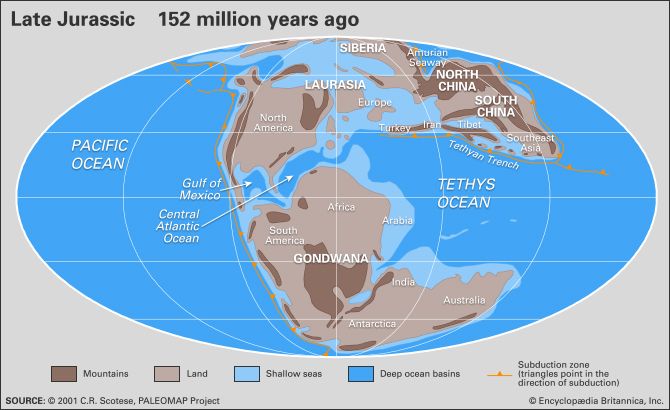
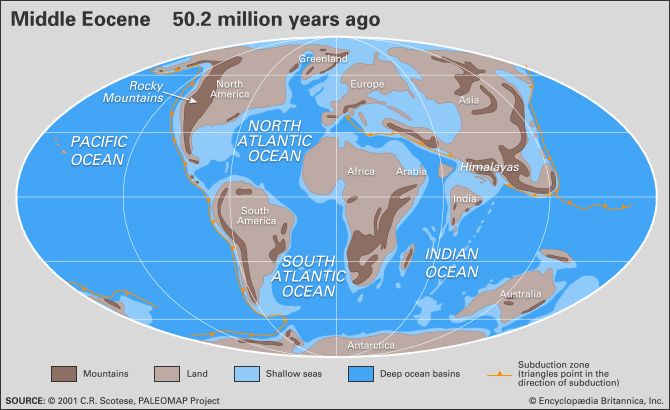
Multituberculates were a highly successful group of extinct mammals that thrived from the middle of the Jurassic Period until the early Eocene Epoch, spanning approximately 128 million years.12
Their defining characteristics include:
- Dental Structure: The group is named for their unique molars, which feature two or three longitudinal rows of cusps. While primitive forms possessed five or six cusps, advanced genera developed up to 30. They typically featured a single pair of long lower incisors and large, shearing anterior lower premolars.1
- Dietary Habits: They were the earliest mammalian herbivores and were primarily granivorous.12
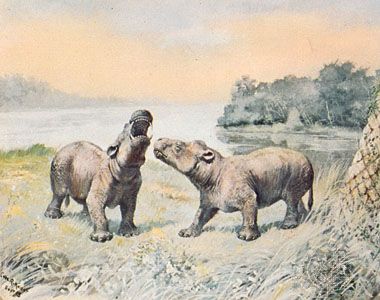
- Physical Size: Most adult multituberculates were comparable in size to mice, though the largest species reached the size of beavers.1
- Appearance: They exhibited a superficial resemblance to modern rodents, though they are not considered ancestral to any living mammal groups.13
Their evolutionary placement remains a subject of scientific debate, with some experts suggesting they diverged before the common ancestor of monotremes, marsupials, and placentals.1
How did the teeth of multituberculates contribute to their unique classification?
The unique classification of multituberculates is primarily defined by their highly specialized dentition, which distinguishes them as the earliest known mammalian herbivores.13
Their teeth are characterized by the following features:
- Complex Molars: The group derives its name from the construction of their molars, which feature two or three longitudinal rows of cusps. While primitive forms possessed only five or six cusps, advanced genera evolved to have as many as 30, providing an efficient surface for grinding plant material.1
- Specialized Incisors and Premolars: Multituberculates possessed a single pair of long lower incisors, often accompanied by one to three pairs of upper incisors. Additionally, most genera featured large, shearing anterior lower premolars, which aided in processing their granivorous diet.1
- Convergent Evolution: While their teeth allowed them to occupy an ecological niche similar to modern rodents, these dental adaptations evolved independently. Their specialized cheek teeth and incisors represent a classic example of convergent evolution, where similar functional requirements—such as nipping, gnawing, and grinding—led to comparable dental structures in unrelated groups.3
Because of these distinct dental patterns, their evolutionary relationship to living mammals remains a subject of scientific debate, with some researchers placing them outside the lineage of monotremes, marsupials, and placentals.1
Are there any living mammals that share similar characteristics with multituberculates?
There are no living mammals that are direct descendants of the multituberculates, as the group has no known living descendants and is not considered ancestral to any modern mammal orders.134
However, multituberculates are often described as “superficially rodentlike” because they occupied a similar ecological niche. This similarity is a result of convergent evolution, where unrelated groups develop similar physical traits to solve the same environmental challenges. Like modern rodents, lagomorphs, and various ungulates, multituberculates evolved specialized dental features for a herbivorous diet, such as:1342
- Incisors for nipping or gnawing: Similar to the specialized front teeth found in many modern herbivores.2
- Diastema: The development of a gap in the tooth row, a common trait in many herbivorous mammals.2
- Molarization: The expansion and flattening of premolars to increase the surface area available for grinding plant matter.2
While these functional similarities make them appear comparable to modern rodents, these traits evolved independently in both groups.2
How did multituberculates differ from modern mammals in terms of their anatomy and lifestyle?
Multituberculates were an extinct group of small, rodentlike mammals that thrived from the Jurassic Period until the early Eocene Epoch-Period) until the early Eocene Epoch. While they occupied an ecological niche similar to modern rodents, they were not ancestral to any living mammal groups.14
Their primary anatomical differences from modern mammals include:
- Unique Dentition: Their defining feature was their molars, which featured two or three longitudinal rows of cusps—ranging from five or six in primitive forms to 30 in advanced genera. They also possessed a single pair of long lower incisors and large, shearing anterior lower premolars.1
- Evolutionary Position: Their exact relationship to modern lineages is debated; some scientists suggest they branched off before the common ancestor of monotremes, marsupials, and placentals, while others argue they are more closely related to the latter two.1
In terms of lifestyle, they were predominantly herbivorous and granivorous. They were eventually replaced by modern mammalian groups during a major faunal turnover at the end of the Paleocene.12
Sources
- multituberculate — Encyclopædia Britannica
- Multituberculata — Merriam-Webster
- mammal - Teeth — Encyclopædia Britannica
- multituberculate — Merriam-Webster
- Tertiary Period - The rise of mammals — Encyclopædia Britannica
Published on · 3 min read