Murchison Falls
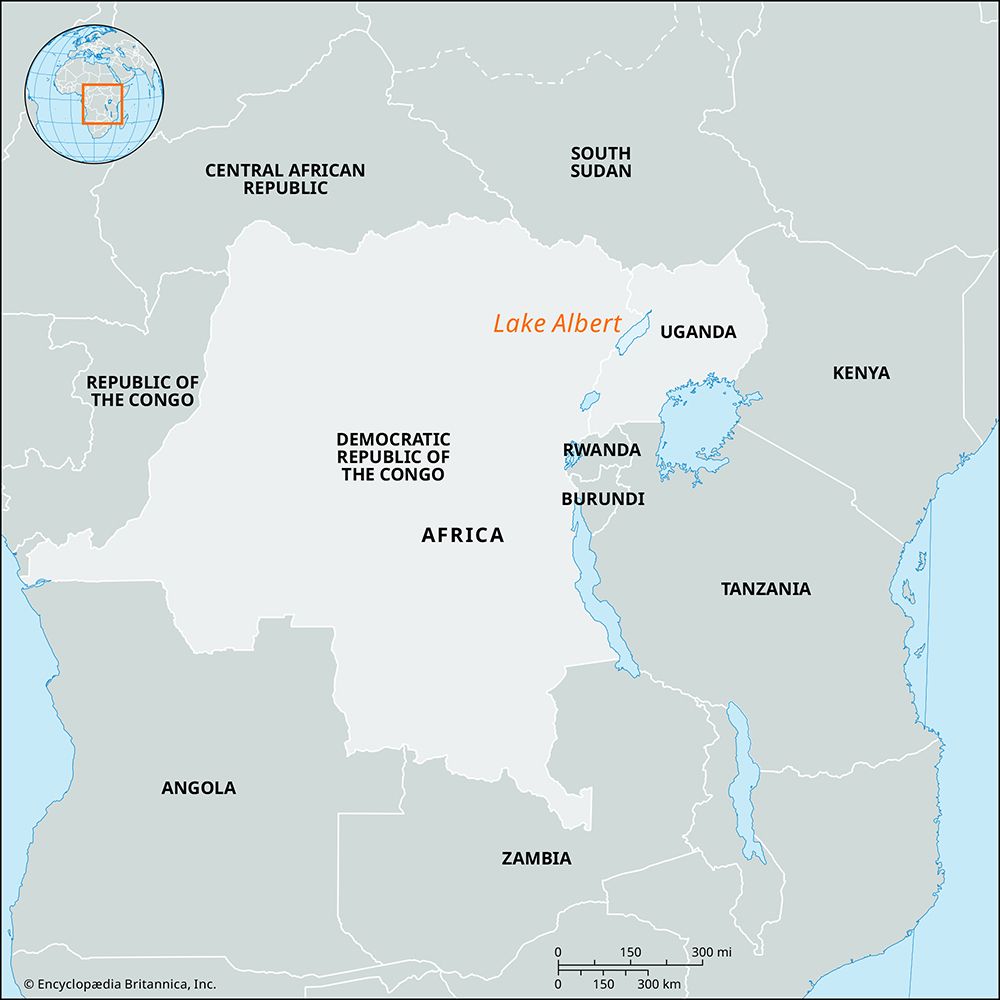
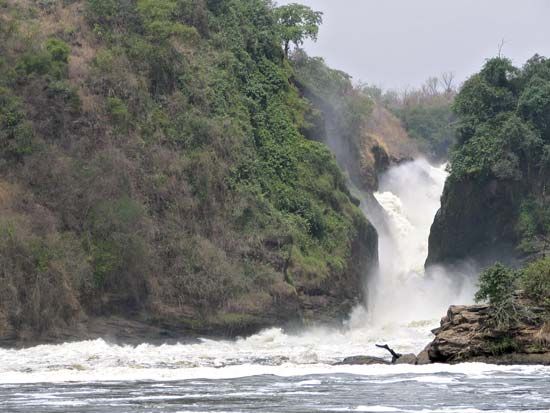
Murchison Falls is a spectacular waterfall located on the lower Victoria Nile River in northwestern Uganda. Situated about 20 miles east of Lake Albert, the…
What is Murchison Falls?
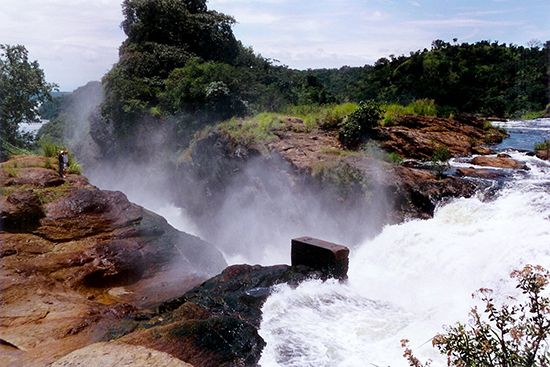
Murchison Falls is a spectacular waterfall located on the lower Victoria Nile River in northwestern Uganda. Situated about 20 miles east of Lake Albert, the river narrows to a width of approximately 20 feet before plunging about 400 feet in a series of three cascades. The primary drop of 130 feet is widely recognized as Murchison (or Kabalega) Falls.1
The cataract serves as the centerpiece of Murchison Falls National Park, a vast protected area of rolling grassland established in 1952. The falls were named by the English explorer Sir Samuel White Baker in the 1860s to honor the geologist Sir Roderick Murchison.1
What wildlife lives in Murchison Falls National Park?
Sorry, the Britannica knowledge base does not contain specific information regarding the wildlife species that inhabit Murchison Falls National Park. While the provided search results confirm the park’s status as the largest in Uganda and describe its geography and the Victoria Nile, they do not list the animals found within its borders.
How does the Victoria Nile connect to the rest of the Nile River?
The Victoria Nile serves as the upper section of the Nile River, acting as a vital link in the drainage system that connects Lake Victoria to the Mediterranean Sea.45
The river’s connection to the broader Nile system follows this path:
- Origin: It flows northward from the northern shore of Lake Victoria near Jinja.45
- Intermediate Lakes: The river passes through the shallow Lake Kyoga, where it navigates through swamp vegetation before exiting in a westerly direction.45
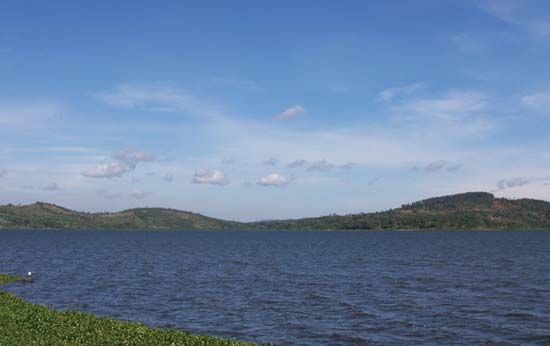
- Descent and Junction: It descends into the East African Rift System over Murchison (Kabalega) Falls and enters the northern end of Lake Albert.45
- Continuation: At Lake Albert, the waters of the Victoria Nile unite with the lake’s waters. The river then exits the lake and continues its journey northward as the Albert Nile, eventually becoming part of the main Nile stream that flows through South Sudan, Sudan, and Egypt.5
Who was Sir Samuel White Baker?
Sir Samuel White Baker (1821–1893) was an English explorer renowned for his contributions to locating the sources of the Nile River.6
After living in Mauritius and Ceylon, Baker traveled through the Middle East before embarking on an expedition to Africa in 1861 with Florence von Sass. Utilizing maps provided by John Hanning Speke, Baker set out in 1863 to find the Nile’s source. In 1864, he identified Lake Albert as a source and, during his travels, visited and named Murchison Falls in honor of the geologist Sir Roderick Murchison.61
Following his return to England, he was knighted in 1866. Later, at the request of Ismāʿīl Pasha, the viceroy of Egypt, Baker led a military expedition to the Nile equatorial regions. During this tenure, he served as governor-general, working to suppress the slave trade and annexing new territories. He also authored several books, including The Nile Tributaries of Abyssinia.6
Sources
- Murchison Falls — Encyclopædia Britannica
- Murchison Falls National Park — Encyclopædia Britannica
- Uganda - Conservation — Encyclopædia Britannica
- Victoria Nile — Encyclopædia Britannica
- Nile River - Physiography of Nile River — Encyclopædia Britannica
- Sir Samuel White Baker — Encyclopædia Britannica
Published on · 2 min read