Najrān
In recent decades, Najrān has experienced significant integration into the broader development of Saudi Arabia. As a key oasis and provincial center, the…
How has modernization and development impacted Najrān in recent decades?
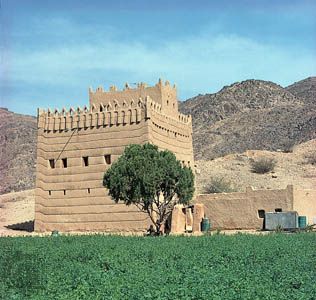
In recent decades, Najrān has experienced significant integration into the broader development of Saudi Arabia. As a key oasis and provincial center, the town has been physically connected to the rest of the kingdom through the construction of major highways, serving as the southern terminus for routes originating from Mecca and Riyadh.1
This infrastructure expansion reflects the national trend of rapid modernization, which has seen traditional, sparsely populated regions transition toward increased urbanization and connectivity. While Najrān remains an extremely fertile agricultural area—continuing its historical role in producing dates and grains—the region has benefited from the kingdom’s broader economic shifts, including the utilization of petroleum wealth to fund infrastructure and social development. These advancements have facilitated greater interaction with the outside world, moving the region away from the traditional, isolated lifestyles that characterized much of the country in the mid-20th century.21
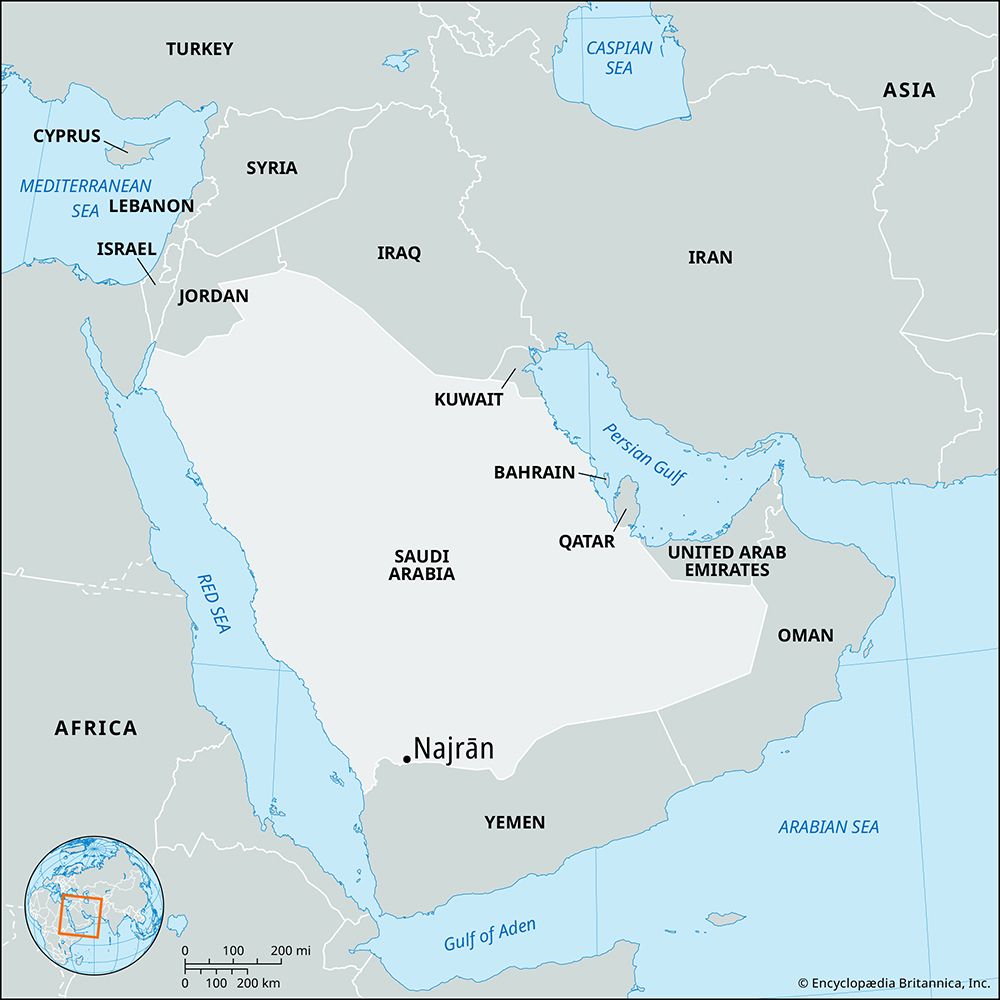
How does Najrān’s climate and topography differ from other regions in Saudi Arabia?
Najrān’s geography is distinct due to its position as a transitional zone between the rugged highlands of the southwest and the vast desert interior of the Arabian Peninsula.
Topography
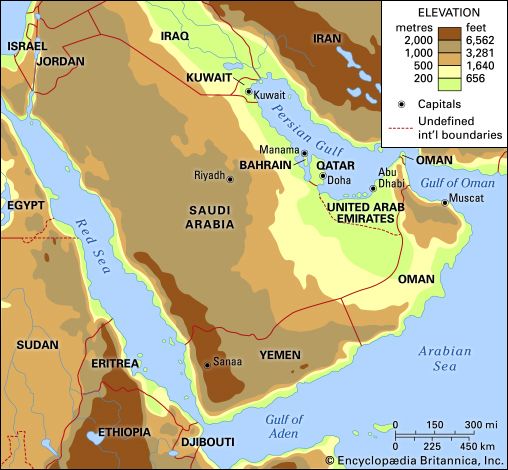
The province of Najrān is composed of three primary topographical zones that distinguish it from the more uniform landscapes found in other parts of Saudi Arabia:1
- West: The region encompasses the Asir plateau, characterized by high elevations and difficult mountain passes that are part of the broader Asir highland system.14
- Center: The Najrān plateau serves as the central feature, providing a transition between the western highlands and the eastern desert.1
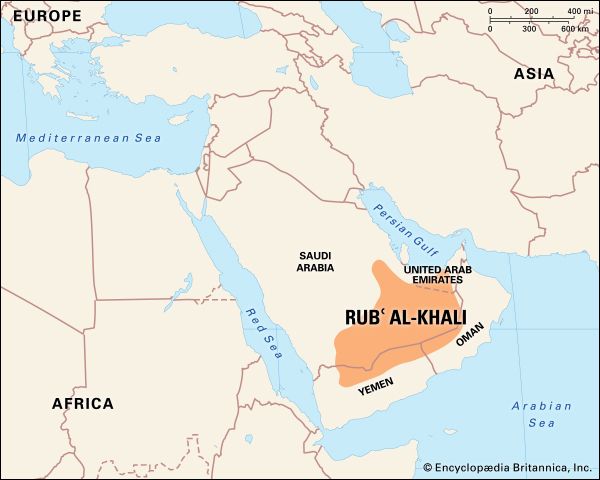
- East: The province extends into the Rubʿ al-Khali (Empty Quarter), a massive desert region that contrasts sharply with the fertile oasis areas.1
Climate and Fertility
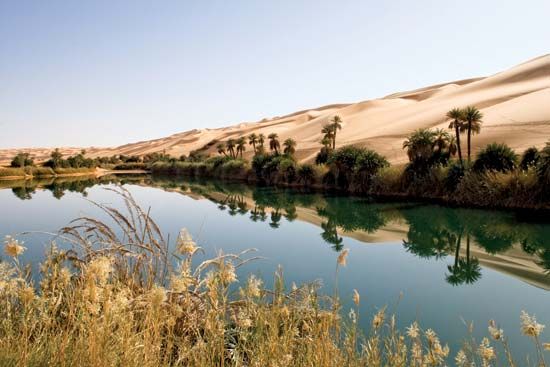
While much of Saudi Arabia experiences extreme aridity with minimal rainfall, Najrān benefits from its proximity to the southern highlands, which are influenced by the Indian Ocean monsoon. This influence significantly increases precipitation compared to the arid interior, allowing the Najrān oasis to remain an extremely fertile agricultural center capable of producing grains and dates. In contrast, many other regions of the country rely heavily on irrigation and government-provided wells to sustain agriculture in otherwise harsh, dry environments.4516
How has the history of Najrān shaped its cultural identity?
The cultural identity of Najrān has been profoundly shaped by its long history as a strategic crossroads and a center of religious significance. Situated along the frontier with Yemen, the region served for centuries as a vital hub for the production and trade of frankincense and myrrh, connecting the Middle East and the Mediterranean basin between 1000 BCE and 600 CE.1
Its religious heritage is equally foundational. By 500 CE, Najrān was home to an influential Christian community. The town’s history is marked by the 6th-century persecution of these Christians by the Himyarite king, an event that drew intervention from Aksum and left a lasting impression on early Islamic literature. Notably, the Prophet Muhammad is reported to have established an agreement of tolerance with the local Christian community during the Mubāhalah, a narrative that remains a significant part of the region’s historical identity.1
In the 20th century, the region’s identity was further defined by its integration into Saudi Arabia following the 1934 Treaty of Al-Ṭāʾif, transitioning from a contested borderland to a key provincial center in the kingdom’s south.1
How does Najrān contribute to Saudi Arabia’s overall energy and natural resource production?
Najrān does not play a primary role in Saudi Arabia’s large-scale energy or industrial production, which is concentrated in other regions such as Al-Sharqiyyah (the Eastern Province) where the kingdom’s principal petroleum-producing areas and major petrochemical complexes are located.1
Instead, Najrān’s contribution to the national economy is centered on its status as an extremely fertile agricultural oasis. The region is highly productive in the cultivation of grains and dates, and it also supports significant stock raising. While the rest of the country has largely shifted away from traditional land use toward intensive urban and industrial patterns, Najrān remains a vital agricultural center that helps sustain local food production.31
Sources
- Najrān — Encyclopædia Britannica
- Saudi Arabia — Encyclopædia Britannica
- Najd — Encyclopædia Britannica
- Arabian Desert - Soils — Encyclopædia Britannica
- Arabia - The Hejaz and Asir — Encyclopædia Britannica
- Arabia - Climate of Arabia — Encyclopædia Britannica
- Saudi Arabia - Settlement patterns — Encyclopædia Britannica
Published on · 3 min read