Oasis
An oasis is a fertile tract of land located within a desert that is sustained by a perennial supply of fresh water. These areas vary significantly in size…
What is oasis?
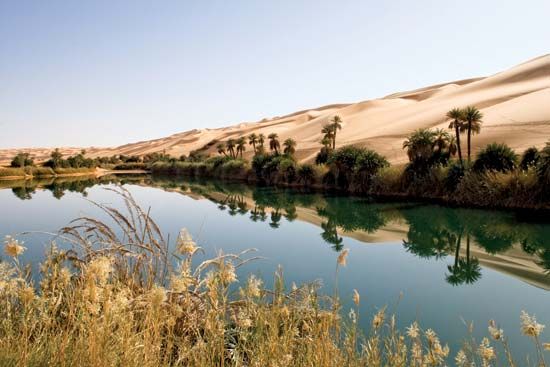
An oasis is a fertile tract of land located within a desert that is sustained by a perennial supply of fresh water. These areas vary significantly in size, ranging from small springs covering about one hectare to expansive regions of irrigated land.1
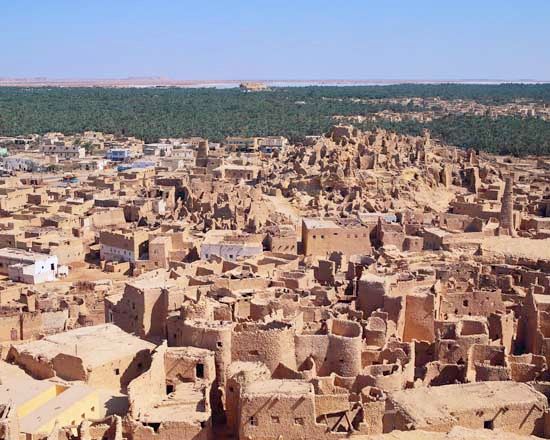
Most oases rely on underground water sources, such as springs or wells, which are often supplied by distant sandstone aquifers. In regions like the Sahara, oases are vital for human settlement, supporting sedentary populations through irrigation. The date palm is typically the primary food source, providing shade for the cultivation of fruits, vegetables, and cereals like wheat, barley, and millet. Beyond their geological definition, the term is also used metaphorically to describe a place that provides relief or protection from chaotic or dangerous environments.123
How do underground aquifers supply water to oases?
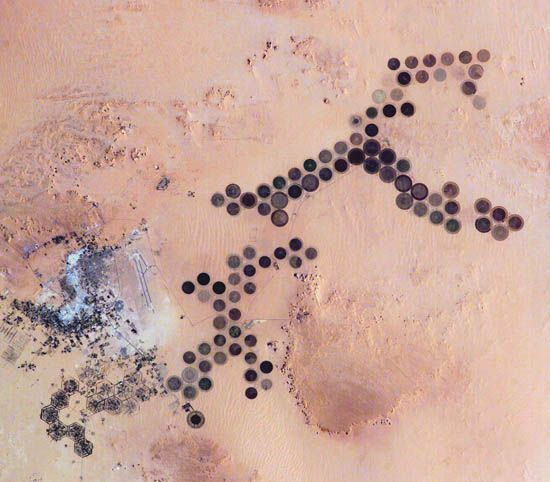
Oases are sustained by groundwater stored in aquifers—permeable rock layers, such as sandstone, that hold water within their pore spaces. These aquifers often receive water at intake areas located hundreds of kilometers away, where precipitation infiltrates the soil and percolates downward into the geologic strata.516
In many cases, the water is held under pressure between impermeable rock layers, forming a confined aquifer. When this water reaches the surface through natural openings like faults or joints, it creates springs. In other instances, the water is accessed via artesian wells, where the natural hydrostatic pressure forces the water to the surface without the need for pumping. Because some of these aquifers were formed during past climatic regimes, the water they contain can be thousands of years old. While these underground reservoirs are vital for life in arid regions, they are susceptible to depletion through excessive extraction, a process known as groundwater mining.7156
What role do date palms play in supporting oasis life?
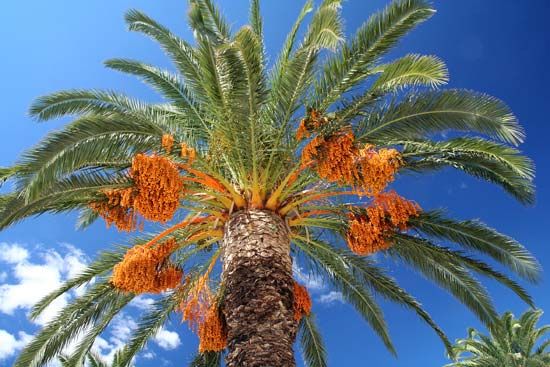
The date palm is essential to life in desert oases, serving as both a primary food source and a foundational element of the local ecosystem.1
In Saharan oases, the date palm acts as the central pillar of agriculture. Its canopy provides critical shade, creating a microclimate that protects smaller crops—such as citrus fruits, figs, peaches, apricots, vegetables, and cereals like wheat, barley, and millet—from the harsh, direct desert sun.1
Beyond its role in food production, the date palm is a versatile resource of significant economic value:
- Construction and Materials: The trunk provides timber, while leaf midribs are used for furniture and crates. Leaflets are utilized for basketry, and fibers are processed into cordage and packing material.9
- Fuel: Both leaf bases and fruit stalks are commonly used as fuel sources.9
- Food and Beverage: In addition to the fruit itself, which is a staple food, the tree yields sap that can be consumed as a beverage or fermented. Even the seeds are sometimes ground for use as stock feed.9
How have humans historically used oases for trade and travel?
Historically, oases served as vital nodes for trade and travel, functioning as essential stopovers for caravans navigating the harsh environments of the Sahara and Asian deserts. Because travel was slow and dangerous, these fertile tracts provided the necessary water, food, and pasture to sustain merchants, pilgrims, and their camels during long, arduous journeys.11112
These routes facilitated the exchange of high-value goods, including gold, ivory, salt, and slaves. Oases were often linked by established paths, such as the darb al-arba’in (the “road of the forty days”), and travelers frequently utilized caravansaries—fortified structures that provided secure lodging and storage.1211
Beyond commerce, oases supported religious travel, such as the large-scale pilgrim caravans traveling to Mecca. Over time, the expansion of Islam and the development of trade routes transformed these settlements into significant social and economic centers, though the rise of modern road, rail, and air transport eventually led to the decline of traditional camel-based caravan travel.11124
Sources
- oasis — Encyclopædia Britannica
- oasis — Merriam-Webster
- Libya - Plant and animal life — Encyclopædia Britannica
- Sahara - People of the Sahara — Encyclopædia Britannica
- artesian well — Encyclopædia Britannica
- Asia - Groundwater — Encyclopædia Britannica
- groundwater — Encyclopædia Britannica
- aquifer — Encyclopædia Britannica
- Date palm — Encyclopædia Britannica
- Palm - Ecology — Encyclopædia Britannica
- caravan — Encyclopædia Britannica
- Sahara - Transportation — Encyclopædia Britannica
Published on · 3 min read