Nazas River
The Nazas River is a river located in the northern Mexican states of Durango and Coahuila. It originates in Durango through the confluence of the Oro and…
What is Nazas River?
The Nazas River is a river located in the northern Mexican states of Durango and Coahuila. It originates in Durango through the confluence of the Oro and Ramos rivers, which descend from the Sierra Madre Occidental. The river flows for approximately 180 miles (290 km) toward the Laguna District, eventually reaching the now-dry Mayrán Lagoon.1
The river’s flow has been significantly altered by the Lázaro Cárdenas and Francisco Zarco dams, which were constructed as part of a land-redistribution program in the region. These structures provide essential water control for the area. Several major cities, including Gómez Palacio and Torreón, are situated along its banks.1
What is the Laguna District and why is it important?
The Laguna District is a significant agricultural region spanning western Coahuila and eastern Durango in northern Mexico. It encompasses approximately 312,000 acres of irrigable land, historically named for the shallow lagoons that once formed on its plains.2
The district is historically important for its role in Mexican land reform. Originally part of a large hacienda used for grazing, the land was redistributed in 1936 under President Lázaro Cárdenas. The area was divided into ejidos, or communal lands, supported by irrigation from the Nazas and Aguanaval rivers. This transformation spurred a dramatic rise in cotton production, though the industry later faced challenges due to severe droughts in the 1950s. Today, the district remains a vital economic hub, anchored by major cities such as Torreón and Gómez Palacio.21
How do dams affect the flow of rivers in arid regions?
Dams significantly alter the hydrology and ecology of rivers in arid regions by transforming natural flow patterns to serve human needs, such as irrigation, flood control, and hydroelectric power.345
In arid environments, where water is scarce, the impact of these structures is particularly pronounced:
- Flow Regulation: Dams capture and store water in reservoirs, allowing for the controlled release of water. While this mitigates seasonal flood and drought cycles, it often results in reduced water availability downstream, sometimes leaving riverbeds nearly dry or reduced to a trickle.65
- Sediment Retention: Reservoirs trap much of a river’s sediment load. This prevents natural nutrient replenishment downstream and can lead to the desiccation of marshlands and the erosion of river channels.645
- Water Quality and Soil Health: Intensive irrigation projects often lead to soil salinization, as poor drainage causes mineral residues to accumulate on the surface through evaporation.6
- Ecosystem Disruption: By blocking natural flow, dams impede the movement of aquatic species and alter the physical environment, often destroying pristine landscapes and habitats.36
What is the significance of the Sierra Madre Occidental mountain range?
The Sierra Madre Occidental is a major mountain range in northwestern Mexico that runs parallel to the Pacific coast for approximately 700 miles (1,100 km). Its significance is defined by several key factors:910
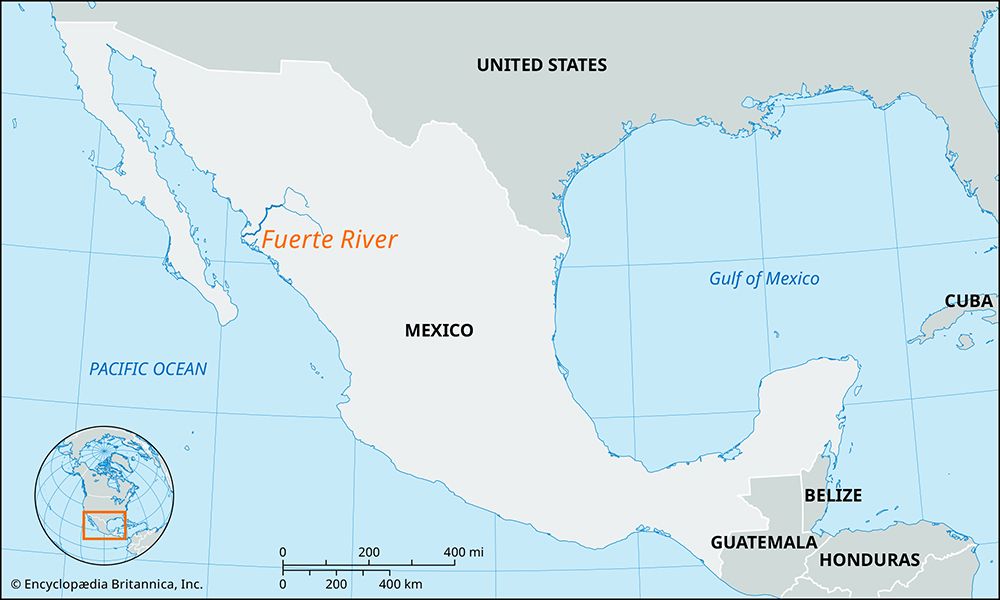
- Hydrological Importance: The range serves as a vital source of water for the surrounding regions. It provides the headwaters for rivers that support oases on the Mexican Plateau, such as the Nazas and Conchos rivers, as well as westward-flowing rivers like the Yaqui and Fuerte that sustain farming districts in the coastal lowlands.11
- Geographic Barrier: The rugged topography, characterized by deep canyons known as barrancas—including the massive Copper Canyon—has historically acted as a significant barrier to east-west communication, leading to independent commercial and infrastructure development between the interior plateau and the Pacific coast.911
- Biodiversity and Habitat: The range supports extensive coniferous forests at higher elevations and serves as a critical migratory corridor, notably for ducks, geese, and monarch butterflies.12
- Cultural Refuge: Its relative inaccessibility provided a sanctuary for indigenous groups, such as the Tarahumara, allowing them to preserve traditional cultures for centuries.13
Sources
- Nazas River — Encyclopædia Britannica
- Laguna District — Encyclopædia Britannica
- dam - Rise of environmental and economic concerns — Encyclopædia Britannica
- Asia - Water resources — Encyclopædia Britannica
- Tigris-Euphrates river system: Top Questions — Encyclopædia Britannica
- dam - Construction techniques — Encyclopædia Britannica
- river - Environments of deposition — Encyclopædia Britannica
- Colorado River - Economic development — Encyclopædia Britannica
- Sierra Madre - Physiography of the Sierra Madre — Encyclopædia Britannica
- Sierra Madre Occidental — Merriam-Webster
- Sierra Madre - Geology — Encyclopædia Britannica
- Mexico - Plant and animal life — Encyclopædia Britannica
- Sierra Madre - Economy — Encyclopædia Britannica
- Sierra Madre - People of the Sierra Madre — Encyclopædia Britannica
- Sierra Madre - Study and exploration — Encyclopædia Britannica
- Sierra Madre — Encyclopædia Britannica
Published on · 3 min read