Niari River
The Niari River is a significant tributary of the Kouilou River located in southern Congo (Brazzaville). Its headwaters originate in the Batéké Plateau…
What is Niari River?
The Niari River is a significant tributary of the Kouilou River located in southern Congo (Brazzaville). Its headwaters originate in the Batéké Plateau, northwest of Brazzaville, before the river flows south, west, and finally northwest to meet the Louessé River at Makabana, where it forms the Kouilou River.1
The Niari valley became a hub for settlement following World War II, largely due to the development of the Brazzaville–Pointe-Noire railway. The region is economically vital, characterized by rich deposits of copper, lead, and zinc, as well as highly fertile soil that supports various agricultural research stations and experimental farms. In some contexts, the name Niari is used to refer to the entire course of the river system, including the Kouilou.1
What is the significance of the Kouilou River?
The Kouilou River is a vital waterway in western Congo (Brazzaville) that flows approximately 450 miles (725 km) from its source in the plateau region to the Atlantic Ocean near Kayes.12
Its significance is defined by several key factors:
- Formation and Geography: The river is formed at Makabana by the confluence of the Niari River and the Louessé River. In some geographical contexts, the name Niari is extended to encompass the entire Kouilou system.31
- Economic Utility: The river serves as a transport route for the timber industry, specifically for floating logs from the Mayombe lumbering region to the coast.1
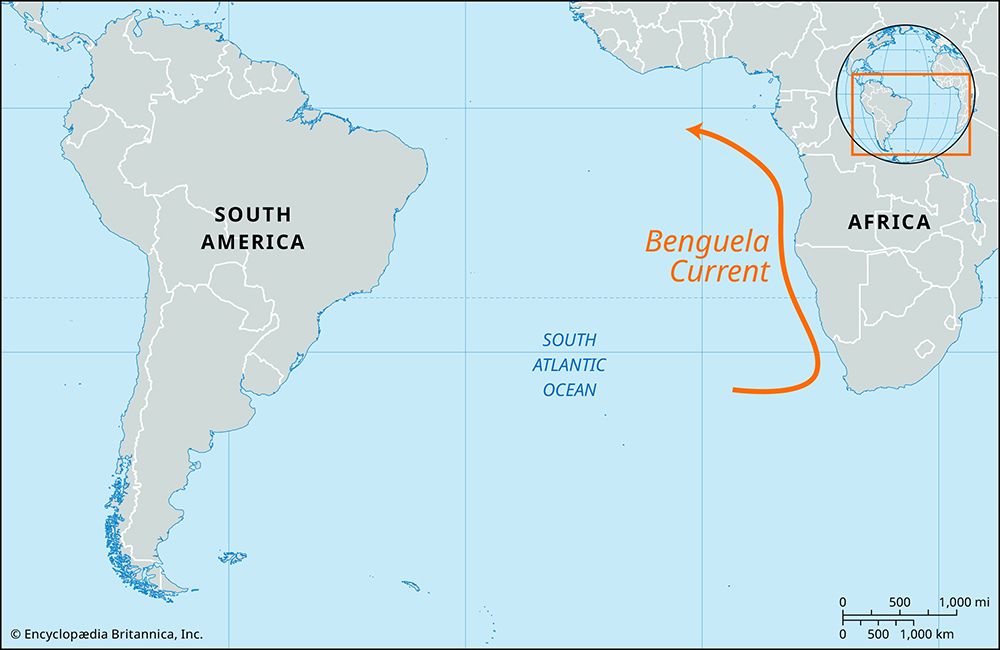
- Navigational Constraints: While it is navigable for about 40 miles (65 km) below Kakamoéka, the river’s overall utility for transport is limited. Its course is interrupted by numerous waterfalls, and its mouth is blocked to navigation by sandbars created by the strong Benguela Current.12
How did the Brazzaville-Pointe-Noire railway impact the region?
The Congo-Ocean Railway, which connects Brazzaville to the port of Pointe-Noire, was completed in 1934 to bypass the impassable rapids of the lower Congo River. Its impact on the region was profound, though achieved at a devastating human cost: between 15,000 and 20,000 Africans died during its construction between 1921 and 1934 due to forced labor and harsh conditions.674
The railway fundamentally reshaped the region’s development:
- Economic Integration: It established Pointe-Noire as the country’s primary port and transit hub, facilitating the export of minerals and timber.6
- Regional Settlement: The line spurred extensive settlement in the Niari River valley, which became a center for agricultural research and mineral extraction (copper, lead, and zinc) due to the improved access provided by the rail link.8
- Infrastructure Growth: The railway necessitated the expansion of port facilities at Pointe-Noire, which were completed in 1939 and further developed during World War II.6
What are the main agricultural products grown in the Niari basin?
The Niari River basin is recognized for having some of the most fertile soil in the Republic of the Congo, making it a primary hub for commercial agriculture and cattle ranching in the country.19
The main agricultural products grown in the Niari valley include:
- Cash Crops: The region is a significant producer of sugarcane and tobacco. Other notable cash crops include rice, cotton, and bananas.9
- Food Crops: In addition to rice, the valley supports the cultivation of various staples, including cassava (manioc), yams, taros, sweet potatoes, corn (maize), peanuts (groundnuts), and fruit.9
- Livestock: The area is a center for cattle ranching, which has been supported by government initiatives since the 1960s, particularly involving the introduction of n’dama cattle, a breed resistant to the tsetse fly.9
Due to the region’s agricultural potential, it has been selected as the site for numerous agricultural research stations and experimental farms.1
Sources
- Niari River — Encyclopædia Britannica
- Kouilou River — Encyclopædia Britannica
- Republic of the Congo - Drainage — Encyclopædia Britannica
- Congo River - Transportation — Encyclopædia Britannica
- Democratic Republic of the Congo - Resources and power — Encyclopædia Britannica
- Pointe-Noire — Encyclopædia Britannica
- Republic of the Congo - The colonial era — Encyclopædia Britannica
- Democratic Republic of the Congo - Transportation and telecommunications — Encyclopædia Britannica
- Republic of the Congo - Agriculture, forestry, and fishing — Encyclopædia Britannica
- Republic of the Congo - Manufacturing of the Republic of the Congo — Encyclopædia Britannica
Published on · 3 min read