Nightingale Thrush
The nightingale thrush refers to any of 11 species of New World thrushes within the genus Catharus (family Turdidae). These birds are characterized by a…
What are the physical characteristics of the nightingale thrush?
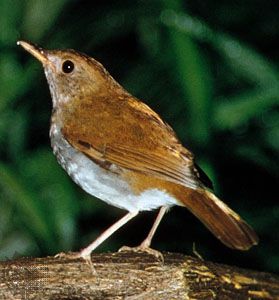
The nightingale thrush refers to any of 11 species of New World thrushes within the genus Catharus (family Turdidae). These birds are characterized by a slender build and generally drab plumage.1
Their physical appearance varies by region:
- Tropical species: These birds often feature orange eye rims, bills, and legs, with unspotted underparts. The slaty-backed nightingale thrush, for example, measures approximately 16 cm (6.5 inches) in length.1
- Northerly species: These birds typically possess whitish eye rims, dark bills, and spotted underparts. Examples include the hermit thrush, which is about 18 cm (7 inches) long, and the wood thrush, which reaches 20 cm (8 inches) and is distinguished by a rusty-colored head.12
Despite these variations, they are collectively recognized for their rich, melodic songs, which are reminiscent of the European nightingale of the European nightingale.13
Where is the natural habitat of the nightingale thrush?
It is important to clarify that the term “thrush nightingale” refers to a distinct species (Luscinia luscinia) found in eastern Europe, whereas “nightingale thrush” refers to a group of 11 New World species within the genus Catharus (or sometimes Hylocichla).143
The natural habitats of these New World nightingale thrushes vary significantly by species:
- Tropical species: These birds, such as the slaty-backed nightingale thrush, are typically found in mountain forests ranging from Costa Rica down to Bolivia.4
- Northerly species: These birds inhabit more temperate regions. For example, the hermit thrush is found in coniferous woodlands across Canada and the United States.4
- Broadleaf forest species: The wood thrush is commonly found in the eastern broadleaf forests of the United States.43
How does the nightingale thrush’s song compare to other thrush species?
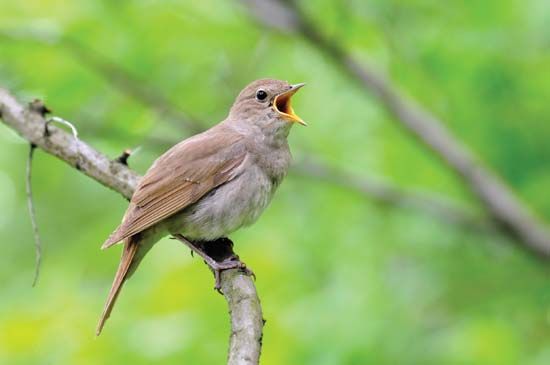
The nightingale thrush group, comprising 11 species within the New World genus Catharus (or Hylocichla), is renowned for possessing rich, melodic songs. These vocalizations are the primary reason these birds are referred to as “nightingale” thrushes, as their musical quality is reminiscent of the European nightingale (Luscinia megarhynchos).216
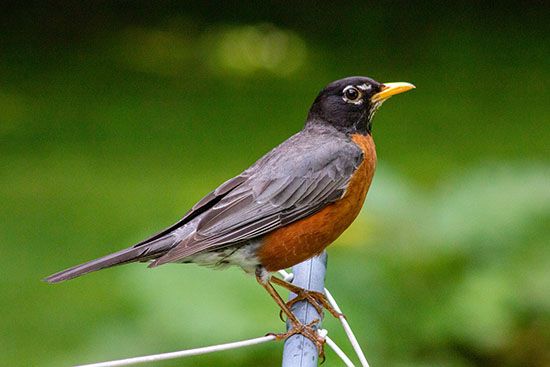
Within the broader Turdidae family, which includes many of the world’s most celebrated songbirds, the nightingale thrush is distinguished by its high-quality, complex song. While many oscine songbirds possess a complex vocal organ called a syrinx, the nightingale thrush is specifically noted for its ability to produce beautiful, varied melodies that stand out even among other accomplished singers in the thrush family, such as the American robin and the wood thrush.37
Unlike the Eurasian nightingale, which is famous for its powerful crescendo effects, the nightingale thrush is valued for its own distinctively rich and melodic repertoire.62
Are there any cultural or literary references to the nightingale thrush?
It is important to clarify that while the term “nightingale” is deeply embedded in literature and culture, these references almost exclusively pertain to the Old World nightingale (Luscinia megarhynchos), rather than the New World nightingale thrush group.2
The name “nightingale thrush” is a descriptive label applied to certain neotropical birds because their vocalizations are reminiscent of the European nightingale’s famous song. Consequently, the cultural and literary prestige associated with the nightingale—such as its frequent appearance in poetry as a symbol of beauty, melancholy, or the divine—is historically linked to the Eurasian species, not the New World Catharus thrushes. There are no significant, distinct cultural or literary traditions specifically centered on the nightingale thrush group itself, as the name is primarily a taxonomic and ornithological designation.2
Sources
- Nightingale thrush — Encyclopædia Britannica
- Nightingale — Encyclopædia Britannica
- Wood thrush — Encyclopædia Britannica
- thrush nightingale — Merriam-Webster
- Migration - Origin and evolution of migration — Encyclopædia Britannica
- Turdidae — Encyclopædia Britannica
- Passeriform - Sound production — Encyclopædia Britannica
Published on · 3 min read