Piciform
In the order Piciformes—which includes woodpeckers, toucans, barbets, and others—courtship and mating behaviors are often characterized by complex visual and…
What are some interesting courtship and mating behaviors observed in piciform species?
In the order Piciformes—which includes woodpeckers, toucans, barbets, and others—courtship and mating behaviors are often characterized by complex visual and auditory displays, as these birds rely heavily on these signals to establish pair bonds and facilitate mate choice.12
Woodpecker Courtship
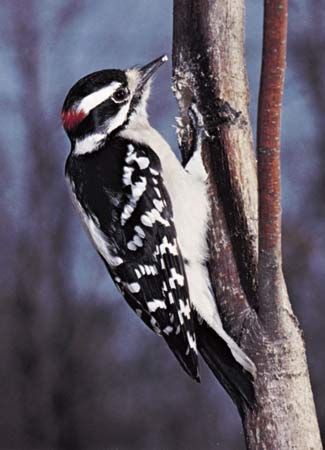
Woodpeckers are the most extensively studied group within the order. Their courtship involves conspicuous aggressive and social displays, including head bobbing, bowing, wing flicking, and tail spreading. Males and females often use specific head postures and bill-pointing gestures to communicate. A notable feature of their behavior is the use of “instrumental” signals, such as drumming or tapping their bills against trees or other resonant surfaces to attract mates and defend territories. For example, the pileated woodpecker engages in specific wing and gliding displays to facilitate mate selection.134
Vocalizations and Sociality
While many piciform vocalizations are harsh or strident rather than melodic, they play a vital role in breeding. Barbets, for instance, may perform antiphonal singing, where pairs alternate or sing simultaneously, often accompanied by head-swinging displays. In some social species, these behaviors help maintain group cohesion during the breeding season.31
Are there any endangered piciform species, and what conservation efforts are in place to protect them?
Several species within the order Piciformes are currently facing severe conservation challenges, primarily due to the destruction and modification of their natural habitats, such as the loss of virgin forest and large, mature trees.89
Endangered Species
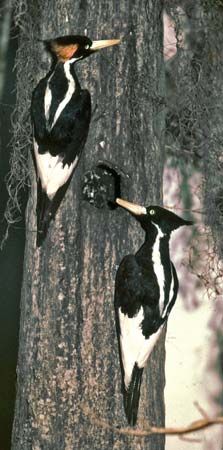
- Ivory-billed woodpecker: Once found in the southern United States and Cuba, this species is listed as critically endangered. While it was long believed to be extinct, a 2005 report of a sighting in Arkansas brought renewed attention to the species. Its decline is directly linked to the logging of the old-growth forests it relied upon for food and shelter.810
- Cuban ivory-billed woodpecker: A subspecies of the ivory-billed woodpecker, it was last officially sighted in the late 1980s and is now believed to be extinct.810
- Imperial woodpecker: Native to Mexico, this is the largest woodpecker in the world. It is currently classified as critically endangered and is possibly extinct.810
Conservation Context
These species appear to require large, undisturbed trees and isolation from human activity to survive. While specific, large-scale recovery programs are not detailed in the provided records, the general conservation of piciform birds is supported by the preservation of forest ecosystems. In some regions, foresters attempt to mitigate habitat loss for cavity-nesting birds by installing artificial nest boxes in managed forests to compensate for the lack of natural nesting sites.811
How do toucans, as part of the piciform order, differ from woodpeckers in their habits and adaptations?
Toucans and woodpeckers, while both members of the order Piciformes, exhibit distinct morphological and behavioral adaptations suited to their respective ecological niches.
Morphological Differences
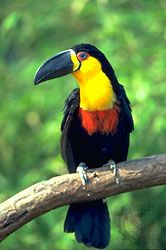
- Bill Structure: The most striking difference is the bill. Woodpeckers possess a chisel-tipped, sturdy bill designed for excavating wood and probing for insects. In contrast, the toucan’s bill is an anomaly: it is exceptionally large, lightweight, and serrated, used primarily for reaching and tearing fruit, though it also serves in species recognition and defense.913
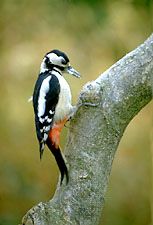
- Skull and Tongue: Woodpeckers have evolved a specialized food-gathering apparatus, including a thick skull that acts as a shock absorber and a long, distensible, barbed tongue for extracting insects from deep within trees. Toucans lack these specialized shock-absorbing cranial structures.9
- Tail and Feet: Woodpeckers have stiffened tail feathers that act as a prop while they hammer on trees. Their feet are highly specialized for climbing vertical trunks. Toucans, conversely, have short, rounded wings and long tails, making them relatively ungainly fliers compared to the strong, undulating flight of many woodpeckers.913
Behavioral Differences
- Nesting: Woodpeckers are unique within the order for their ability to excavate their own nesting cavities in hard, living wood. Toucans do not excavate; they rely on natural cavities or usurp old woodpecker nests13.14
- Foraging: Woodpeckers are primarily insectivores that glean or chisel into bark. Toucans are largely frugivorous, though they are opportunistic predators that consume insects, snakes, frogs, and the eggs or nestlings of other birds.132
- Sociality: While many woodpeckers are territorial and aggressive, toucans often form large, gregarious associations of multiple species to forage in the canopy.1314
What evolutionary history do piciform birds have, and how are they related to other bird orders?
The evolutionary history of the order Piciformes remains largely speculative due to a significant dearth of fossil evidence. Most known fossil specimens are relatively recent, with true woodpeckers appearing only in the Pliocene Epoch. Because the existing families appear to be specialized remnants of a formerly more diverse group, researchers must rely on morphological inferences to reconstruct their lineage.15
Evolutionary Relationships
The order is divided into two primary suborders, though their exact relationship remains debated:
- Galbulae: Comprising jacamars and puffbirds, these are thought to have evolved early from a generalized fly-catching ancestor. Some taxonomists suggest they may be more closely related to Coraciiformes (such as kingfishers) than to other piciforms.1512
- Pici: This group includes barbets, honey guides, toucans, and the Picidae (woodpeckers, wrynecks, and piculets). Barbets are considered the least specialized and likely the ancestral family for this suborder.1512
Relation to Other Orders
Piciforms share many similarities with the highly successful order Passeriformes, or perching birds. While some scientists have proposed merging the two, most taxonomists maintain them as distinct orders, noting that no passeriform possesses the unique zygodactyl toe arrangement (two toes forward, two back) characteristic of piciforms.1612
Sources
- Animal social behavior - Social interactions involving sex — Encyclopædia Britannica
- Piciform - Reproduction — Encyclopædia Britannica
- Sex - Courtship — Encyclopædia Britannica
- Reproductive behaviour - Birds — Encyclopædia Britannica
- Pileated woodpecker: Top Questions — Encyclopædia Britannica
- Piciform - Vocalizations — Encyclopædia Britannica
- Bird - Sound — Encyclopædia Britannica
- Ivory-billed woodpecker — Encyclopædia Britannica
- Piciform - Form and function — Encyclopædia Britannica
- Piciform - Importance to humans — Encyclopædia Britannica
- Woodpecker — Encyclopædia Britannica
- Piciform — Encyclopædia Britannica
- Toucan — Encyclopædia Britannica
- Piciform - Distribution and ecology — Encyclopædia Britannica
- Piciform - Evolution and paleontology — Encyclopædia Britannica
- Piciform - Critical appraisal — Encyclopædia Britannica
Published on · 4 min read