Northern Cardinal
The northern cardinal (Cardinalis cardinalis) is a common North American songbird belonging to the family Cardinalidae. It is widely recognized for the…
What is a northern cardinal?
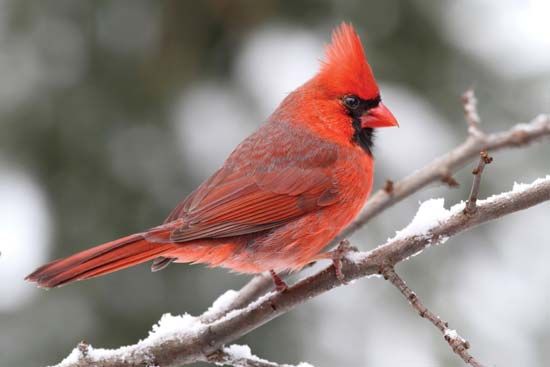
The northern cardinal (Cardinalis cardinalis) is a common North American songbird belonging to the family Cardinalidae. It is widely recognized for the male’s striking scarlet plumage, black facial mask, and distinctive crest, while females exhibit a more subdued olive-brown coloration with reddish highlights.12
These nonmigratory birds are highly adaptable, thriving in habitats ranging from dense brush and forests to urban backyards. Their range extends across the eastern United States, reaching as far west as Arizona and New Mexico and south into Mexico and Central America. Although historically a southern species, they expanded their territory northward into Canada during the 20th century, aided by warmer temperatures and the prevalence of backyard bird feeders.2
Northern cardinals are omnivorous, consuming seeds, fruits, and insects. They are known for their territorial behavior, with males sometimes aggressively attacking their own reflections in windows. Both sexes sing, and they are prolific breeders, often raising multiple broods per year. Currently, the species is classified as of least concern by the IUCN.12
What does a northern cardinal look like?
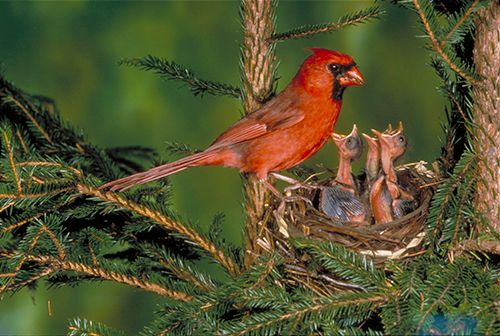
The northern cardinal (Cardinalis cardinalis) is a medium-sized songbird measuring 21–23 cm (8.3–9.1 inches) in length, with an average wingspan of about 30 cm (12 inches) and a weight of 42–48 grams.3
Both sexes share several distinct physical characteristics, including:
- A prominent, pointed crest on the head.3
- A black mask or region surrounding the eyes.3
- A short, thick, red-orange bill.3
- A relatively long tail.3
The species exhibits sexual dimorphism in its coloration. The male is famous for its striking scarlet plumage, which is derived from carotenoids found in its diet of fruits and berries. In contrast, the female has a more subdued appearance, featuring olive-brown feathers with reddish highlights on the wings and tail.3
While the species is typically red, an exceptionally rare yellow variant exists due to a genetic mutation that prevents the bird from converting yellow dietary pigments into red.3
Where can you find northern cardinals in the wild?
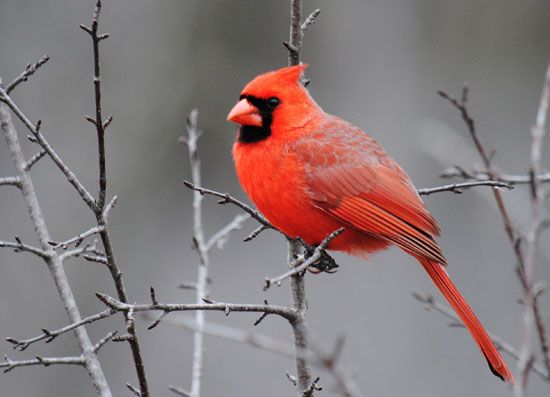
Northern cardinals are highly adaptable birds found in a variety of habitats, including urban parks, residential backyards, tall brush, vines, and the edges of deciduous forests.3
Their geographic range is extensive, covering much of the eastern United States and extending west into Arizona and New Mexico. To the south, they are found throughout Mexico and into northern Guatemala and Belize. Since the early 1900s, the species has also expanded its territory northward into southeastern Canada, a shift attributed to rising global temperatures and the increased availability of winter food sources in suburban areas.3
Because they are nonmigratory, these birds remain in their established ranges throughout the winter, often frequenting areas with bird feeders.3
What do northern cardinals eat?
The northern cardinal is an omnivore with a varied diet that includes seeds, grains, nuts, berries, fruits, and insects.3
Their consumption of fruits and berries is particularly significant, as these foods contain carotenoids that provide the red pigment necessary for the male’s signature plumage. In residential areas, they are also frequent visitors to bird feeders, where they particularly favor sunflower seeds.31
While adults consume a wide range of plant and animal matter, young cardinals have a more specialized diet; they are fed primarily caterpillars and other insects until they are ready to leave the nest.3
Sources
- Cardinal — Encyclopædia Britannica
- northern cardinal — Merriam-Webster
- Northern cardinal — Encyclopædia Britannica
Published on · 3 min read