Novaya Zemlya
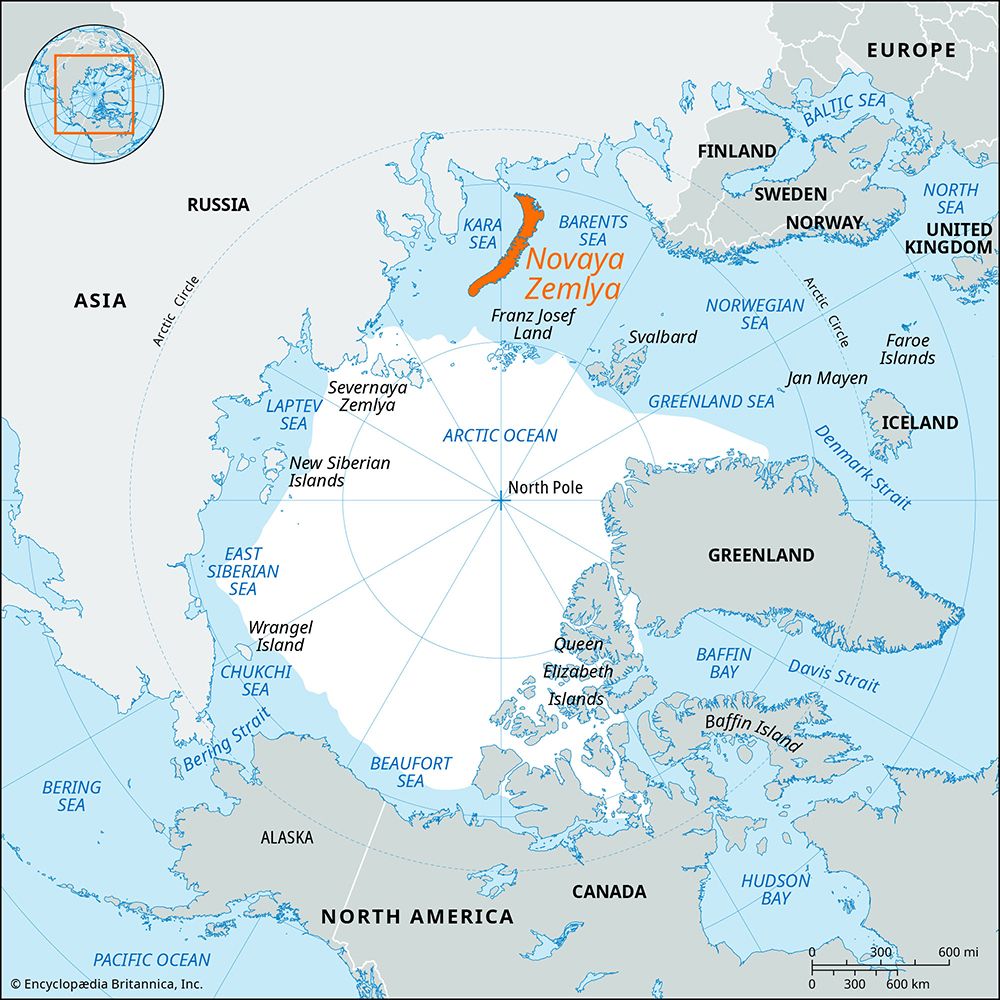
The Novaya Zemlya archipelago, located in the Arctic Ocean, supports a variety of wildlife adapted to its severe climate and tundra environment.
What unique wildlife species can be found on Novaya Zemlya?
The Novaya Zemlya archipelago, located in the Arctic Ocean, supports a variety of wildlife adapted to its severe climate and tundra environment.1
The islands are home to several mammal species, including:
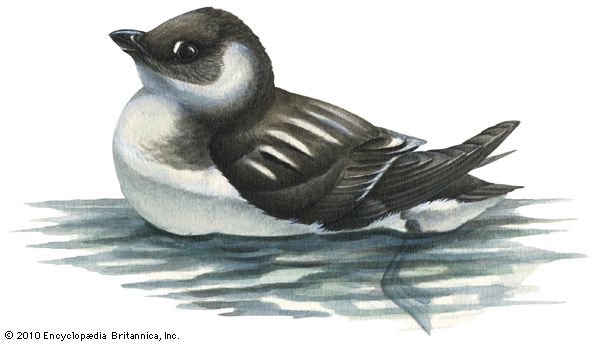
Additionally, the archipelago hosts a rich diversity of bird life during the summer months. Notably, the dovekie, a small seabird belonging to the Alcidae family, breeds in large colonies on the rocky coasts and islands of the region.12
What is the climate like on Novaya Zemlya and how does it affect the local ecosystem?
The climate of Novaya Zemlya is severe, characterized by long, frigid winters with temperatures ranging from 3 to -8 °F (-16 to -22 °C) and cool summers between 36 and 44 °F (2 to 7 °C). The region experiences frequent fogs and strong winds, with over one-quarter of the land permanently covered by ice.1
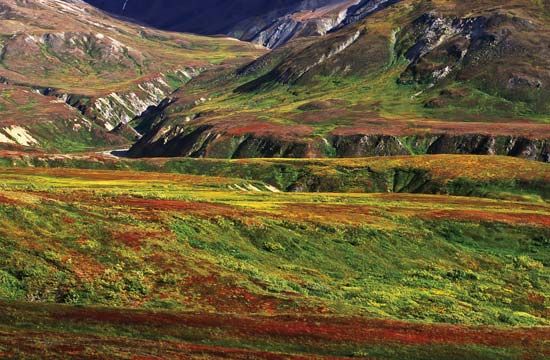
This harsh environment dictates the structure of the local ecosystem, which is defined by low species diversity and relative simplicity. The short summer season limits plant growth and nutrient decomposition, leading to low productivity. Vegetation is predominantly low-lying tundra, though sheltered valleys support low bushes.41
Strong winds and snow distribution are critical factors; wind redistributes snow, creating drifts that provide insulation for small rodents like lemmings while complicating foraging for larger herbivores. Because species live near their biological limits, the ecosystem is unstable, often experiencing wide population fluctuations driven by weather extremes and predator-prey dynamics.4
How was Novaya Zemlya used for nuclear testing during the Cold War?
During the Cold War, the Soviet Union utilized the remote archipelago of Novaya Zemlya as a primary site for nuclear weapon testing. The most significant event occurred on October 30, 1961, with the detonation of the Tsar Bomba, the most powerful human-made explosion in history.5
Designed by a team including Andrey Sakharov, the three-stage thermonuclear bomb was dropped over the Mityushikha Bay test site. Although originally designed for a 100-megaton capacity, it was modified to yield 50 megatons to reduce fallout. The blast, which occurred 2.5 miles above the ground, leveled the uninhabited village of Severny 34 miles away and caused damage to structures over 100 miles from ground zero.5
While the test demonstrated Soviet military strength, the weapon was never deployed operationally due to its massive size, which prevented it from being carried by ballistic missiles. Following this event, international pressure led to the 1963 treaty banning atmospheric nuclear tests.5
What is the history of human settlement and exploration on Novaya Zemlya?
While Novaya Zemlya has been known since at least medieval times, it remained largely unsettled and unexplored by outsiders until the 18th and 19th centuries.6
Early European exploration was driven by the search for a northeast passage to Asia. In 1594, the Dutch navigator Willem Barents reached the west coast of the archipelago. During his third voyage in 1596, his ship became trapped in ice, forcing his party to winter on the island. This site was discovered in 1871, providing significant historical relics.1
Systematic scientific exploration intensified in the 19th century. Between 1821 and 1824, Fyodor Petrovich Litke of the Russian navy surveyed the west coast and the Matochkin Shar Strait, while Pyotr Kuzmich Pakhtusov surveyed much of the east coast between 1832 and 1835. Following the 1917 Russian Revolution, the Soviet Union expanded its presence significantly to develop the northern sea route, establishing numerous polar stations for meteorological and radio facilities.7
Sources
- Novaya Zemlya — Encyclopædia Britannica
- Dovekie — Encyclopædia Britannica
- Arkhangelsk — Encyclopædia Britannica
- Polar ecosystem - Development and structure of populations and communities — Encyclopædia Britannica
- Tsar Bomba — Encyclopædia Britannica
- Willem Barents — Encyclopædia Britannica
- Arctic - The Russian Arctic — Encyclopædia Britannica
- Arctic - Peoples of Fennoscandia and northwestern Siberia — Encyclopædia Britannica
Published on · 3 min read