Nuculopsis
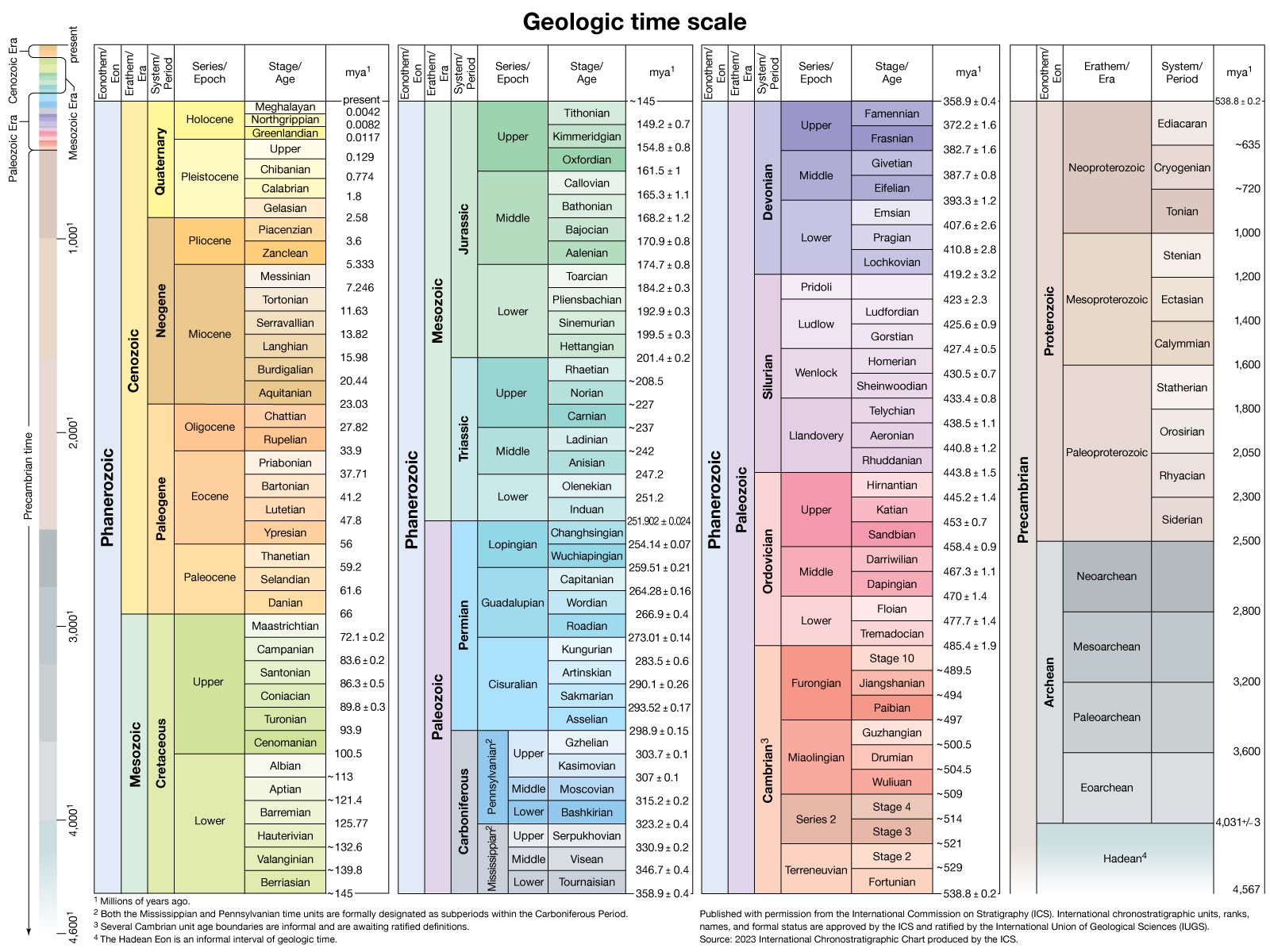
Nuculopsis is an extinct genus of clams that lived during the Pennsylvanian Subperiod, approximately 318 million to 299 million years ago. These small…
What is Nuculopsis?
Nuculopsis is an extinct genus of clams that lived during the Pennsylvanian Subperiod, approximately 318 million to 299 million years ago. These small, nearly spherical organisms were characterized by fine growth lines on their shells.1
They inhabited the broad, shallow seas that covered much of midcontinental North America during that time. Due to their physical similarities to the more common and long-lived genus Nuculana, Nuculopsis has historically been classified as a subgenus of Nuculana.1
What are the primary differences between extinct and extant bivalves?
The primary differences between extinct and extant bivalves are rooted in their evolutionary history, as the class has undergone significant diversification and adaptation over hundreds of millions of years.3
Evolutionary Context
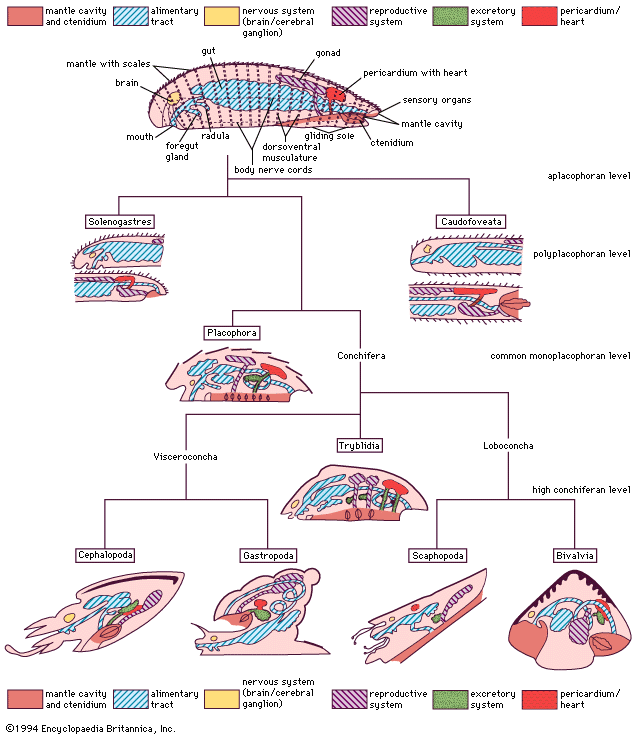
The oldest known bivalves, such as Fordilla troyensis and Pojetaia runnegari, date back to the Cambrian Period (about 510 million years ago). While many ancient lineages have vanished, the “stamp of modernity” was placed on the group during the Mesozoic Era, when most currently recognized families emerged. Many modern bivalves can trace their ancestry back to these early groups, demonstrating a remarkable “plasticity” in their body form that has allowed them to survive by repeatedly adapting to new habitats.3
Structural and Behavioral Adaptations
- Feeding Mechanisms: Primitive forms were primarily detritivores, whereas most modern bivalves are suspension feeders that utilize ciliated ctenidia (modified gills) to collect food particles. Some ancient and specialized groups, such as the subclass Cryptodonta and certain Lucinoidea, evolved to host sulfur-oxidizing bacteria, a trait that persists in some modern species.43
- Habitat and Predation: Increased predation pressure, particularly during a major adaptive radiation about 60 million years ago, drove many bivalves to develop defensive shell features—such as spines, ridges, and teeth—or to adopt deep-burrowing habits.4
- Morphological Trends: While the basic body plan involves two valves, evolution has favored various shapes based on lifestyle. For example, the loss of the anterior adductor muscle led to the development of circular or triangular shells in many groups, facilitating attachment to hard surfaces via a byssus or cementation, whereas deep-burrowing species evolved laterally compressed, bladelike shells for efficient movement through sediment.564
How do scientists use fossils like Nuculopsis to understand ancient marine environments?
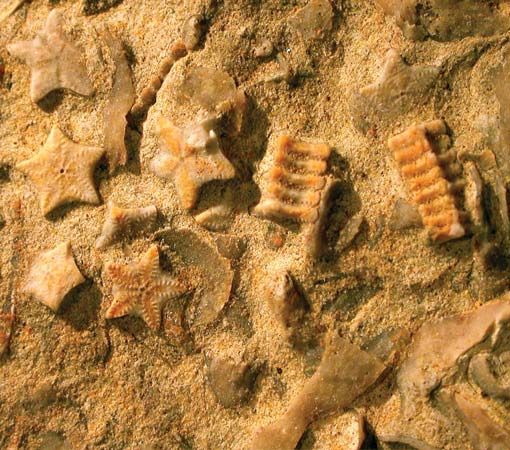
Scientists use fossils like Nuculopsis to reconstruct ancient environments through the field of paleoecology. By analyzing the remains of organisms preserved in sedimentary rock, researchers can determine the specific ecological niches these creatures occupied, including their food chains and the physical constraints of their habitats.18
Nuculopsis, for instance, serves as a biological indicator for the broad, shallow seas that covered midcontinental North America during the Pennsylvanian Subperiod. Because fossils are often found in distinct sequences within strata, they allow scientists to perform stratigraphic correlation, which helps establish the relative ages of rock layers across different regions.183
Furthermore, because certain organisms have specific environmental requirements—such as water depth, temperature, or salinity—their presence in the fossil record provides clues about past climates and geographic conditions. This data is also economically significant, as identifying these ancient environments is essential for the exploration of fossil fuels like oil and natural gas, which accumulate in specific, restricted settings.378
What does it mean for a bivalve to be classified as infaunal?
To be classified as infaunal means that a bivalve lives within the sediments of the seafloor, rather than on its surface. This lifestyle is a defining characteristic of many bivalves, which have evolved a specialized body plan to thrive in these environments.11765
Key aspects of the infaunal lifestyle include:
- Burrowing Adaptations: Infaunal bivalves typically possess a muscular foot modified for digging into sand, mud, or other substrates. Their shells are often laterally compressed and bladelike, which allows for more efficient movement through the sediment.61213
- Feeding and Respiration: While buried, these animals remain connected to the water column above through long [siphons], which allow them to filter-feed and breathe while remaining protected from predators within the substrate.1213
- Ecological Strategy: The transition to an infaunal life is often viewed as an evolutionary response to predation pressure, driving bivalves to “go underground” to escape predators like crustaceans, starfish, and snails.612
In contrast to epifauna, which live upon the seafloor or attach to hard surfaces like rocks, infaunal organisms are entirely embedded within the bottom material.117
Sources
- Nuculopsis — Encyclopædia Britannica
- bivalve - Annotated classification — Encyclopædia Britannica
- bivalve - Evolution and paleontology — Encyclopædia Britannica
- list of mollusks — Encyclopædia Britannica
- bivalve - External features — Encyclopædia Britannica
- bivalve - Size range and diversity of structure — Encyclopædia Britannica
- bivalve - Ecology and habitats — Encyclopædia Britannica
- geology - Paleontology — Encyclopædia Britannica
- fossil record — Encyclopædia Britannica
- fossil — Encyclopædia Britannica
- infauna — Merriam-Webster
- mollusk - Habitats, feeding habits, and associations — Encyclopædia Britannica
- benthos — Encyclopædia Britannica
Published on · 3 min read