Olenellus
Olenellus is a genus of extinct trilobites that lived during the Early Cambrian period, approximately 542 million to 521 million years ago. Because they were…
What is Olenellus?
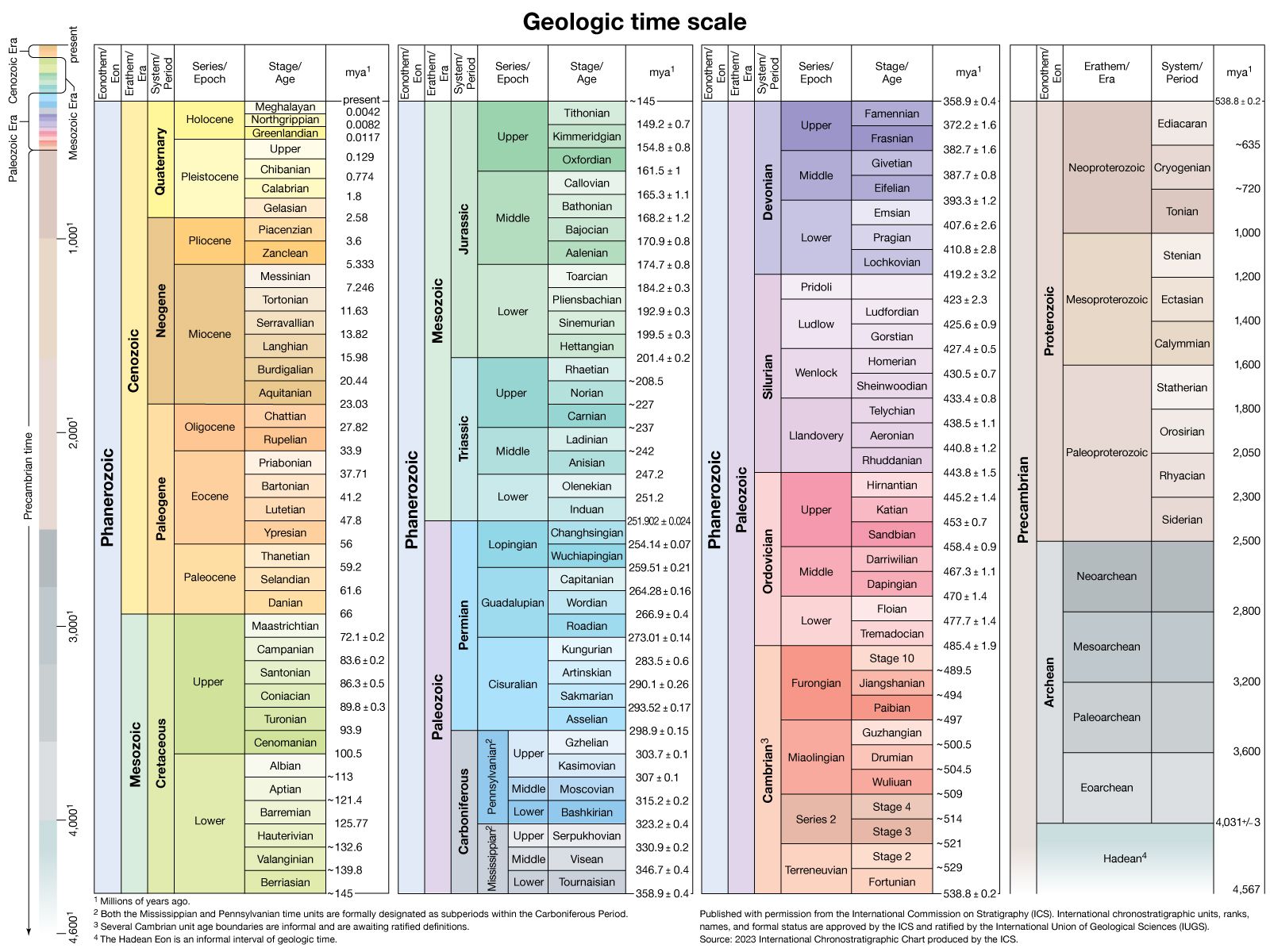
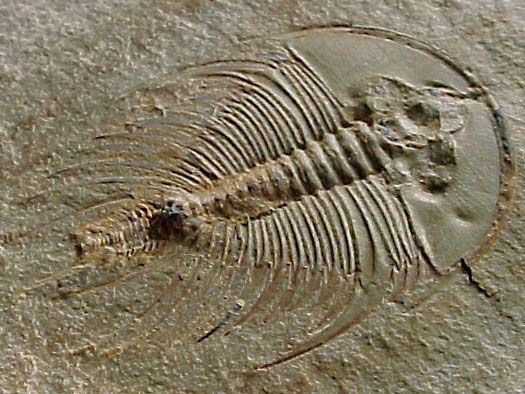
Olenellus is a genus of extinct trilobites that lived during the Early Cambrian period, approximately 542 million to 521 million years ago. Because they were common during this specific timeframe and restricted to these rock layers, they serve as a valuable guide fossil for geologists and paleontologists.1
Physically, Olenellus is characterized by a well-developed head, large crescent-shaped eyes, and a small, poorly developed tail. Additionally, members of this genus are noted for having a large spine located on the fifteenth thoracic segment.12
What are index fossils and why are they important?
An index fossil is any plant or animal preserved in the Earth’s rock record that is characteristic of a specific environment or a particular span of geologic time.3
To be considered a useful index fossil, a specimen must meet several criteria:
- It must be distinctive or easily recognizable.3
- It must be abundant.3
- It must have a wide geographic distribution.3
- It must have a short range through time.3
These fossils are essential to science because they serve as the basis for defining boundaries within the geologic time scale and for the correlation of rock strata. Because these organisms—such as Protista with hard body parts, ammonoids, or mammals in the Cenozoic Era—evolved rapidly and possessed durable remains like shells, bones, or teeth, they allow researchers to accurately date geological deposits.3
What are the main characteristics of trilobites?
Trilobites were a group of extinct arthropods that dominated marine environments beginning in the Cambrian Period. Their primary characteristics include:
- Three-Lobed Body: They are easily recognized by their distinctive form, which consists of a central longitudinal axial lobe with two additional lobes on either side.4
- Segmented Anatomy: The body is divided into three distinct regions: the cephalon (head), the thorax, and the pygidium (tail).4
- Exoskeleton: They possessed a hard, chitinous exoskeleton that they had to shed to grow, which explains why their fossilized remains are relatively common.4
- Appendages and Senses: Each body segment featured a pair of jointed appendages. The forwardmost appendages were specialized for feeding and sensing. Most trilobites had compound eyes, which were often made of calcite mineral lenses, allowing for exceptional preservation.45
- Dietary Habits: They occupied various ecological niches, ranging from active predators and scavengers to those that likely consumed plankton.4
What was the Cambrian Explosion?
The Cambrian explosion refers to the rapid evolutionary diversification of life that occurred at the beginning of the Cambrian Period, approximately 541 million years ago. Within a geologically brief span of a few million years, most major animal phyla and the ancestral lineages of modern species emerged.789
This period was characterized by significant environmental changes, including warmer global temperatures and rising sea levels, which led to increased erosion and higher oxygen levels in seawater. These conditions supported the rise of complex life, including trilobites, mollusks, and early predators like Anomalocaris.8
A defining feature of this era was the evolution of hard body parts, such as calcium carbonate shells. These structures fossilized much more readily than soft tissues, providing 19th-century geologists with a significantly more complete fossil record than that of the preceding Proterozoic Eon.7
Sources
- Olenellus — Encyclopædia Britannica
- Olenellus — Merriam-Webster
- index fossil — Encyclopædia Britannica
- trilobite — Encyclopædia Britannica
- Photoreception - Evolution of eyes — Encyclopædia Britannica
- arthropod - Evolution and paleontology — Encyclopædia Britannica
- Cambrian Period: Top Questions — Encyclopædia Britannica
- Cambrian explosion — Merriam-Webster
- A Journey Through Time Since the Precambrian - Cambrian Period: 541 million to 485.4 million years ago — Encyclopædia Britannica
Published on · 2 min read