Ophioglossaceae
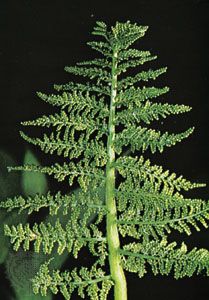
The Ophioglossaceae family is a group of primitive ferns that includes four or five genera, with the taxonomy of the group remaining a subject of contention.
How many genera are included in the Ophioglossaceae family, and what are their names?
The Ophioglossaceae family is a group of primitive ferns that includes four or five genera, with the taxonomy of the group remaining a subject of contention.1
The recognized genera are:
- Ophioglossum: Known as adder’s-tongue ferns, this genus contains approximately 46 species.1
- Botrychium: This genus includes about 50 species, commonly referred to as grape ferns and moonworts. Some classifications may also place the rattlesnake fern into its own separate genus, Botrypus.1
- Helminthostachys: A monotypic genus represented by the species Helminthostachys zeylanica.1
- Mankyua: A monotypic genus represented by the species Mankyua chejuense.1
These plants are primarily distinguished by the structure and placement of their sporangia on a fertile spike, which is separate from the sterile green blade of the frond.1
What are some common species of Ophioglossaceae, and where can they be found?
Members of the Ophioglossaceae family are found globally, inhabiting both tropical and temperate regions. While most are terrestrial, some species are epiphytic.1
Common species and their distributions include:
- Ophioglossum (Adder’s-tongue ferns): This genus comprises 46 species distributed across tropical and temperate zones. Notably, O. malviae is recognized as the world’s smallest terrestrial fern, native to India. as the world’s smallest terrestrial fern, native to India.1
- Botrychium (Grape ferns and moonworts): With approximately 50 species, this genus is distributed worldwide. A well-known example is the rattlesnake fern (B. virginianum), which is found in North America.1
- Helminthostachys zeylanica: This species is found in Sri Lanka and regions stretching from the Himalayas to Queensland, Australia.1
- Mankyua chejuense: This species is endemic to Cheju Island in South Korea.1
What unique features distinguish Ophioglossaceae from other fern families?
The Ophioglossaceae family is distinguished from other ferns by several unique morphological and reproductive features:
Frond Structure
Unlike most ferns, members of this family typically produce only one frond per season, which is divided into two distinct parts: a sterile green blade and a specialized fertile spike that bears the spore-producing structures (sporangia).
Eusporangiate Development
Ophioglossaceae are classified as eusporangiate ferns. Their sporangia arise from several epidermal cells, whereas the more common leptosporangiate ferns (class Polypodiopsida) develop sporangia from a single cell. Furthermore, these sporangia are massive, possess multi-layered walls, and produce a large, indefinite number of spores, contrasting with the smaller, long-stalked, single-layered sporangia found in most other ferns.13
Gametophyte Characteristics
The gametophytes of Ophioglossaceae are subterranean, tuberous, and lack chlorophyll. They are mycoheterotrophic, meaning they rely on a symbiotic relationship with fungi for nutrition, unlike the photosynthetic, heart-shaped prothalli typical of most other fern families.34
Genetic Distinction
The family is also notable for having the highest chromosome counts of any known organism; for example, Ophioglossum reticulatum possesses 1,440 chromosomes.1
Are there any notable uses or cultural significance associated with Ophioglossaceae ferns?
While the Ophioglossaceae family is scientifically significant due to its primitive evolutionary traits and record-breaking chromosome counts, there is limited documentation regarding widespread cultural or medicinal uses in the provided records.
The primary cultural connection noted is etymological. The genus Botrychium, which includes grape ferns and moonworts, derives its name from the Greek word botrychos, meaning “stalk of a bunch of grapes.” This name was inspired by the plant’s distinctive, grapelike clusters of sporangia. Similarly, the family name Ophioglossaceae and the common name for the genus Ophioglossum—“adder’s-tongue ferns”—reflect the visual appearance of their fertile spikes, which resemble the tongue of a snake.
Beyond these descriptive naming conventions, the family is primarily studied by botanists for its unique eusporangiate development and subterranean, mycoheterotrophic gametophytes rather than for specific human applications.
Sources
- Ophioglossaceae — Encyclopædia Britannica
- Ophioglossaceae — Merriam-Webster
- plant reproductive system - Ferns — Encyclopædia Britannica
- fern - Specialized forms — Encyclopædia Britannica
- Botrychium — Merriam-Webster
Published on · 3 min read