Ornithogalum
Ornithogalum is a genus comprising approximately 100 species of bulbous herbs within the Asparagaceae family. Native to Eurasia and Africa, these plants are…
What is Ornithogalum?
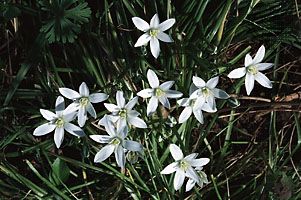
Ornithogalum is a genus comprising approximately 100 species of bulbous herbs within the Asparagaceae family. Native to Eurasia and Africa, these plants are characterized by narrow, basal leaves that emerge from an underground bulb.1
The plants produce clusters of white, yellow, or greenish bell- or star-shaped flowers atop a leafless stalk. Popular garden varieties include the Star-of-Bethlehem (Ornithogalum umbellatum) and the Arabian starflower (O. arabicum). Because some species propagate readily through bulbils, they can spread aggressively and naturalize in certain environments. The name is derived from the Greek ornithogalon, combining terms for “bird” and “milk”.12
What are the main differences between bulbous and non-bulbous plants?
The primary difference between bulbous and non-bulbous plants lies in their specialized structures for survival and energy storage.
Bulbous plants—a category that includes true bulbs, corms, tubers, and rhizomes—possess modified underground organs that function as food reserves. These structures allow the plant to enter a state of dormancy during unfavorable conditions, such as harsh winters or prolonged droughts, and resume active growth when environmental conditions improve. In a true bulb, such as an onion or lily, the majority of the structure consists of fleshy, food-storing leaf bases surrounding a small stem.345
In contrast, non-bulbous plants lack these specific underground storage organs. While many plants rely on other methods for reproduction and survival—such as spores in ferns or simple root systems—they do not utilize the specialized, fleshy, subterranean stems or leaf bases characteristic of bulbous species to endure dormancy.54
How do plants like Ornithogalum spread using bulbils?
Plants in the genus Ornithogalum spread through a form of vegetative reproduction involving bulbils, which are small, bulblike structures that develop from the parent plant.16
These structures typically form as miniature bulbs or bulblets within the axils—the angles between the leaves and the stem—of the parent plant’s fleshy leaves. Because these bulbils are essentially clones of the parent, they can be planted to produce new, genetically identical individuals. In some Ornithogalum species, this process occurs so readily that the plants can spread aggressively and naturalize in new environments. This method of propagation is highly effective in horticulture because it bypasses the challenges of seed dormancy and allows for the rapid, consistent multiplication of desirable plant varieties.617
What are some other popular flowers in the Asparagaceae family?
The Asparagaceae family is remarkably diverse, encompassing a wide range of popular ornamental and garden flowers. Because the family is defined by genetic relationships rather than uniform physical traits, it includes everything from desert succulents to delicate spring bulbs.910
Some of the most popular flowers and ornamental plants in this family include:
- Hyacinth: Known for their dense, fragrant spikes of bell-shaped flowers, these are classic spring-blooming bulbs.910
- Grape Hyacinth: A popular garden favorite characterized by its small, clustered, grape-like blue or purple flowers.910
- Lily of the Valley: Prized for its delicate, highly fragrant, white bell-shaped blossoms.9
- Tuberose: Cultivated extensively for its intense fragrance and spikes of white flowers.910
- Squill: Often grown for their early-spring displays of star-shaped or bell-shaped flowers.910
- Hosta: While primarily grown for their lush foliage, they produce elegant, lily-like flower spikes.910
- Yucca: Known for their dramatic, tall stalks of white, bell-shaped flowers.1011
Sources
- Ornithogalum — Encyclopædia Britannica
- ornithogalum — Merriam-Webster
- bulb — Encyclopædia Britannica
- plant reproductive system - Reproduction by special asexual structures — Encyclopædia Britannica
- gardening - Bulbous plants — Encyclopædia Britannica
- vegetative reproduction — Encyclopædia Britannica
- horticulture - Vegetative propagation — Encyclopædia Britannica
- Asparagales - Order growth characteristics — Encyclopædia Britannica
- list of plants in the family Asparagaceae — Encyclopædia Britannica
- Asparagales - Organization and taxonomy — Encyclopædia Britannica
- Asparagaceae — Encyclopædia Britannica
- Asparagales — Encyclopædia Britannica
Published on · 2 min read