Organ Pipe Cactus National Monument
Organ Pipe Cactus National Monument, located in southwestern Arizona, is home to a diverse array of desert flora adapted to the rugged Sonoran Desert…

What types of cacti and other plant species can be found in the park?
Organ Pipe Cactus National Monument, located in southwestern Arizona, is home to a diverse array of desert flora adapted to the rugged Sonoran Desert environment.1
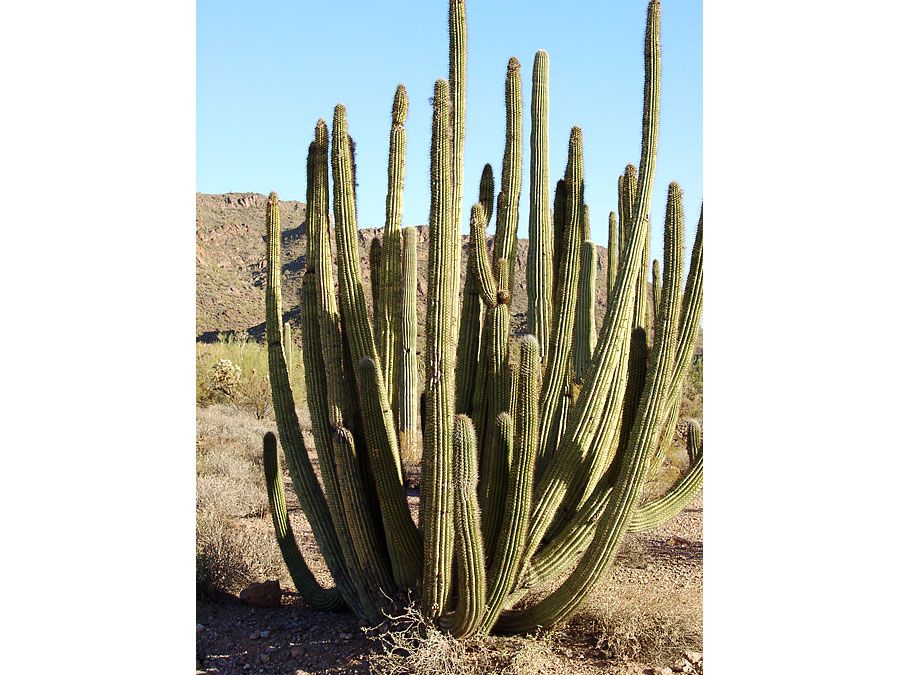
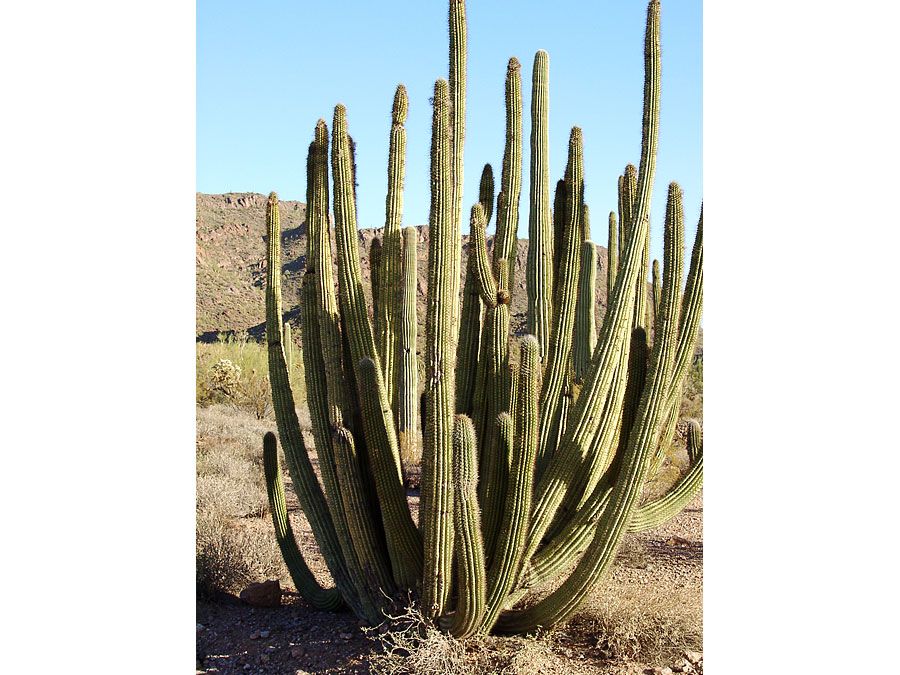
The monument is named for the organ-pipe cactus (Stenocereus thurberi), which grows in large stands here—a unique occurrence within the United States. In addition to these, the park features several other notable plant species, including:1
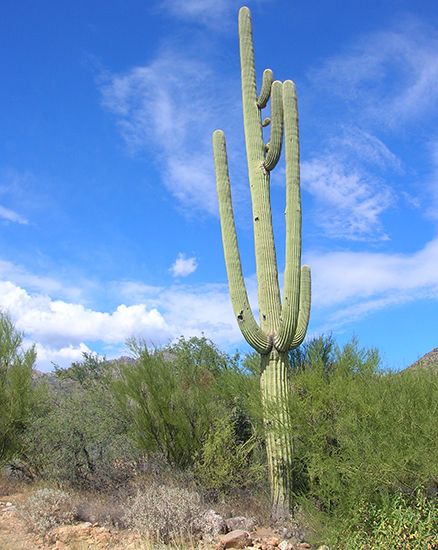
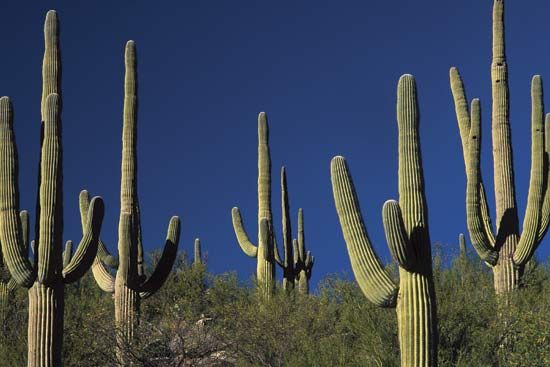
- Saguaros: Large, iconic candelabra-shaped cacti.1
- Ocotillos: Flowering shrubs characterized by their long, spiny stems.1
- Elephant trees (Bursera microphylla): A rare species found within the monument.1
- Other vegetation: The landscape also supports desert ironwoods, creosote bushes, and, during years with adequate winter and spring rainfall, a profusion of wildflowers that bloom between February and April.1
These plants are part of the broader, highly diverse vegetation found throughout the Sonoran Desert, which also includes various species of cacti such as prickly pear, cholla, and barrel cactus, as well as plants like yucca, mesquite, and palo verde.2
Where is Organ Pipe Cactus National Monument located, and what are its unique geographical features?
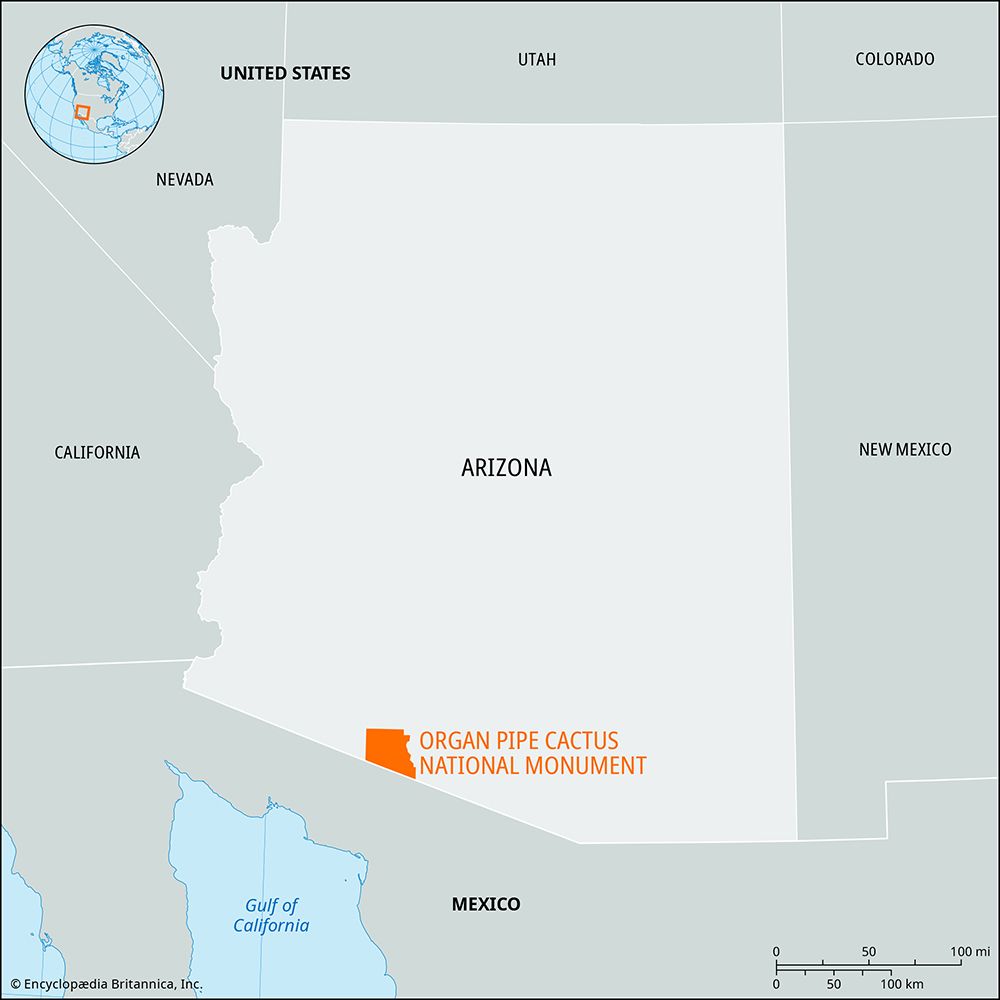
Organ Pipe Cactus National Monument is located in southwestern Arizona, situated directly along the border with Mexico.3
The monument’s geography is defined by the rugged terrain of the Sonoran Desert, characterized by several mountain ranges and hills separated by broad, flat valleys. Key geographical features include:3
- Ajo Range: Located along the eastern boundary, this range contains the monument’s highest elevations, peaking at 4,808 feet (1,465 meters) at Mount Ajo.3
- Water Features: The area lacks perennial waterways, with the exception of a small, spring-fed pond at Quitobaquito in the southwest corner. However, the landscape is marked by intermittent streams that can transform into powerful torrents during summer monsoon thunderstorms.3
- Historic Routes: A portion of the historic El Camino del Diablo (“Devil’s Highway”) crosses a corner of the monument, reflecting the region’s challenging history for early travelers.3
Designated as a UNESCO biosphere reserve, the monument is uniquely recognized for hosting large stands of the organ-pipe cactus, which are found in the United States only in this specific locality.3
How did the Organ Pipe Cactus National Monument get its name, and what makes the organ pipe cactus special?
Organ Pipe Cactus National Monument is named after the organ-pipe cactus (Stenocereus thurberi), a species that grows in large, prominent stands within the monument—the only location in the United States where this occurs in such abundance. The plant derives its common name from the way its tall, columnar branches rise from the base, resembling the pipes of a musical organ.2
The organ-pipe cactus is a remarkable desert species that typically reaches heights of 5 to 8 meters (16 to 26 feet). It is characterized by several upright, candelabra-like stems that are covered in dense brown spines. Beyond its unique appearance, the plant is ecologically significant: it produces sweet, red fruit and blooms with white, night-opening flowers that are primarily pollinated by bats. Because of its hardiness and structure, the species is also traditionally valued for its fruit and is often planted in rows to serve as natural hedges or fences.1
What are some popular activities and attractions for visitors to the Organ Pipe Cactus National Monument?
Visitors to Organ Pipe Cactus National Monument can enjoy a variety of outdoor activities within the rugged landscape of the Sonoran Desert. Because the monument offers minimal facilities—with no restaurants or service stations—most visitors plan their trips during the cooler winter months to take advantage of the pleasant weather.3
Popular activities and attractions include:
- Scenic Drives and Cycling: Visitors can explore the monument’s diverse terrain by driving or cycling along its scenic routes.3
- Hiking: There are numerous opportunities to hike to historic sites, including the remains of former ranches and mines that provide a glimpse into the region’s past.3
- Exploring Historic Routes: A portion of the historic El Camino del Diablo (“Devil’s Highway”) crosses the monument. This challenging route, which saw many pioneers and miners pass through in the past, remains accessible to those with four-wheel-drive vehicles.3
- Wildlife and Nature Observation: The monument is a biosphere reserve teeming with life. Visitors often look for desert bighorn sheep, Gila monsters, and a wide array of birds, such as hummingbirds and cactus wrens. During spring, the desert floor often features profuse wildflower blooms.3
Sources
- Organ Pipe Cactus National Monument — Merriam-Webster
- organ-pipe cactus — Encyclopædia Britannica
- Organ Pipe Cactus National Monument — Encyclopædia Britannica
- Sonoran Desert — Encyclopædia Britannica
- Arizona-Sonora Desert Museum — Encyclopædia Britannica
- organ pipe cactus — Merriam-Webster
- organ cactus — Merriam-Webster
Published on · 3 min read