Saguaro
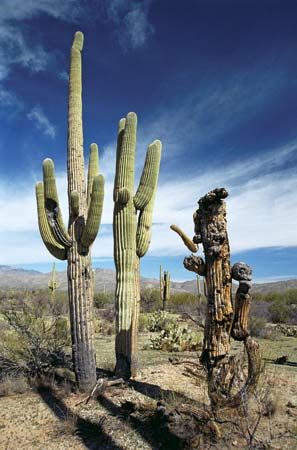
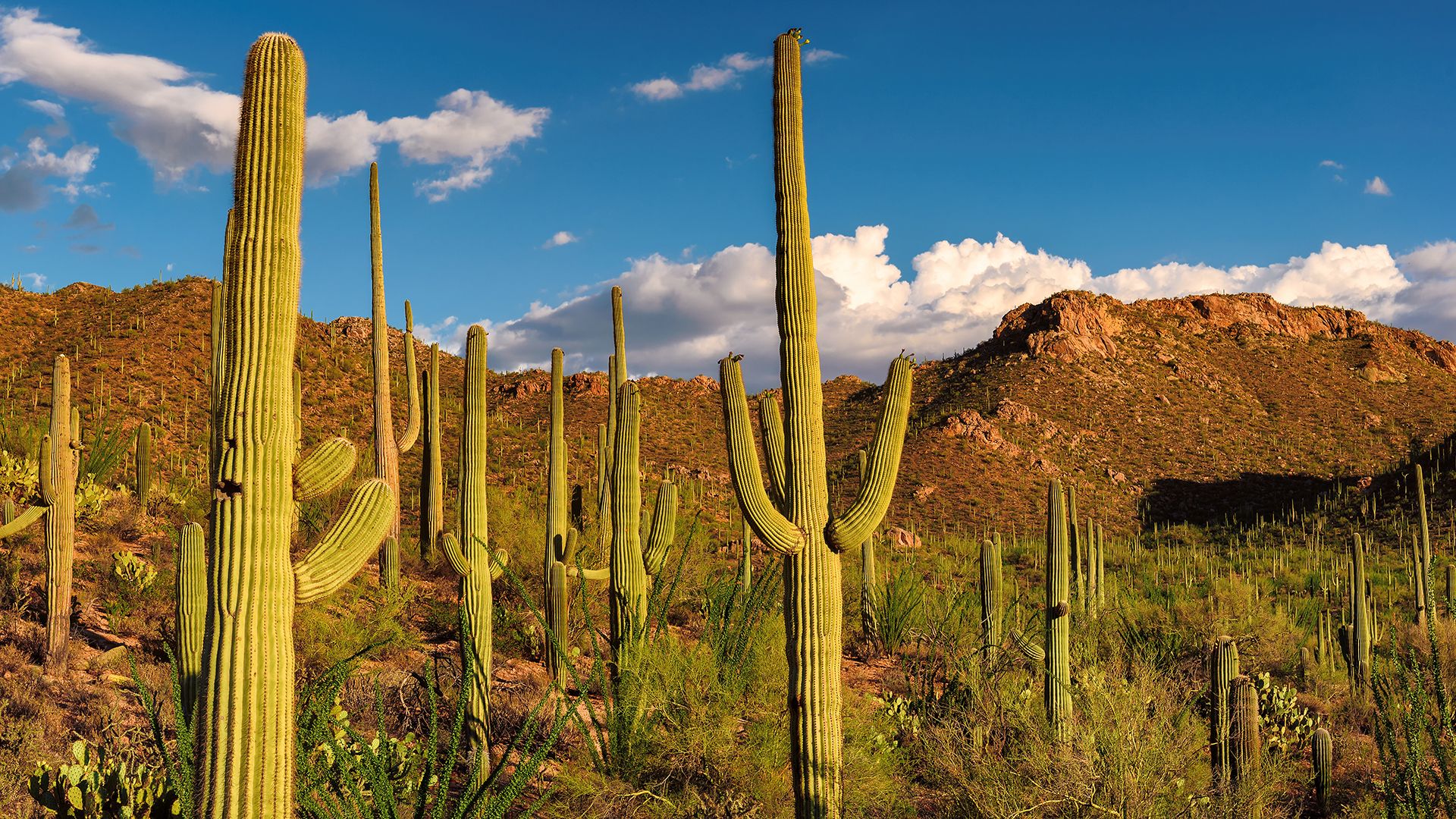
The saguaro (Carnegiea gigantea) is a large, ribbed, and columnar cactus species known for its distinctive, candelabra-like branching. These slow-growing…
What is a saguaro cactus and where is it primarily found?
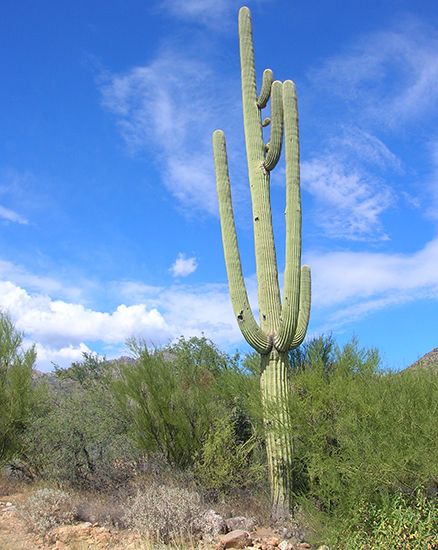
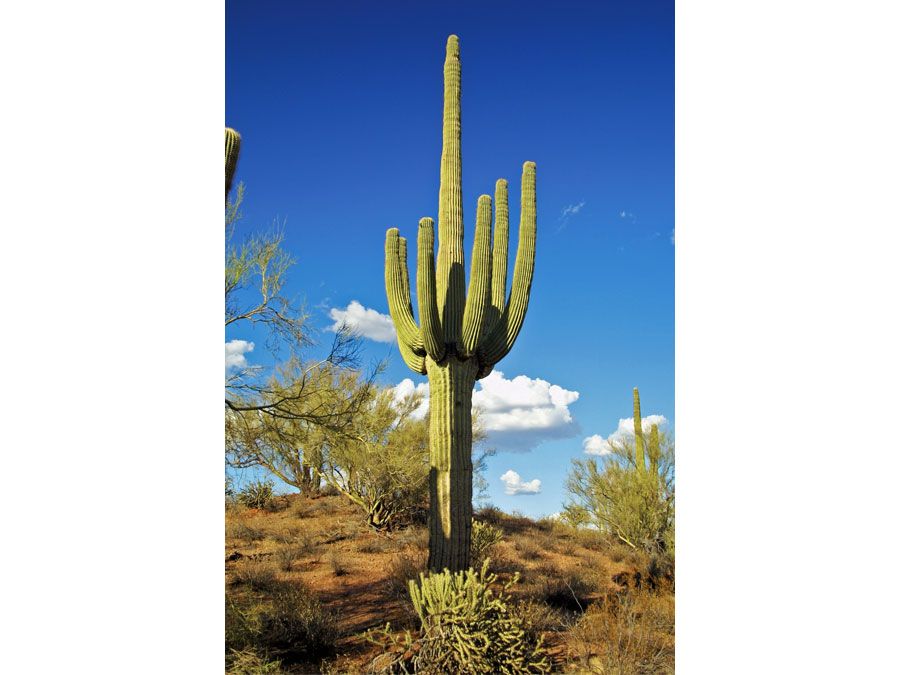
The saguaro (Carnegiea gigantea) is a large, ribbed, and columnar cactus species known for its distinctive, candelabra-like branching. These slow-growing plants can reach heights of up to 15 meters (nearly 50 feet) and live for 150 to 200 years. They play a vital ecological role by providing nectar for pollinators and nesting sites for various desert birds1.12
The saguaro is native to the Sonoran Desert, a region spanning parts of the southwestern United States—specifically Arizona and California—and northwestern Mexico. In southern Arizona, the Saguaro National Park is specifically dedicated to protecting these iconic desert plants.12
How tall can a saguaro cactus grow and how long does it take to reach maturity?
The saguaro is an exceptionally slow-growing plant that can reach a maximum height of approximately 15 meters (almost 50 feet).1
Regarding its development and maturity:
- Early Growth: The plant grows very slowly, reaching only 2 cm (less than 1 inch) in height during its first 10 years.1
- Growth Rate: Once the cactus attains a height of 2 to 3 meters (about 6.5 to 10 feet), it begins to grow at a rate of approximately 10 cm (4 inches) per year.1
- Maturity: A saguaro typically blooms for the first time when it is between 50 and 75 years old.1
These cacti generally live for 150 to 200 years before they die, often due to being uprooted by wind or washouts.1
How do the flowers and fruits of the saguaro cactus contribute to its lifecycle?
The flowers and fruits of the saguaro cactus are essential components of its reproductive cycle and ecological survival.
The Role of Flowers
The saguaro produces white, night-blooming flowers located at the top of its trunk and branches. Because they bloom at night, these flowers are primarily adapted for pollination by nocturnal visitors, including bats, though they remain open into the following day to attract other insects and birds. By providing a vital source of nectar, the flowers ensure that these pollinators facilitate the fertilization necessary for the plant to produce seeds.13
The Role of Fruits
Following successful pollination, the flowers develop into red, fleshy fruits. These fruits serve as a critical food source for various desert animals and Indigenous peoples. By attracting wildlife, the fruits play a key role in the dispersal of the cactus’s seeds, which is a fundamental step in the plant’s lifecycle and the propagation of the species across the desert landscape.1
What is the importance of saguaro cacti in the culture and traditions of the Tohono O’odham people?
The saguaro holds significant importance for Indigenous peoples of the region, including the Tohono O’odham. The plant serves as a vital source of sustenance, as its red, fleshy fruits have long been harvested as an important food source. Additionally, the woody skeletons of the saguaro are utilized for various practical purposes, reflecting the deep connection between the people and the desert environment.1
While the provided information highlights the general use of the saguaro by American Indians, it does not detail specific cultural or traditional practices unique to the Tohono O’odham people.
Sources
- saguaro — Encyclopædia Britannica
- Saguaro National Park — Encyclopædia Britannica
- Caryophyllales - Cactaceae — Encyclopædia Britannica
- Seed - Dormancy and life span of seeds — Encyclopædia Britannica
Published on · 3 min read