Organ-pipe Cactus
The organ-pipe cactus (Stenocereus thurberi) is a large species of cactus native to Mexico and southern Arizona in the United States. It is characteristic of…
What is organ-pipe cactus?
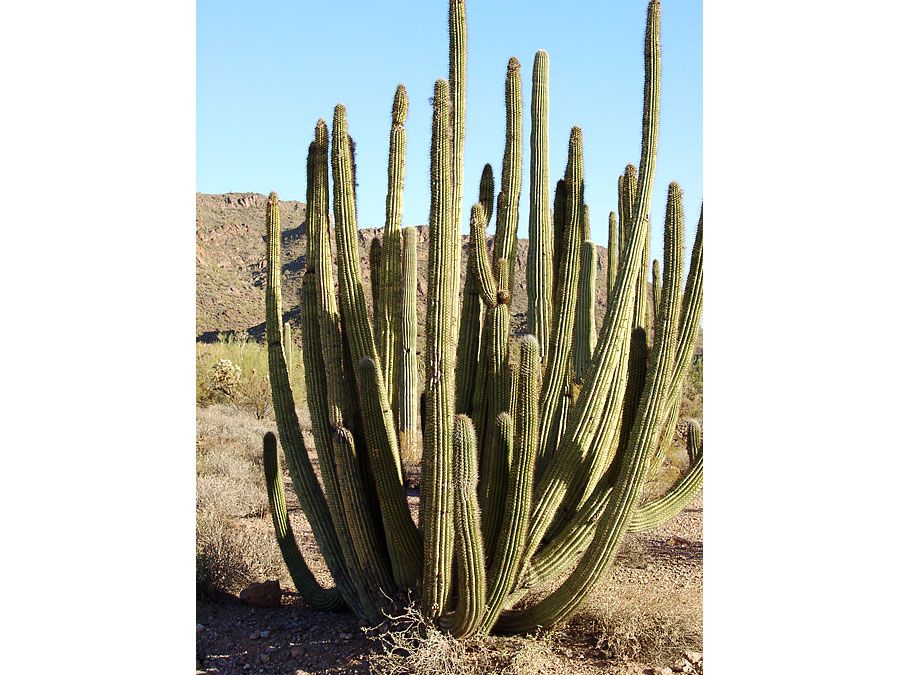
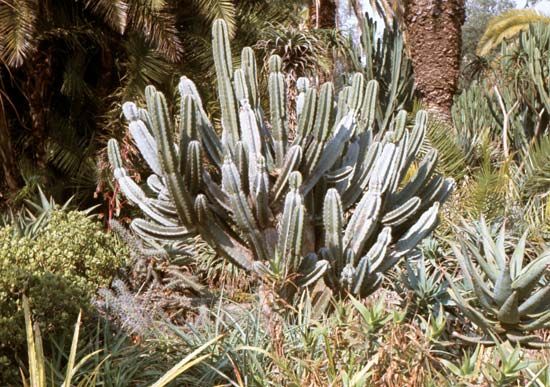
The organ-pipe cactus (Stenocereus thurberi) is a large species of cactus native to Mexico and southern Arizona in the United States. It is characteristic of the Sonoran Desert and is named for its tall, columnar branches that resemble the pipes of a church organ.12
Typically growing 5–8 metres (16–26 feet) tall, the plant features multiple arms rising candelabra-like from the base. Its stems are covered in brown spines, and it produces night-blooming white flowers that are primarily pollinated by bats. The cactus produces sweet, edible red fruits, and its cuttings are often used for hedges or fences.1
In the United States, large stands of this species are found primarily within the Organ Pipe Cactus National Monument, a protected biosphere reserve established to preserve this unique desert ecosystem.2

How do bats help pollinate the organ-pipe cactus?
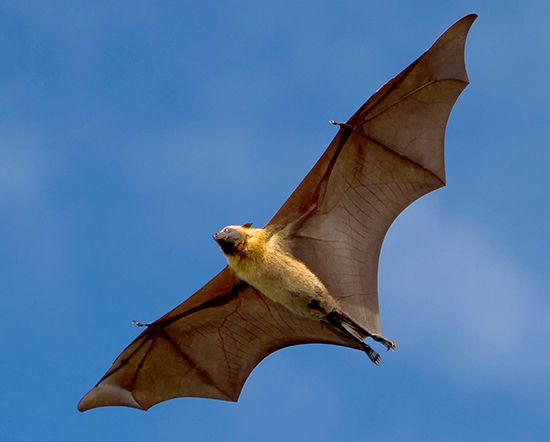
The organ-pipe cactus (Stenocereus thurberi) is a “bat-loving,” or chiropterophilous, plant that has evolved specific traits to facilitate pollination by nocturnal bats. Because these bats are active at night, the cactus produces white flowers that open after sunset, making them easier for the bats to locate in the dark.341
The pollination process relies on a mutually beneficial relationship:
- Attraction: The flowers are large and sturdy, often emitting a musky or fermented odor that helps guide bats to the plant using their highly developed sense of smell.356
- Feeding: Bats, such as specialized nectar-feeding species, visit the flowers to consume the copious amounts of nectar and protein-rich pollen produced by the cactus.356
- Transfer: As the bats feed, they use their long, extensible tongues—often equipped with fleshy bristles—to extract the nectar. In the process, pollen adheres to the bat’s face and whiskers, which is then transferred to the next flower the bat visits, effectively fertilizing the plant.356
What are some other unique plants found in the Sonoran Desert?
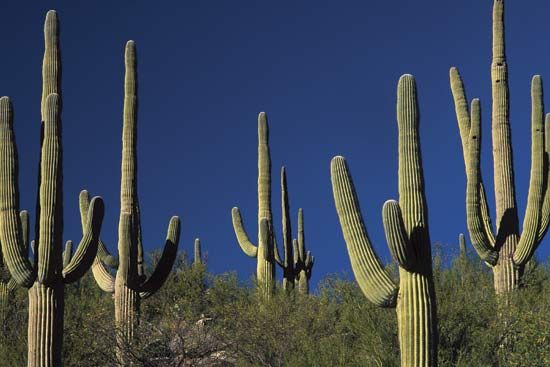
The Sonoran Desert is home to the most diverse vegetation of all North American deserts, featuring a variety of unique succulent and drought-adapted plants. Beyond the iconic saguaro and organ-pipe cactus, notable species include:7
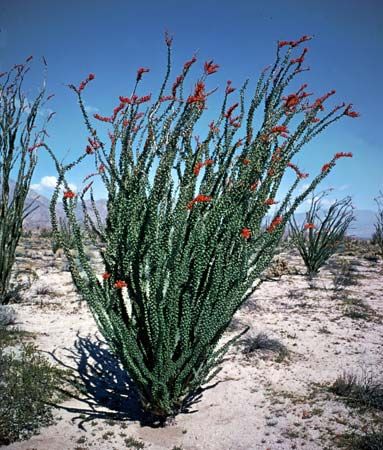
- Ocotillo: A spiny, flowering shrub with slender, erect branches. It is drought-deciduous, meaning it sheds its small leaves shortly after the rainy season, leaving the stems to carry out most of the photosynthesis.
- Creosote bush: A common and hardy shrub found throughout the region, well-adapted to arid conditions.87
- Boojum tree: An unusual, tall, and slender plant endemic to the Baja California peninsula.7
- Palo verde: A desert tree known for its green bark, which also allows it to perform photosynthesis.7
- Century plant: A succulent known for its large, rosette-shaped leaves.7
- Barrel cactus, prickly pear, and cholla: Various succulent species that are characteristic of the desert’s diverse landscape.7
Why is the Organ Pipe Cactus National Monument a protected biosphere reserve?
Organ Pipe Cactus National Monument was designated a biosphere reserve by UNESCO in 1976 because it serves as a vital “learning place” for sustainable development and the conservation of biological communities.212
As part of the global network of biosphere reserves, the monument is managed to examine the complex interactions between human social structures and the Sonoran Desert ecosystem. This designation recognizes the area’s significance to global and regional conservation, specifically for its role in:212
- Protecting Biodiversity: The monument preserves unique desert habitats, including large stands of the organ-pipe cactus—which is found in the United States only in this specific locality—and provides a sanctuary for endangered species like the Sonoran pronghorn and the Quitobaquito pupfish.2
- Modeling Human-Environment Balance: It functions as a living laboratory where researchers study how to manage natural resources and biodiversity while balancing human presence and environmental health.12
Sources
- organ-pipe cactus — Encyclopædia Britannica
- Organ Pipe Cactus National Monument — Encyclopædia Britannica
- Bat-loving flowers — Encyclopædia Britannica
- Pollination - Mammals — Encyclopædia Britannica
- Caryophyllales - Cactaceae — Encyclopædia Britannica
- Major types of pollinators - Mammals — Encyclopædia Britannica
- Ocotillo — Encyclopædia Britannica
- saguaro — Encyclopædia Britannica
- Saguaro National Park — Encyclopædia Britannica
- Desert - Flora — Encyclopædia Britannica
- Sonoran Desert — Encyclopædia Britannica
- biosphere reserve — Encyclopædia Britannica
- Arizona-Sonora Desert Museum — Encyclopædia Britannica
Published on · 3 min read