Oslo Fjord
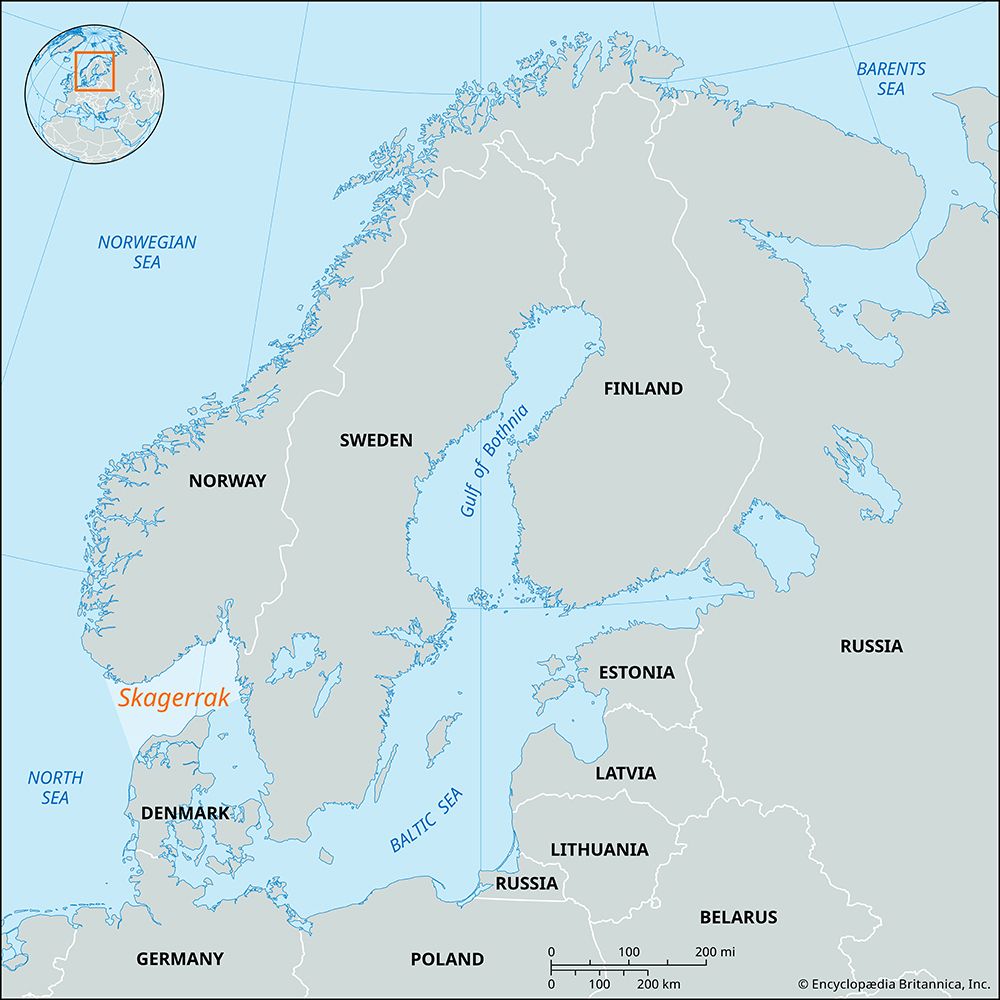
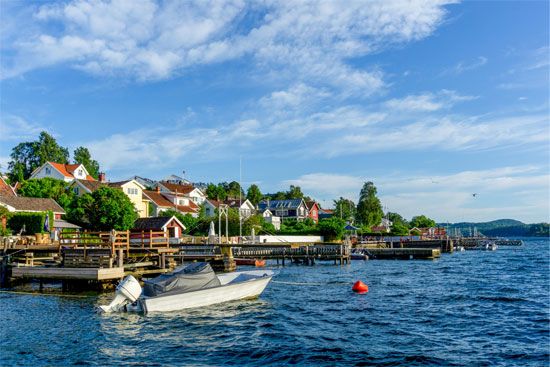
Oslo Fjord is a fjord located on the Skagerrak strait that extends 60 miles (100 km) into the southern coast of Norway, stretching from Fredrikstad to Oslo.
What is Oslo Fjord?
Oslo Fjord is a fjord located on the Skagerrak strait that extends 60 miles (100 km) into the southern coast of Norway, stretching from Fredrikstad to Oslo.1
Covering an area of 766 square miles (1,984 square km), the fjord occupies a glacier-formed depression known as a graben. It is one of the most densely populated regions in Norway, with a forested shoreline featuring numerous towns and seaports. The fjord serves as a vital shipping route for Oslo and receives the flow of most major rivers in southeastern Norway. Its northern section branches into several smaller inlets, including Bunne Fjord, Drams Fjord, and Sande Bay, while its waters contain many islands, such as the notable Jel Island near Moss.1
How are fjords formed by glaciers?
Fjords are formed through the process of glacial erosion acting upon river valleys. As massive, thick glaciers move through these valleys, their immense weight and erosive power deepen and widen the valley floor, typically transforming a V-shaped stream valley into a characteristic U-shaped valley.456
Because glaciers are more viscous and have a larger cross-section than rivers, they erode the landscape to provide the least frictional resistance, resulting in straighter, smoother paths. This erosion can be so intense that it carves the valley floor far below sea level.64
When the glaciers eventually melt, the sea invades these deep, submerged troughs, creating the long, narrow arms of the sea known as fjords. While this glacial origin is widely accepted, some researchers suggest that tectonic activity may also play a role in shaping the relief of these valleys, with glaciers acting to modify preexisting features.457
What role did the Vikings play in Norway’s history?
The Viking Age (c. 800–1050) was a transformative period in Norwegian history, characterized by expansion, trade, and the eventual unification of the country. Driven by a spirit of adventure, superior maritime technology, and military organization, Norwegians launched expeditions westward, raiding and settling in regions including Ireland, Scotland, England, Iceland, and Greenland, and even reaching North America.9
These interactions with western Europe were decisive for Norway’s development. In the late 9th century, Harald I Fairhair unified the country after the Battle of Hafrsfjord. Subsequently, the Christianization of Norway—promoted by kings like Olaf I Tryggvason and Olaf II Haraldsson—helped centralize royal power and integrate Norway into the broader European political and religious framework. This process, alongside the rise of feudal-like structures, eventually curtailed the independent warrior bands that defined the early Viking era.91011
Why is the Oslo Fjord important for shipping?
The Oslo Fjord is a vital maritime artery for Norway, primarily because it serves as a major conduit for shipping traffic to and from the capital city of Oslo.1
The importance of the fjord for shipping is supported by several key factors:
- Economic Connectivity: The fjord’s forested shoreline is home to numerous towns and seaports, making it one of the most densely populated and economically active regions in the country.1
- Strategic Infrastructure: Towns located along the fjord, such as Fredrikstad, rely on the waterway for their primary industries, which include shipping, sawmilling, and the export of goods like chemicals and lumber.14
- Industrial Hubs: Other coastal communities, such as Sandefjord, have transitioned their historical focus from whaling to modern shipping and industrial manufacturing, further cementing the fjord’s role in Norway’s commercial landscape.3
By providing a navigable route into the heart of southeastern Norway, the fjord facilitates the movement of goods and supports the industrial output of the surrounding municipalities.1143
Sources
- Oslo Fjord — Encyclopædia Britannica
- Sandefjord — Encyclopædia Britannica
- Fredrikstad — Encyclopædia Britannica
- fjord — Encyclopædia Britannica
- glacial valley — Encyclopædia Britannica
- glacial landform - Erosional landforms of continental glaciers — Encyclopædia Britannica
- estuary - Geology and geomorphology — Encyclopædia Britannica
- glacier - Tidewater glaciers — Encyclopædia Britannica
- Norway - The Vikings — Encyclopædia Britannica
- Norway - Christianization of Norway — Encyclopædia Britannica
- Denmark: Top Questions — Encyclopædia Britannica
- Viking: Top Questions — Encyclopædia Britannica
- Denmark - The Viking era — Encyclopædia Britannica
- Vestlandet — Encyclopædia Britannica
- Nord-Norge — Encyclopædia Britannica
Published on · 3 min read