Osmunda
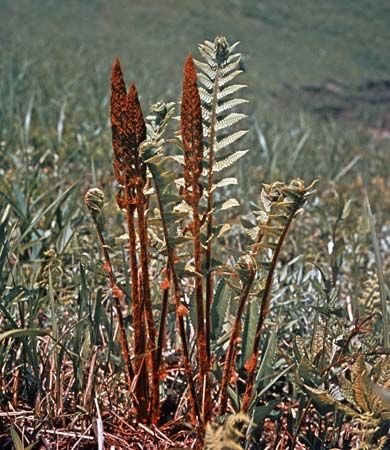
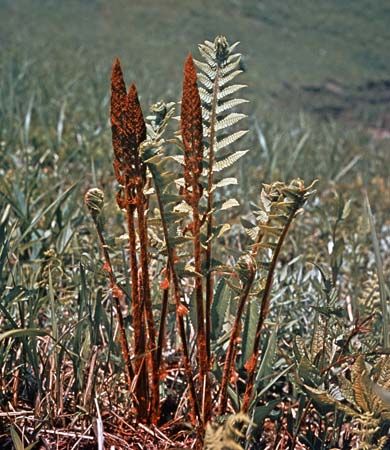
Osmunda is a genus of approximately 10 to 12 species of large ferns belonging to the family Osmundaceae. These plants are found in wet environments ranging…
What is Osmunda?
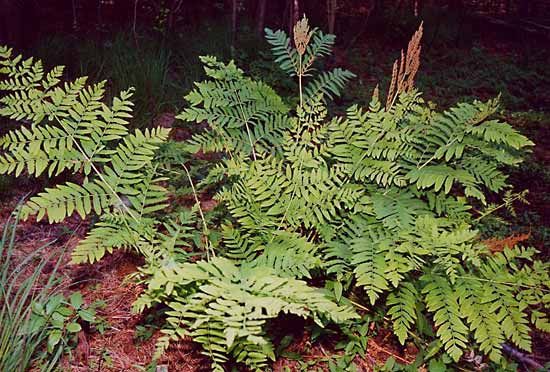
Osmunda is a genus of approximately 10 to 12 species of large ferns belonging to the family Osmundaceae. These plants are found in wet environments ranging from Canada and Europe into the tropics.12
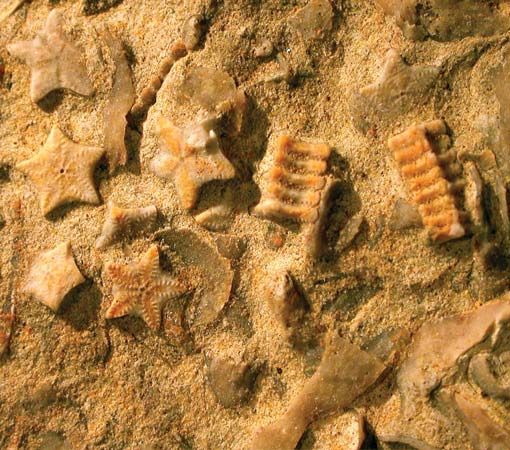
The genus is noted for its extensive fossil record, with some modern species considered living fossils because they are nearly identical to ancestors dating back millions of years. Physically, Osmunda ferns are characterized by large, divided fronds and sporangia (spore-producing structures) that lack the protective membrane, or indusium, common in many other fern families.12
Economically, the matted, fibrous roots and rhizomes of these ferns are harvested as “osmunda fiber” or “osmundine.” This material is widely used as a growing medium for epiphytic orchids. Popular species, such as the royal fern, cinnamon fern, and interrupted fern, are also frequently cultivated as garden ornamentals or greenhouse plants.12
What are some other examples of living fossils?
A “living fossil” is an organism that has remained essentially unchanged from earlier geologic times and whose close relatives are typically extinct. Beyond the Osmunda fern, several other organisms are classified this way:5
- Ginkgo biloba: This tree is the sole living representative of the order Ginkgoales. It has existed for approximately 250 million years and is highly valued for its resilience to urban conditions and pests.6
- Horseshoe Crabs: These marine arthropods are classic examples of organisms that have persisted with minimal morphological change over vast stretches of geologic time.5
- Pelican Spiders: These unique arachnids are considered living fossils because they possess an ancient fossil record and have exhibited very little evolutionary change over time.7
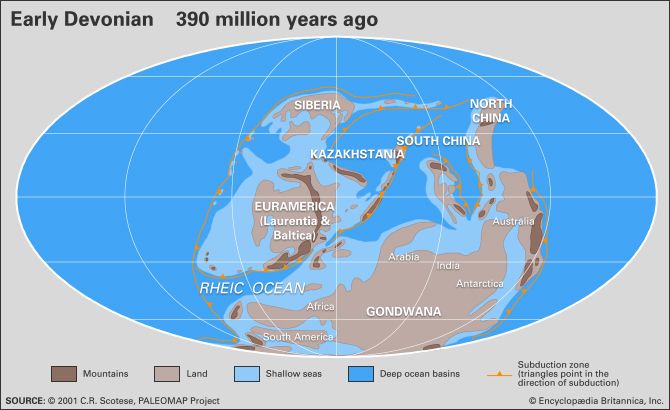
While some modern plants, such as certain lycophytes, resemble ancient herbaceous species from the Devonian and Carboniferous periods, the term “living fossil” specifically highlights the remarkable continuity of these lineages against the backdrop of mass extinctions.8
How do ferns reproduce without using seeds?
Ferns reproduce through a process known as alternation of generations, which involves two distinct life stages: the asexual sporophyte and the sexual gametophyte.9
The Sporophyte Stage
The large, leafy plant typically recognized as a fern is the sporophyte. It produces spores within specialized structures called sporangia, which are often clustered on the undersides of fronds in groups called sori. These spores are released into the environment and carried by wind currents to new locations.10119
The Gametophyte Stage
When a spore lands in a suitable, moist environment, it germinates to form a tiny, heart-shaped or ribbonlike structure called a prothallium. This gametophyte produces male (antheridia) and female (archegonia) sex organs. Fertilization occurs when sperm swim through a film of water to reach an egg. The resulting zygote then develops into a new, independent sporophyte, completing the cycle.10119
Additionally, many ferns can reproduce vegetatively through their rhizomes or via apomixis, a process where new sporophytes arise directly from the gametophyte without fertilization.11
What is the difference between vascular and non-vascular plants?
The primary distinction between vascular and non-vascular plants lies in the presence of specialized tissues for internal transport and structural support.
Vascular Plants
Vascular plants, or tracheophytes, possess vascular tissue consisting of xylem (which conducts water and minerals) and phloem (which conducts food). This system allows these plants to develop true roots, stems, and leaves, enabling them to grow to significant sizes and thrive in diverse terrestrial habitats. In these plants, the sporophyte is the dominant, more conspicuous phase of the life cycle.1314
Non-vascular Plants
Non-vascular plants, or bryophytes, lack these specialized conducting tissues and do not possess true roots, stems, or leaves. Because they lack a well-developed cuticle and vascular system, they are typically small and restricted to moist environments. In bryophytes, the gametophyte is the dominant, photosynthetic phase of the life cycle, while the sporophyte remains dependent on it.15
Sources
- Osmunda — Encyclopædia Britannica
- osmunda — Merriam-Webster
- list of ferns — Encyclopædia Britannica
- Osmundaceae — Encyclopædia Britannica
- living fossil — Merriam-Webster
- pelican spider: Top Questions — Encyclopædia Britannica
- lycophyte - Fossil forms — Encyclopædia Britannica
- Did you know? — Merriam-Webster
- plant reproductive system - Ferns — Encyclopædia Britannica
- fern - Life cycle — Encyclopædia Britannica
- fern - The sorus — Encyclopædia Britannica
- lower vascular plant - Reproduction — Encyclopædia Britannica
- plant - Definition of the category — Encyclopædia Britannica
- xylem — Encyclopædia Britannica
- plant - Definition of the category — Encyclopædia Britannica
Published on · 3 min read