Outwash
It is important to clarify that while outwash deposits are significant in glacial geology, they are primarily used to map the extent and movement of past…
How can scientists use outwash deposits to reconstruct past climates?
It is important to clarify that while outwash deposits are significant in glacial geology, they are primarily used to map the extent and movement of past glaciers rather than as a direct proxy for reconstructing specific past climates. Climate reconstruction is more commonly achieved through ice cores or marine sediment records.123
Scientists study outwash to understand past environments in the following ways:
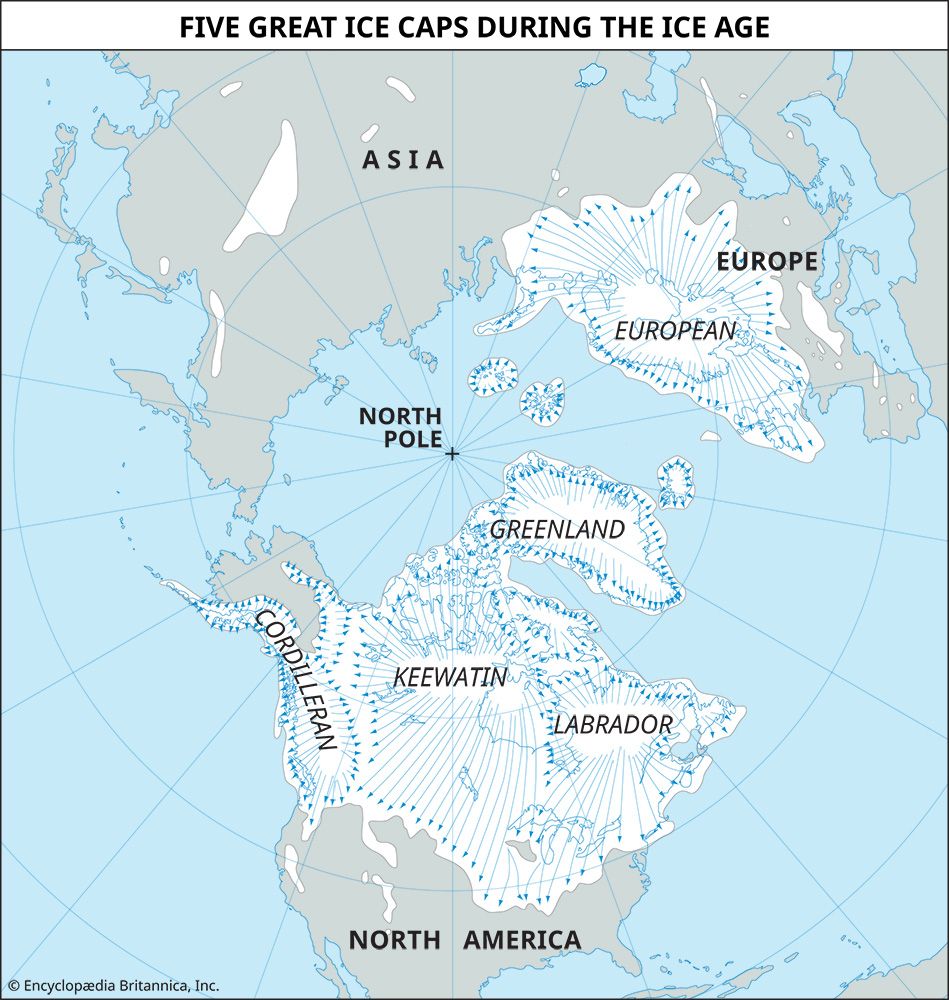
- Mapping Glacial Extent: Because outwash is composed of sand and gravel carried by meltwater, its presence and distribution help researchers trace the former margins of glaciers and the paths of meltwater streams.45
- Sedimentological Analysis: By examining the texture, structure, and grain size of these stratified deposits, sedimentologists can interpret ancient environmental conditions, such as the velocity of meltwater currents and the distance from the glacial terminus.465
- Chronology: When associated with other geological markers, these deposits help establish the timing of glacial advances and retreats, which are fundamental to understanding the history of ice ages.72
What role does outwash play in the study of past glacial periods?
Outwash plays a vital role in the study of past glacial periods by serving as a primary indicator of ice margin positions and the dynamics of glacial retreat. While it is not a direct proxy for climate, it provides essential geological evidence for reconstructing the history of ice ages.
Scientists use outwash deposits in the following ways:
- Mapping Ice Margins: Because outwash is “graded to” specific moraines, geologists use these deposits to trace the former positions of glacier snouts. When moraines are absent or eroded, terraces formed by outwash often serve as the only remaining evidence to reconstruct how ice margins shifted over time.2
- Interpreting Glacial Dynamics: The stratified nature of outwash—which consists of sand and gravel sorted by meltwater—allows researchers to analyze the velocity of ancient streams and the proximity of the glacier terminus. The downstream thinning of these deposits helps geologists map the extent of glacial influence.102
- Chronological Correlation: By identifying recessional positions where new outwash plains or valley trains were formed during glacial retreat, scientists can establish a relative timeline of deglaciation.2
What is outwash in geological terms, and how is it formed?
In geological terms, outwash refers to deposits of sand and gravel that have been transported by running water from a melting glacier and laid down in stratified layers. Unlike till, which is deposited directly by ice and is typically non-stratified, outwash is reworked by meltwater, resulting in well-sorted, bedded, or laminated sediments.210
Formation Process
Outwash is formed through the following mechanisms:
- Transport: As a glacier moves, it acts like a conveyor belt, carrying debris beneath, within, and on top of the ice. Meltwater streams, which are often pressurized within subglacial tunnels, pick up this debris and transport it toward the glacier’s terminus.1011
- Deposition: Upon exiting the glacier, the meltwater is no longer confined by ice tunnels and loses velocity. This decrease in speed forces the stream to deposit its sediment load.11
- Sorting: The process naturally sorts materials by grain size. Larger boulders and gravel are deposited closest to the glacier margin, while finer materials like sand, silt, and clay are carried further downstream.210
- Landforms: When confined by valley walls, these deposits are known as valley trains. In low-relief areas, they merge to form broad outwash plains, also called sandurs.211
What is the relationship between outwash and glacial till?
In geological terms, both outwash and till are classified as glacial drift, representing the two primary ways debris is deposited in a glacial environment. Their relationship is defined by the agent of deposition and the resulting physical characteristics of the sediment.2
Key Differences
- Agent of Deposition: Till is deposited directly by glacial ice as it melts, often remaining in place or forming a blanket over the landscape. In contrast, outwash is deposited by meltwater streams and rivers flowing from the glacier.2
- Stratification: Because till is laid down directly by ice, it is typically non-stratified and unsorted, containing a chaotic mixture of rock fragments, boulders, and fine-grained matrix. Outwash is stratified (bedded or laminated) because running water naturally sorts sediments by grain size during transport.210
- Particle Characteristics: Rocks found in till often bear striations, grooves, and facets from being dragged by ice. In outwash, these features are usually worn away by the abrasive action of stream transport, leaving the gravel and boulders rounded.2
While distinct, these deposits often exist in close proximity, as glacial margins are dynamic environments where ice, water, and debris interact constantly.2
Sources
- Pleistocene Epoch - Ice-core records — Encyclopædia Britannica
- outwash — Encyclopædia Britannica
- sedimentology — Encyclopædia Britannica
- geology - Glacial geology — Encyclopædia Britannica
- glacial landform — Encyclopædia Britannica
- outwash plain — Merriam-Webster
- Paleoclimatology — Encyclopædia Britannica
- Quaternary - Correlation of Quaternary deposits — Encyclopædia Britannica
- glacier - Information from deep cores — Encyclopædia Britannica
- glacial landform - Glacial deposition — Encyclopædia Britannica
- glacial landform - Glaciofluvial deposits — Encyclopædia Britannica
- Pleistocene Epoch - Glacial records — Encyclopædia Britannica
- stratification — Encyclopædia Britannica
Published on · 3 min read