Ice Age
Milankovitch cycles refer to the long-term, cyclical variations in Earth’s orbital geometry that influence the distribution of solar radiation across the…
What role do Milankovitch cycles play in the occurrence of ice ages?
Milankovitch cycles refer to the long-term, cyclical variations in Earth’s orbital geometry that influence the distribution of solar radiation across the planet’s surface. These cycles are widely considered the “pacemaker” of ice ages, as they dictate the timing of glacial and interglacial periods.123
The cycles are driven by three primary parameters:
- Eccentricity: The 100,000- and 413,000-year variations in the shape of Earth’s orbit around the Sun.13
- Obliquity: The 41,000-year cycle of change in the tilt of Earth’s axis.13
- Precession: The 19,000- to 26,000-year cycle caused by the “wobble” of Earth’s axis and the rotation of its orbital ellipse.13
Glaciations are hypothesized to begin when these factors combine to produce low summer insolation in the high-latitude Northern Hemisphere, allowing winter snow to persist through the summer. Because these orbital changes alone are relatively small, they are amplified by feedback mechanisms, such as the ice-albedo effect and changes in atmospheric carbon dioxide levels, which drive the climate toward full glacial or interglacial states.324
What are the different stages within an ice age, such as glacial and interglacial periods?
An ice age is a long-term geologic period during which vast areas of Earth are covered by thick ice sheets. Within these major periods, the climate system fluctuates between two primary states:78
Glacial Stages
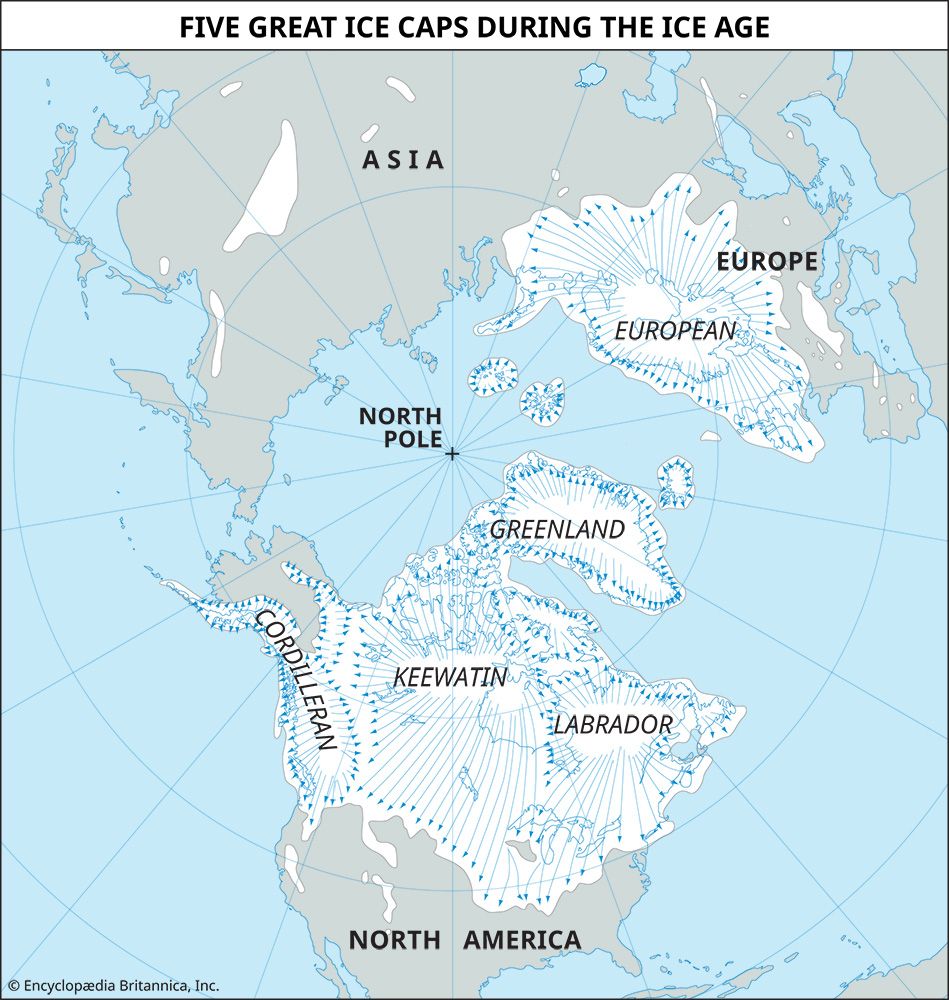
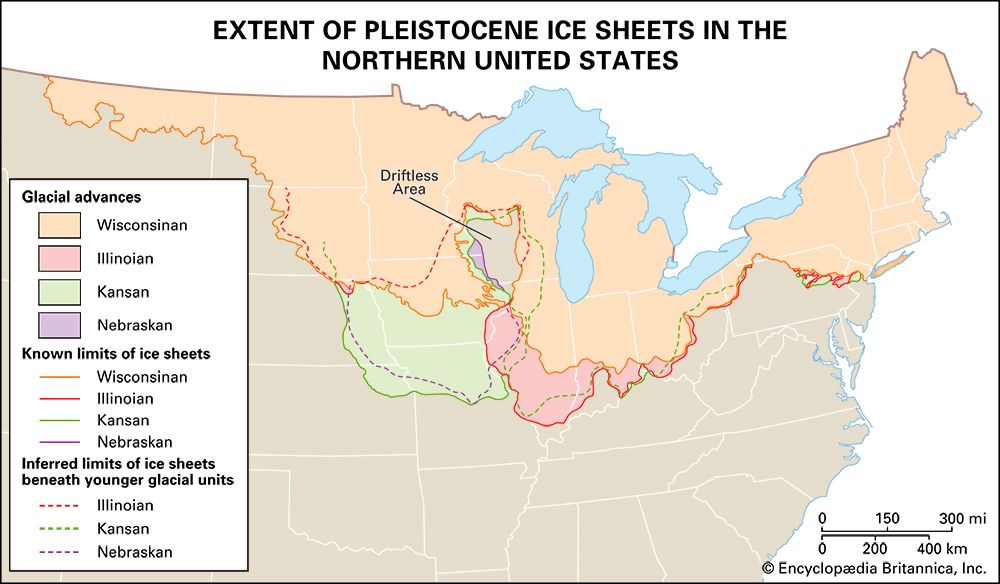
A glacial stage (or glacial period) is a cold episode characterized by the expansion of glaciers and ice sheets into middle and high latitudes. During these times, global temperatures are significantly lower, and large volumes of water are transferred from the oceans to the ice sheets, leading to lower sea levels. Major glaciations are often composed of smaller pulses of advance and retreat known as substages.8910
Interglacial Stages
An interglacial stage is a warmer interval that occurs between glacial stages. During these periods, the climate is typically as warm as, or warmer than, it is at present, and ice sheets retreat to dimensions similar to or smaller than those seen today. Earth is currently in an interglacial period known as the Holocene Epoch, which began approximately 11,700 years ago.8910
Intermediate States
Research indicates that the Earth system does not simply toggle between two extremes. Approximately 80 percent of the past 500,000 years has been spent in intermediate glacial states—periods warmer than a glacial maximum but cooler than an interglacial. These states are characterized by continual, millennial-scale climate variation rather than a constant climate.9
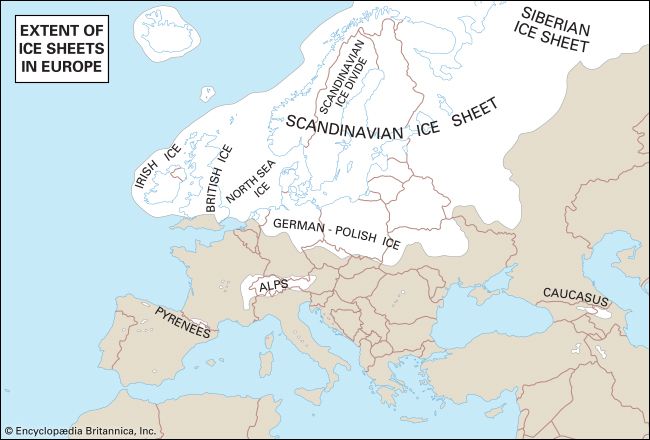
How did the most recent ice age, the Pleistocene, affect human evolution and migration?
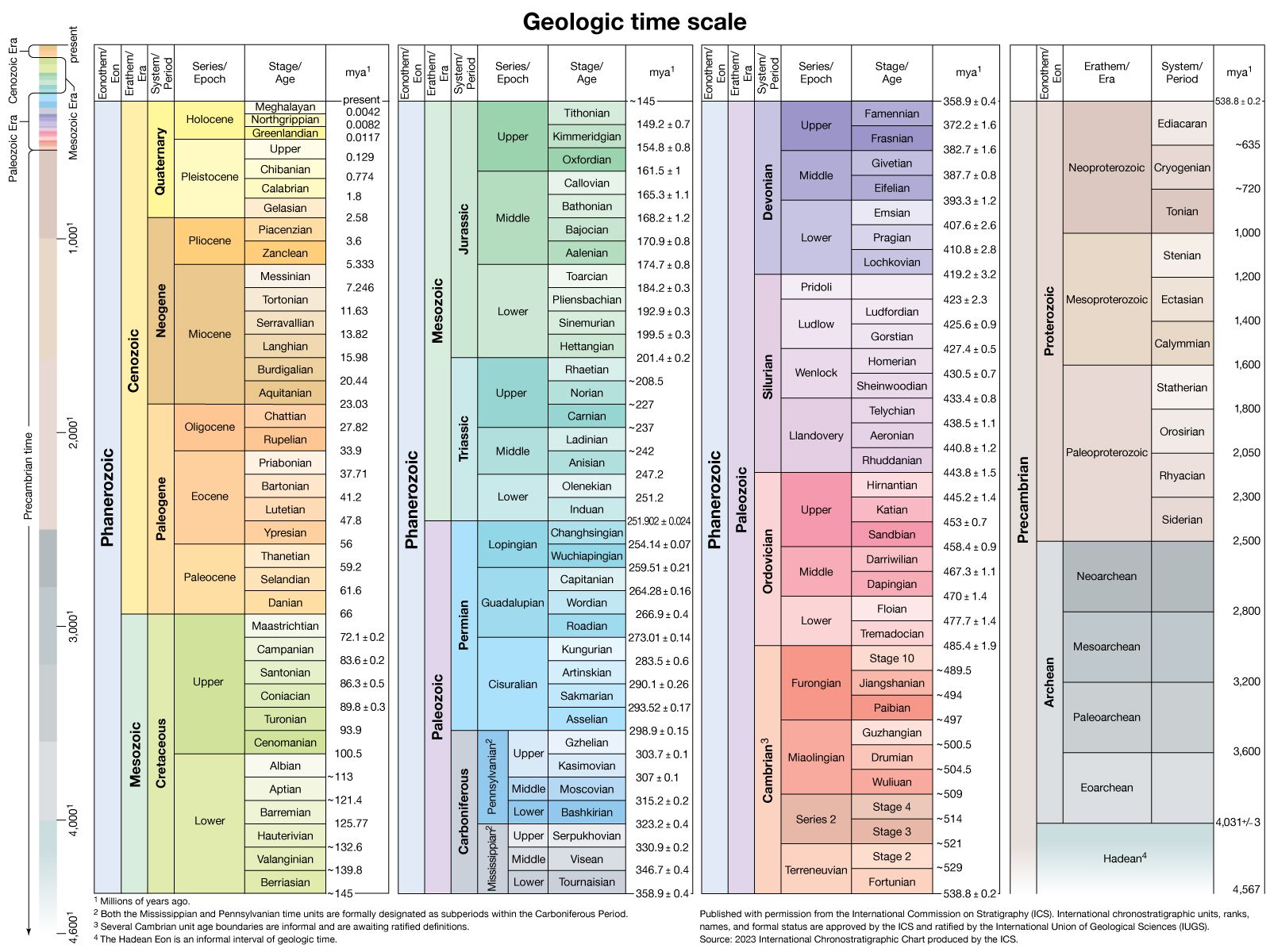
The Pleistocene Epoch (approximately 2.6 million to 11,700 years ago) was a period of significant climatic instability that profoundly shaped human evolution and migration.
Evolutionary Pressures
The harsh, fluctuating climates of the Pleistocene imposed intense evolutionary pressures on the human lineage. The transition from forested environments to drier, open savannas in Africa favored the development of an upright, bipedal stance, which enabled efficient long-distance travel and freed the hands for tool use. These environmental shifts are linked to the emergence and diversification of the genus Homo, characterized by increasing brain size and the development of sophisticated stone tool kits.121314
Migration and Expansion
The Pleistocene’s periodic glaciations caused dramatic drops in global sea levels, creating land bridges that facilitated human dispersal.
- Out of Africa: Early Homo species, such as H. erectus, migrated into Eurasia as early as 1.8 million years ago.1214
- Global Spread: Modern H. sapiens emerged in Africa around 200,000 years ago, eventually spreading into the Middle East, Europe, and across Asia to Australia by at least 50,000 years ago.12
- Populating the Americas: During the last glacial maximum, the Bering land bridge (Beringia) connected Siberia and Alaska. Humans utilized this route to enter the New World, likely following game animals as glacial ice retreated.151614
These migrations were not passive; they were driven by the need to adapt to changing resources, such as hunting large game like mammoths and utilizing diverse plant life, which required the development of specialized technologies and social strategies.1217
What are the main causes of ice ages?
Ice ages are complex phenomena driven by a combination of astronomical, geological, and atmospheric factors. No single cause explains them entirely; rather, they result from the interplay of various Earth systems.
Orbital Variations
The primary “pacemaker” of glacial-interglacial cycles is the orbital geometry of Earth, known as Milankovitch cycles. These predictable variations in Earth’s orbit affect the distribution of solar radiation across latitudes and seasons:118
- Eccentricity: The shape of Earth’s orbit varies from circular to elliptical over 100,000 and 413,000-year cycles.118
- Obliquity: The tilt of Earth’s axis varies between 22.1° and 24.5° over a 41,000-year cycle, influencing seasonal intensity.118
- Precession: The “wobble” of Earth’s axis creates 19,000 to 26,000-year cycles that change the timing of solstices and equinoxes.118
Feedback Mechanisms
Because orbital changes alone are relatively small, feedback mechanisms are required to amplify cooling or warming:1819
- Albedo: Increased snow and ice cover reflect more sunlight, leading to further cooling.1819
- Greenhouse Gases: Lower atmospheric concentrations of carbon dioxide and methane during glacial periods reduce the greenhouse effect, reinforcing cooling.18192
Tectonic and Oceanographic Factors
The configuration of continents and oceans also plays a critical role. The movement of tectonic plates can block or open oceanic seaways, altering thermohaline circulation and the transport of heat toward the poles. For example, the isolation of Antarctica by the development of a circum-Antarctic current was a major factor in the growth of its ice sheets.820
Sources
- Climate change - Orbital ( Milankovich ) variations — Encyclopædia Britannica
- Pleistocene Epoch - Cause of the climatic changes and glaciations — Encyclopædia Britannica
- Milutin Milankovitch — Encyclopædia Britannica
- Climate change - Feedback mechanisms — Encyclopædia Britannica
- Global warming - Ice albedo feedback — Encyclopædia Britannica
- Climate change - The Earth system — Encyclopædia Britannica
- ice age — Encyclopædia Britannica
- Climate change - Glacial and interglacial cycles of the Pleistocene — Encyclopædia Britannica
- glacial stage — Encyclopædia Britannica
- Climate change - The last deglaciation — Encyclopædia Britannica
- Global warming - Climatic variation since the last glaciation — Encyclopædia Britannica
- Quaternary - Hominin evolution — Encyclopædia Britannica
- human evolution - Hominin habitats — Encyclopædia Britannica
- history of Europe - Mesolithic adaptations — Encyclopædia Britannica
- Beringia — Encyclopædia Britannica
- South American Indian - The prehistoric period — Encyclopædia Britannica
- Pleistocene Epoch - Evolutionary changes — Encyclopædia Britannica
- Climate change - Solar variability — Encyclopædia Britannica
- plate tectonics - Climate — Encyclopædia Britannica
- evolution of the atmosphere - Variation in abundance of carbon dioxide — Encyclopædia Britannica
- Climate change - The most recent glacial phase — Encyclopædia Britannica
- Climate - Thermohaline circulation — Encyclopædia Britannica
Published on · 5 min read