Palolo Worm
Pacific Islanders traditionally harvest palolo worms during their annual breeding swarms, which occur in the early morning for two days during the last…
How do Pacific Islanders traditionally harvest palolo worms, and why?
Pacific Islanders traditionally harvest palolo worms during their annual breeding swarms, which occur in the early morning for two days during the last quarter of the moon in October and November. During this event, the worms’ reproductive tail sections, known as epitokes, break away from the parent worms and swim to the ocean surface in massive numbers to release eggs and sperm.12
Because these swarms are predictable and involve tens of thousands of worms appearing simultaneously, they are gathered in vast quantities by hand or with nets. The primary reason for this harvest is that the palolo tails are considered a highly esteemed food delicacy by Polynesians. The worms are valued for their cultural and culinary significance, serving as a traditional seasonal resource.13
What cultural significance do palolo worms hold in Pacific Island traditions and folklore?
The cultural significance of the palolo worm in Pacific Island traditions is primarily centered on its role as a highly esteemed seasonal food delicacy. For Polynesians, the annual swarming event—which occurs with precise timing during the last quarter of the moon in October and November—is a significant occasion that brings communities together to gather the reproductive tail sections, or epitokes, in vast numbers.13
While the worms are widely recognized as a traditional resource and a culinary treasure, the provided information does not detail specific folklore or mythological narratives associated with the species beyond their status as a valued food source. The term “palolo” itself is derived from Samoan and Tongan languages, reflecting the deep-rooted connection between these island cultures and the marine life inhabiting their coral reefs.3
Where are palolo worms typically found, and what kind of habitat do they prefer?
Palolo worms are marine annelids found in various tropical and coastal environments, where they typically inhabit crevices, cavities, and tubelike burrows within coral reefs. Their specific habitat preferences vary by species and region:
- South Pacific: The species Eunice viridis is famously associated with the rock and coral reefs of various Pacific islands, where it resides in protective reef cavities.13
- Atlantic: The Atlantic palolo (E. furcata) is widely distributed within the rock coral of the West Indies.1
- Japan: The Japanese palolo (Tylorrhynchus heterochaetus) is found in coastal waters rather than exclusively within coral reef structures.1
Regardless of the specific location, these worms spend the majority of their lives anchored in their substrate, with only the reproductive tail sections—the epitokes—leaving the burrow to swarm at the ocean surface during their synchronized breeding cycles.1
How does the palolo worm’s body structure differ from other types of worms?
The palolo worm possesses a distinct body structure characterized by its segmentation and specialized appendages, which differ significantly from other worm groups like flatworms and roundworms.
Key Structural Features
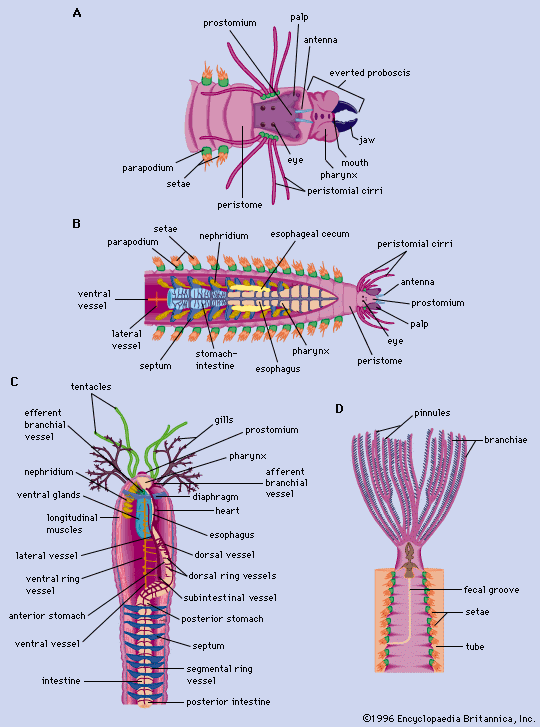
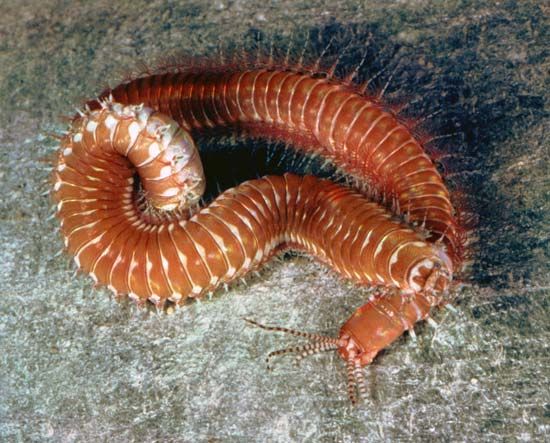
- Segmentation and Appendages: As a member of the class Polychaeta, the palolo worm is divided into ringlike segments. Each segment features paddlelike appendages that bear gills, which aid in respiration and movement.1
- Sensory and Feeding Organs: The head is equipped with several sensory tentacles. Additionally, the worm possesses a pharynx that can be thrust forward and is armed with teeth for feeding.1
- Sexual Dimorphism: The body exhibits distinct coloration based on sex, with males typically appearing reddish brown and females appearing bluish green.1
Specialized Breeding Transformation
The most striking structural difference occurs during the breeding season. The worm undergoes a radical transformation where the posterior section of the body—the epitoke—develops into a specialized reproductive unit. The muscles and most internal organs in this section degenerate as the reproductive organs rapidly increase in size. The limbs on these segments become more paddlelike, and the section even develops eyes to facilitate its independent, free-swimming journey to the surface.1
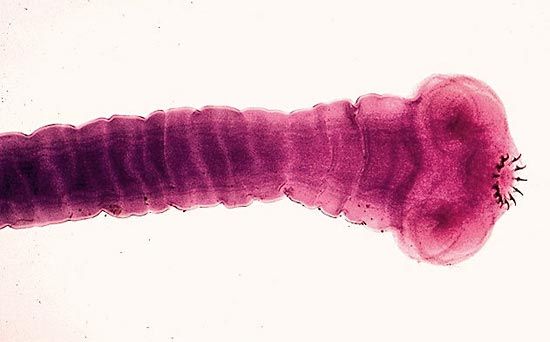
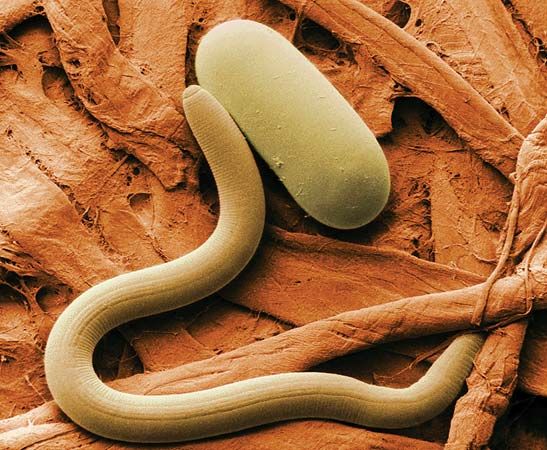
In contrast, other worms like roundworms lack circular muscles and are restricted by a thick cuticle that prevents swelling, while flatworms rely on complex combinations of muscle layers to crawl or move.4
Sources
- palolo worm — Encyclopædia Britannica
- Reproductive behaviour - Segmented worms — Encyclopædia Britannica
- palolo — Merriam-Webster
- muscle - Worms — Encyclopædia Britannica
- heteropteran - Annotated classification — Encyclopædia Britannica
Published on · 3 min read